

If you're buying food wrapping paper for your business, you can't afford to guess whether it's truly safe or food grade.
The wrong paper can leach chemicals, fail compliance checks, and damage your brand overnight.
The right food wrapping paper manufacturers protect your customers, keep you compliant, and even elevate your packaging with custom, food-grade materials that match your brand and sustainability goals.
In this guide, you'll see exactly what makes wrapping paper food-safe, which certifications really matter, and how to choose manufacturers-like Dongguan Xianghe Paper Co., Ltd.-who use genuinely safe & food-grade materials (not just marketing buzzwords).
Ready to stop guessing and start sourcing with confidence? Keep reading.
What Are Food-Grade Materials for Wrapping Paper?
If food is going to touch paper, that paper must be food-grade. In plain terms, food-grade wrapping paper is made from materials that are safe for direct food contact, won't leach harmful chemicals, and are approved under food contact regulations (such as FDA rules in the US).
Food-Grade Wrapping Paper Basics
Food-grade materials for wrapping paper are:
- Formulated so inks, coatings, and fibers don't migrate into food at unsafe levels
- Manufactured under controlled, hygienic conditions
- Tested and certified to meet food contact safety standards
This is what separates food-safe paper manufacturers from regular printing or packaging suppliers.
Common Safe Food Wrapping Materials
We use and recommend several core safe food packaging materials:
-
Food-grade kraft paper
- Made from virgin or food-safe recycled pulp
- Strong, breathable, great for burgers, sandwiches, and bakery items
- Can be uncoated or coated with food-grade barriers (oil/grease resistance)
-
Parchment paper (baking paper)
- Typically silicone-coated and heat-resistant
- Non-stick and ideal for baked goods and hot foods
- Designed specifically for direct food contact
-
Wax paper
- Coated with food-grade wax (often paraffin or soybean-based)
- Provides moisture and grease resistance
- Widely used for deli, cheese, and bakery wrapping
All of these can be produced as eco-friendly food wrapping paper, depending on the pulp source and coating type.
Key Characteristics of Safe Food Wrapping Paper
When we talk about safe food-grade wrapping paper, we're looking at:
-
Non-toxic & food-safe
- No heavy metals, optical brighteners, or harmful plasticizers above legal limits
- Uses food-grade inks and adhesives for printed, custom food wrapping paper
-
Chemical control
- Low migration of substances into food
- Compliance with FDA-approved wrapping paper criteria and other food contact rules
-
Regulatory compliance
- Meets food contact paper safety requirements such as:
- US FDA food contact guidelines
- EU and other international standards where relevant
- Meets food contact paper safety requirements such as:
This is what makes a supplier a trusted food paper manufacturer instead of just a generic paper source.
Risks of Non-Food-Grade Paper
Using non-food-grade materials for direct contact can lead to:
- Chemical contamination from inks, dyes, and recycled fibers not intended for food
- Off-odors and off-flavors that damage product quality
- Health risks from long-term exposure to certain contaminants
- Compliance and legal issues for food brands in the US market
That's why we only treat food-grade wrapping paper as acceptable for anything that directly touches your food-and why choosing certified, safe, non-toxic food packaging is non-negotiable for serious food businesses.
Why Choose Safe Food Wrapping Paper?
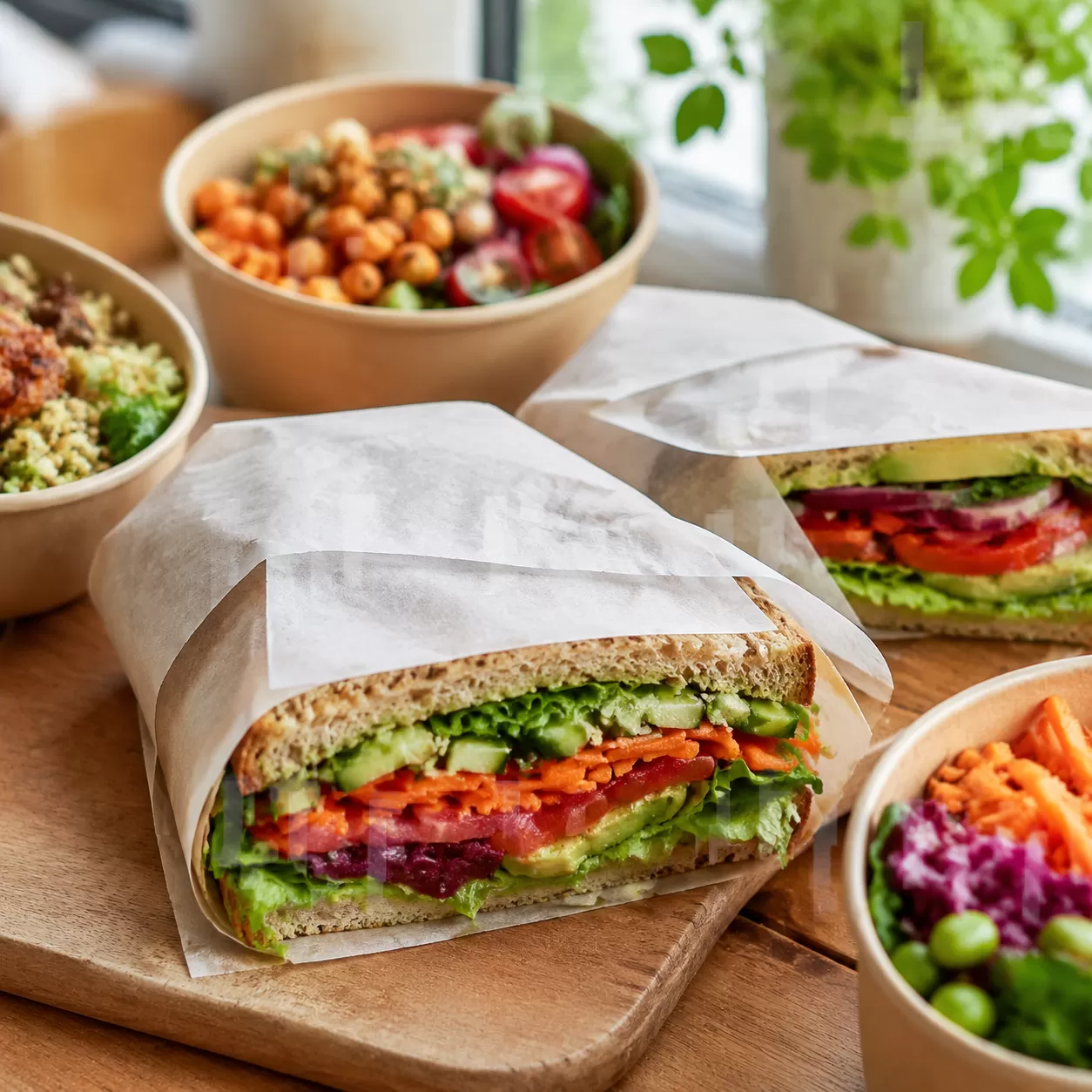
Safe, food-grade wrapping paper isn't a "nice to have" anymore-it's the baseline if you're serving food in the U.S. Whether you run a food truck, bakery, café, meal-prep brand, or restaurant chain, the right food-grade wrapping paper directly impacts food safety, brand image, and compliance.
Key Benefits for Businesses & Consumers
| Benefit | What It Means for You | Why Customers Care |
|---|---|---|
| Protects food quality | Keeps grease, moisture, and smells from leaking or transferring | Food tastes fresh and looks clean |
| Prevents contamination | Uses non-toxic, food-safe materials that don't leach chemicals | Lower health risk and safer daily use |
| Builds trust & reputation | "Food-grade," "FDA-compliant," and "BPA-free" are strong trust signals | Customers feel safer buying from you |
| Meets regulations | Supports compliance with FDA and EU food contact standards | Reduces risk of fines, recalls, or bad reviews |
| Supports sustainability | Many safe papers are also biodegradable or recyclable | Eco-conscious customers prefer brands that care |
How Safe Food Wrapping Paper Protects Food
With food-safe paper manufacturers, we focus on:
- Direct food contact safety – No harmful inks, bleaches, or coatings touching the food
- Stable at hot and cold temps – No melting wax or chemical migration when used with hot sandwiches, fried foods, or chilled items
- Barrier performance – Greaseproof and moisture-resistant options to keep food crisp, not soggy
Low-quality, non-food-grade paper can:
- Transfer ink, heavy metals, or fluorescent agents into food
- Change smell or taste
- Increase risk of allergies or long-term health issues
Compliance = Protection for Your Business
Using FDA-approved wrapping paper and materials aligned with EU food packaging compliance gives you:
- Documentation for inspections
- A stronger defense against liability
- Easier expansion into retail, wholesale, or export
If you also ship fragile food gifts or subscription boxes, pairing food-safe wraps with protective options like honeycomb packaging rolls from our honeycomb paper roll collection keeps products safe in transit while staying eco-friendly.
Safety and Sustainability Go Hand in Hand
Most modern eco-friendly food wrapping paper solutions are designed to be both:
- Food-grade (safe for direct contact)
- Recyclable, biodegradable, or compostable
That means you can serve safe food, stay compliant, and hit your sustainability goals without overcomplicating your packaging.
Key Factors to Consider When Selecting Food Wrapping Paper Manufacturers
When I evaluate food-safe paper manufacturers, I look at six core factors. These apply whether you're a small deli ordering custom food wrapping paper or a national chain buying bulk food wrapping paper every month.
1. Certifications and Compliance
For food-grade wrapping paper, certifications are non‑negotiable.
Look for:
- FDA-compliant / FDA-approved wrapping paper for direct food contact
- EU 1935/2004, BfR, or similar global food contact approvals
- ISO 9001 / ISO 22000 for quality and food safety systems
- SGS or third‑party test reports proving food contact paper safety
If a supplier can't show valid, recent certificates and test reports, I move on immediately. Third‑party tests like those used in many paper manufacturing processes give you real evidence, not just marketing claims.
2. Material Quality (Virgin vs Recycled)
Safe food packaging materials start with safe fibers.
Key checks:
- Food-grade kraft paper, parchment paper, or specialty food paper
- Virgin pulp from controlled sources for premium safety
- Recycled pulp only if it's specifically rated as food-safe
- No added heavy metals, optical brighteners, or unsafe inks
Ask for a spec sheet that clearly states the raw materials and food contact suitability.
3. Customization Options
Your packaging is part of your brand. The right food-safe paper manufacturer should offer:
- Custom sizes (wraps, sheets, rolls, basket liners, etc.)
- Custom printing with food-safe, low-migration inks
- Brand colors and logos for consistent identity
- Different grades for greasy foods, hot foods, or moist products
This is key if you're a restaurant, bakery, or food truck that wants your wrapping to do double-duty as branding.
4. Production Capacity and Reliability
In the U.S. market, consistency and on-time delivery matter as much as price.
Confirm:
- Monthly production capacity and lead times
- Ability to handle peak seasons (holidays, promotions)
- Their process for rush orders and backup capacity
- Clear logistics and tracking for domestic or import shipments
Some manufacturers share detailed technical parameters of packaging performance, like thickness and strength, to help you choose the right grade for high-volume operations.
5. Customer Reviews and Reputation
A good food-safe paper manufacturer will have a track record you can verify.
- Check Google reviews, case studies, and references
- Ask for U.S. customer testimonials, especially in your segment (QSR, bakery, butcher, etc.)
- Look for long-term clients, not just one-off projects
- Pay attention to feedback on consistency, communication, and problem-solving
If they hesitate to share references, that's a red flag.
6. Sustainability Practices
Most U.S. consumers now care about eco-friendly food wrapping paper. I always check:
- Use of biodegradable or compostable food paper options
- Water-based or soy-based inks
- Responsibly sourced or FSC-certified pulp
- Efforts to reduce waste, energy use, and plastic coatings
The best food-safe paper manufacturers offer sustainable food wrapping solutions without sacrificing grease resistance or durability.
Quick Comparison Checklist
| Factor | What You Should See |
|---|---|
| Certifications | FDA, EU 1935/2004, BfR, ISO, SGS |
| Material Type | Food-grade kraft, parchment, waxed, or coated papers |
| Food Safety | Non-toxic, low-migration inks, food contact tested |
| Custom Options | Sizes, printing, branding, packaging formats |
| Capacity & Reliability | Clear lead times, stable output, strong logistics |
| Sustainability | Biodegradable food paper, eco-friendly coatings, responsible sourcing |
Choose food wrapping paper suppliers who can prove all six. That's how you protect your food, your customers, and your brand.
Food Wrapping Paper Manufacturers: Spotlight on Dongguan Xianghe Paper Co., Ltd.
When I talk to U.S. food brands about food-grade wrapping paper, Dongguan Xianghe Paper Co., Ltd. is one of the manufacturers I'm comfortable putting my name behind. They focus on food-grade wrapping paper, not random general-use paper, and that matters when you're putting anything in direct contact with food.
Leading Food-Grade Wrapping Paper Manufacturer
Xianghe specializes in safe food packaging materials for:
- Bakeries and cafes (sandwich wraps, pastry wraps, burger wraps)
- Restaurants and food trucks (liner paper, basket liners, to-go wraps)
- E-commerce food brands (brand-printed custom food wrapping paper)
Their lines cover food-grade kraft paper, parchment-style papers, and coated food-safe paper, all produced to meet international food contact paper safety standards.
Committable, Custom Solutions
What I like is how flexible they are with custom food wrapping paper:
- Custom sizes to fit your exact menu items
- Full-color logo and pattern printing for branding
- Options for grease-resistant, moisture-resistant, or breathable paper
They also support brands that need matching void-fill and packaging accents, with products like brown paper filler and crinkle paper that stay on-brand and help protect goods in transit (for example, their brown paper filler works well for food gift boxes and mailers).
Eco-Friendly Food Wrapping Paper Focus
The company leans hard into eco-friendly food wrapping paper and sustainable food wrapping solutions:
- Biodegradable and recyclable paper options
- Water-based inks for printing
- Reduced plastic use across product lines
For U.S. businesses trying to clean up their packaging footprint, that's a practical way to align with customer expectations and retailer requirements.
Customer-First, Safety-First Approach
Xianghe treats non-toxic food packaging and consistency as a core promise, not marketing copy:
- Food-safe coatings and materials only
- Batch testing and traceability
- Stable lead times for bulk food wrapping paper orders
I've seen small regional bakeries and multi-location restaurant groups scale with them. One café chain switched from generic, unbranded wraps to Xianghe's FDA-style compliant, custom-printed food-grade kraft paper; within a few months, they reported better perceived quality from customers and smoother compliance conversations with inspectors.
If you're looking for trusted food paper manufacturers that mix safety, branding, and sustainability for the U.S. market, Dongguan Xianghe Paper Co., Ltd. is a partner I'd confidently put on your shortlist.
Understanding Food Safety Standards and Certifications
When you're buying food wrapping paper, "food-grade" can't just be a buzzword. It has to be backed by clear food safety standards and certifications.
Key food contact safety standards
For any food-grade wrapping paper that touches food directly, these are the big benchmarks we always look at:
- FDA (U.S. Food and Drug Administration) – For the U.S. market, FDA food contact regulations are the baseline. Food wrapping paper must use inks, coatings, and fibers that are approved for direct food contact, and must not migrate harmful substances into food.
- EU 1935/2004 – In Europe, this framework controls materials intended to come into contact with food. It focuses on migration limits, overall safety, and traceability throughout the supply chain.
- BfR Recommendations (Germany) – These are more detailed guidelines for paper and board in contact with food, especially around mineral oils, heavy metals, and printing inks.
If a food-safe paper manufacturer says their products are "compliant," they should be able to show documentation against at least one of these standards, depending on the markets they serve.
Why third‑party testing matters
Any safe food packaging materials claim needs proof. That's where independent labs and testing companies come in:
- Third-party labs (like SGS, Intertek, etc.) run migration tests, heavy metal checks, and overall safety assessments.
- Test reports usually confirm:
- No harmful chemical migration into food
- Compliance with FDA or EU food contact limits
- Consistency across different batches
This is especially important when you're buying bulk food wrapping paper and need reliable quality across thousands of sheets.
How Dongguan Xianghe Paper Co., Ltd. stays compliant
As a trusted food paper manufacturer, we build compliance into our process, not just our marketing:
- We select food-grade kraft paper and coatings that meet FDA and EU food contact requirements.
- We run regular third‑party testing to verify low migration and non‑toxic performance.
- We maintain traceable production records so every roll of eco-friendly food wrapping paper can be linked back to specific raw materials and test reports.
- Our food-safe cellophane wrap and other food contact papers are developed with the same regulatory mindset we use for our higher-barrier packaging solutions, similar to how we approach specialized products like food-safe cellophane wrap for direct food contact.
For U.S. buyers, this means you're not just getting nice-looking custom food wrapping paper-you're getting FDA‑aligned, tested, and documented materials that support your own food packaging compliance and brand protection.
How to Source Food Wrapping Paper from Reliable Manufacturers
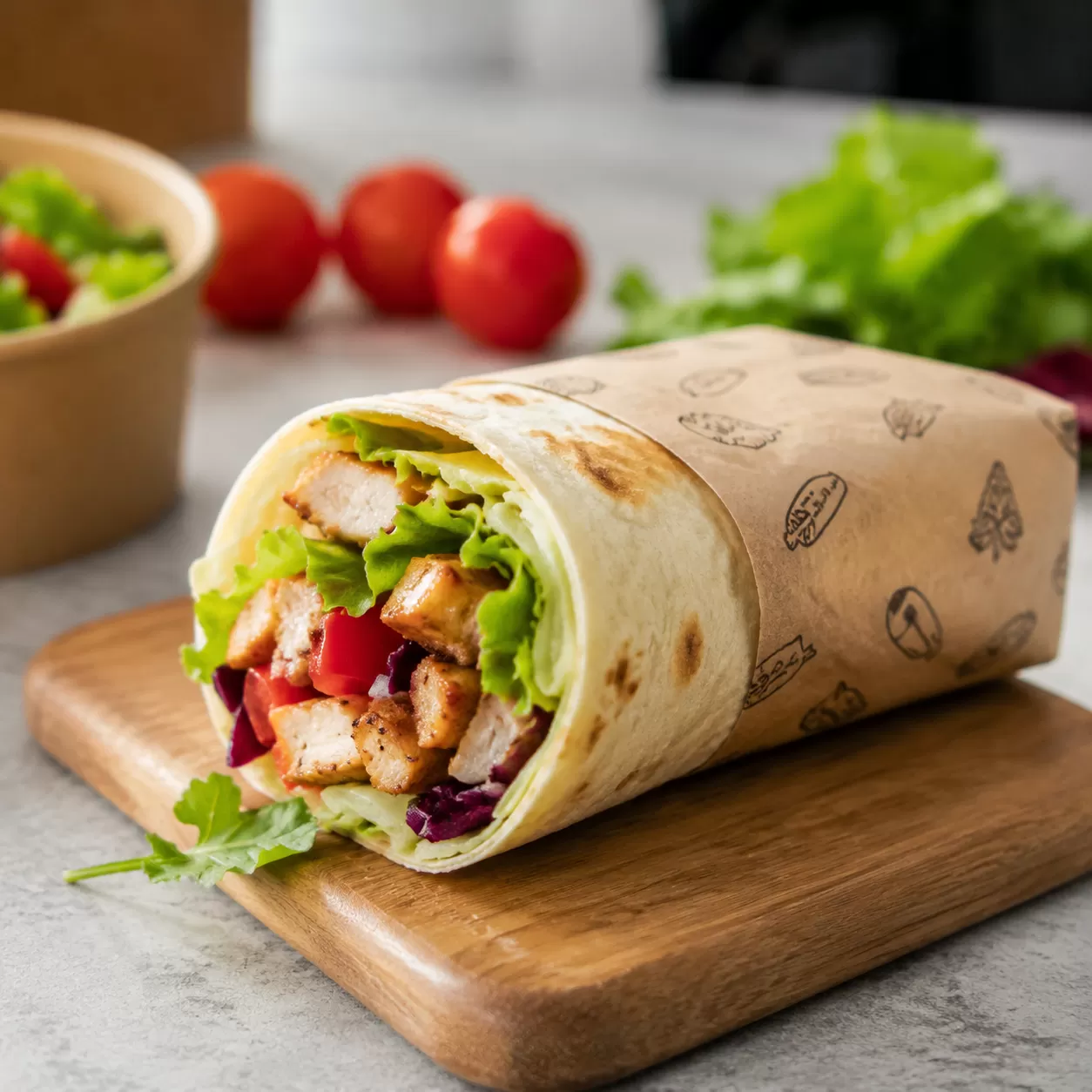
Sourcing food-grade wrapping paper in the U.S. market comes down to three things: safety, reliability, and total cost over time. Here's how I approach it step by step.
Step 1: Shortlist Food-Safe Paper Manufacturers
Start by targeting food-safe paper manufacturers that clearly focus on:
- Food-grade wrapping paper and safe food packaging materials
- FDA-compliant and EU-standard food contact paper safety
- Eco-friendly food wrapping paper options (biodegradable, recyclable, compostable)
Look for strong product pages, clear specs, and real photos-not just generic catalog images.
Step 2: Verify Certifications and Compliance
Before you talk price, confirm food packaging compliance:
- Ask for FDA, EU 1935/2004, BfR, ISO, or SGS test reports
- Confirm the paper is approved for direct food contact
- Make sure they can provide COA (Certificate of Analysis) for each batch if needed
If they can't show documents, I treat that as a red flag-no matter how cheap the quote is.
Step 3: Request Samples and Test in Real Use
Never skip samples, especially for custom food wrapping paper:
- Test with your real products: hot, greasy, moist, frozen, etc.
- Check grease resistance, print quality, smell, and color transfer
- Confirm the paper works with your current packaging line and storage conditions (for example, similar to the best-practice guidelines you see in professional resources on storage conditions for wrapping paper)
If you use specialty formats like honeycomb kraft paper for protective or secondary wrapping, make sure their honeycomb wrapping paper performance (strength, cushioning, recyclability) matches your needs.
Step 4: Compare Pricing, MOQs, and Bulk Options
When you negotiate bulk food wrapping paper:
- Ask for price breaks at different volumes (e.g., 10k / 50k / 100k sheets or rolls)
- Confirm MOQ, lead time, and payment terms
- Clarify shipping options and landed cost to your U.S. warehouse
- Lock in a sample-approved spec sheet so there's no downgrade later
Don't chase the lowest price if it risks food safety or delivery delays-those will cost you more in the long run.
Step 5: Check Reliability and Long-Term Fit
Reliable food wrapping paper suppliers should offer:
- Stable lead times and clear production schedules
- Consistent color, thickness, and print quality from batch to batch
- Responsive communication and after-sales support
I always look for partners who understand long-term supply planning, not just one-off orders.
How Dongguan Xianghe Paper Co., Ltd. Makes Sourcing Easier
With Dongguan Xianghe Paper Co., Ltd., we've built the process around transparency and support:
- We provide full documentation upfront: food-grade reports, compliance certificates, and test data for our food-grade kraft paper and eco-friendly wrapping solutions.
- We send free or low-cost samples so you can test performance with your actual food products before committing.
- Our team walks you through spec selection, branding, and custom printing, so your packaging looks sharp and stays fully food-safe.
- For U.S. buyers, we focus on stable production capacity, on-time shipments, and clear communication on every order.
If you want trusted food wrapping paper manufacturers behind your brand, build a long-term partnership with a supplier who treats your packaging as seriously as you treat your food. That's exactly how we operate at Dongguan Xianghe Paper Co., Ltd.
Trends in Food Wrapping Paper: Safety Meets Sustainability
In the U.S. market, food brands are done with "cheap but risky" packaging. The trend is clear: safe, food-grade wrapping paper that's also sustainable is becoming the default, not the upgrade.
Biodegradable & Compostable Food Wrapping Paper
More restaurants, bakeries, and food trucks are switching to:
- Biodegradable food paper made from food-grade kraft paper or FSC-certified pulp
- Compostable food-grade wrapping paper that breaks down faster than conventional plastic-lined papers
- Unbleached, chlorine-free paper to reduce chemical exposure and keep the "natural" brand image
These options still need to be food-safe, non-toxic, and compliant with FDA and EU food contact regulations, so we always balance eco claims with strict safety testing.
Smarter Food-Grade Coatings & Barriers
Oil, grease, and moisture resistance used to mean heavy plastic or fluorochemical coatings. Not anymore. Right now, the big shift is toward:
- Water-based barrier coatings instead of PFAS-type chemicals
- Plant-based or bio-based coatings that still meet food contact paper safety standards
- Optimized greaseproof and moisture barrier performance without compromising recyclability or compostability
The goal is simple: keep fries crispy, sandwiches fresh, and pastries clean-without loading the paper with questionable chemicals.
How Manufacturers Are Adapting
As a food-safe paper manufacturer, I see U.S. buyers asking the same things on almost every order: "Is it food-grade? Is it eco-friendly? Can you prove it?" Manufacturers that win business now are the ones who:
- Invest in non-toxic food packaging formulas and third-party testing
- Offer custom food wrapping paper with water-based inks and brand printing
- Develop sustainable food wrapping solutions that still run smoothly on high-speed packing lines
- Provide documentation on food packaging compliance, recyclability, and end-of-life options
You also see more brands pairing wrapping paper with paper-based systems like recyclable paper bags and protective honeycomb-style options as they move away from plastic (for example, many U.S. shippers now rely on paper-based protective packaging instead of plastic sleeves).
Bottom line: food-grade wrapping paper today has to tick three boxes at once-safe, good-looking, and sustainable. If a manufacturer can't deliver all three, they're going to lose ground in the U.S. market.
Common Questions About Food Wrapping Paper and Safety (FAQ)
What makes food wrapping paper safe for direct food contact?
Safe, food-grade wrapping paper is made with:
- Food-contact–approved fibers (like food-grade kraft or glassine)
- Non-toxic inks and adhesives (low-migration, often water-based)
- Clean, controlled production to avoid contamination
- Compliance with FDA, EU 1935/2004, BfR, etc.
If the paper is labeled as food-grade wrapping paper or FDA-approved wrapping paper, and the supplier provides test reports, it's designed for direct food contact.
Are all food wrapping papers eco-friendly?
No. Safe food packaging materials are not automatically sustainable.
- Some food-safe papers use plastic or PE coatings that are harder to recycle.
- Eco-friendly food wrapping paper is usually:
- Uncoated or coated with water-based or plant-based barriers
- Recyclable, biodegradable, or compostable
If you're aiming for sustainable food wrapping solutions, ask specifically for biodegradable food paper or certified compostable grades.
How can I verify if a manufacturer uses food-grade materials?
Ask the manufacturer for:
- Food-contact test reports (FDA, EU 1935/2004, BfR, SGS, etc.)
- Certificates for inks, coatings, and base paper
- Written confirmation that products are suitable for direct food contact
Reputable food-safe paper manufacturers will share documentation quickly and can explain their compliance in plain language. You can also request samples and compare them to known food-safe products like certified patterned glassine bags from trusted lines.
What are the differences between waxed paper, parchment paper, and kraft paper for food use?
All three can be food-grade wrapping paper, but they perform differently:
-
Waxed paper
- Coated with wax (often paraffin or vegetable)
- Grease- and moisture-resistant
- Good for sandwiches, bakery items, deli use
-
Parchment paper
- Treated for non-stick and high-heat resistance
- Ideal for baking, oven use, and greasy foods
-
Food-grade kraft paper
- Strong, simple, "natural" look
- Can be plain or treated for grease resistance
- Great for wraps, burgers, liners, and bulk food wrapping paper
The right choice depends on food type, heat, grease level, and brand look.
How does Dongguan Xianghe Paper Co., Ltd. ensure product safety?
At Dongguan Xianghe Paper Co., Ltd., we treat food contact paper safety as non-negotiable:
- We use verified food-grade materials only (base paper, coatings, inks)
- Every batch is tested by third parties against FDA and EU food-contact standards
- Our production is clean, traceable, and tightly controlled
- We provide full documentation (test reports, specs, COAs) for our custom food wrapping paper and bulk orders
If you're sourcing trusted food paper manufacturers for the U.S. market, we keep the process transparent and straightforward-so you know exactly what's touching your food.