


The Safety Pillar: Food Packaging Applications of Wrapping Paper
As a food brand or packaging buyer, your first concern is simple: is this wrapping paper truly safe for direct food contact? I treat food packaging safety as non‑negotiable, especially when we talk about food packaging applications of wrapping paper.
Understanding Chemical Migration in Food-Grade Wrapping Paper
Chemical migration is the movement of substances from packaging into food. In paper substrates, the key risks are:
-
- Printing inks and additives
- Mineral oils (MOSH/MOAH)
- Heavy metals and processing residues
For food-grade packaging paper, we focus on:
-
- Low migration formulations
- Controlled raw materials
- Verified compliance through testing
Virgin Pulp vs. Recycled Fibers for Food Contact
For FDA-compliant wrapping paper and direct food contact, virgin fibers are typically preferred.
| Fiber Type | Typical Use in Food Wrap | Key Safety Note |
|---|---|---|
| Virgin kraft pulp | Direct food contact, inner wraps | Lower risk of unknown contaminants |
| Recycled fibers | Outer wraps, box liners, shippers | Requires strict screening and testing |
I use virgin food-contact paper for primary wraps and carefully manage recycled content in secondary packaging only.
Global Food Packaging Safety Certifications and Standards
To reassure international buyers, we operate under globally recognized standards:
-
- FDA – food-contact safety for the US market
- ISO 22000 – food safety management in the production process
- QS – quality and safety for food-related materials
- SGS – third-party testing and verification
- FSC – responsible, traceable paper sourcing
These frameworks keep food packaging applications of wrapping paper aligned with regulatory and brand requirements.
FDA-Compliant Wrapping Paper Requirements
For FDA-compliant wrapping paper, I focus on:
-
- Approved food-contact raw materials
- Controlled additives and coatings
- Verified migration limits under intended use (temperature, time, food type)
This is critical for products like freeze meat butcher paper, greaseproof paper rolls, and eco-friendly food wrap entering the US market.
ISO 22000 and QS: Safety Management in Paper Packaging
Certifications such as ISO 22000 and QS ensure we treat packaging production like a food process:
-
- Hazard analysis for each substrate and coating
- Documented control points for contamination risk
- Traceability from pulp to finished food-grade packaging paper
This system reduces variability and protects your supply chain.
Role of SGS and FSC in Verifying Safe Food-Grade Paper
-
- SGS testing confirms:
- Overall migration
- Specific heavy metals
-
MOSH/MOAH levels where relevant
-
FSC certification confirms:
- Responsible forestry
- Clean, traceable fiber streams
- Alignment with sustainability programs
Together, these give buyers confidence in both safety and sustainability.
Managing MOSH/MOAH and Heavy Metals in Wrapping Paper
For food packaging applications of wrapping paper, mineral oils (MOSH/MOAH) and heavy metals are key watchpoints.
We manage them by:
-
- Selecting controlled inks and lubricants
- Using virgin kraft pulp for direct contact
- Performing targeted lab tests (via SGS and other accredited labs)
Table – Key Contaminant Controls
| Risk | Control Approach |
|---|---|
| MOSH/MOAH | Low-migration inks, clean raw materials |
| Heavy metals | Certified inputs, periodic batch testing |
Cleanroom Manufacturing and Contamination Control
Production hygiene directly affects food-grade wrapping paper safety. We minimize contamination through:
-
- Segregated production zones for food-contact substrates
- Strict dust, particle, and pest control
- Controlled handling of rolls and sheets
Clean processes support stable organoleptic properties-no off-odors, no strange tastes.
How Xianghe Paper Guarantees Safe Food-Grade Wrapping Paper
As the manufacturer, I position Xianghe Paper as a certified, food-safe, eco-friendly substrate supplier:
-
- 16+ years focused on food-grade packaging paper
- Compliance with FDA, ISO9001, ISO22000, QS, SGS, FSC
- Use of food-safe, greaseproof, biodegradable materials
- Documented batch control for freeze meat butcher paper, chocolate gift wrapping paper, glassine paper for food, and honeycomb packaging paper
The result is plastic-free food wrap and wrapping paper solutions that protect your products, your consumers, and your brand reputation in global markets.
The Materials Pillar: Paper Types, Formats, and Barrier Technologies
When we talk about food packaging applications of wrapping paper, the substrate and barrier technology matter as much as the design. I focus on paper structures that deliver food safety, mechanical strength, and clean organoleptic performance while staying fully recyclable and plastic-free.
Food-grade kraft paper rolls for packaging
For many US food brands, food-grade kraft paper rolls are the workhorse of everyday packaging. At Xianghe, we supply kraft made specifically for food contact, with:
-
- Virgin or recycled fibers selected for food-safe use
- Good stiffness for wrapping, interleaving, and tray lining
- Options suitable for both fresh and packaged foods
These food-grade packaging paper rolls work well in bakeries, delis, supermarkets, and fulfillment centers that need simple, robust, and sustainable wrapping solutions.
Tensile strength and burst resistance of kraft wrapping paper
In food logistics, paper must hold up under tension, stacking, and movement. That's why I pay close attention to:
-
- Tensile strength – how much pull the paper can take before tearing
- Burst resistance – how well the sheet withstands pressure and impact
Right-sized tensile and burst values help prevent tears during wrapping, palletizing, and shipping, especially when you're dealing with heavier items like frozen meat, multi-pack baked goods, or multipiece gift assortments.
Best kraft paper applications for food packaging
Food-grade kraft wrapping paper is a solid fit for:
-
- Bakery wrapping paper for bread, rolls, and pastries
- Butcher paper roll formats for deli and meat counters
- Outer wraps for food gift boxes and subscription kits
- Tray liners and interleaving sheets for bulk products
I treat kraft as the go-to substrate when you need a balance of strength, cost-effectiveness, and recyclability in everyday food packaging.
Glassine paper for food packaging
When you need a smoother, more refined look and better resistance to grease, glassine paper for food is a strong choice. It's:
-
- Naturally greaseproof, helping manage oil and fat migration
- Smooth and dense, ideal for direct food contact
- Compostable and fully paper-based, supporting plastic-free goals
Our glassine structures are used widely in confectionery, bakery, and premium food gifts where the appearance and feel of the wrap are part of the brand experience. You can see typical performance and formats in our glassine food wrapping paper solutions here: glassine food wrapping paper.
Small glassine envelopes for food products
For smaller items, we supply small glassine envelopes that are:
-
- Sized for candy pieces, cookies, samples, or small bakery items
- Available with peel-and-seal or open-flap constructions
- Designed as bulk glassine envelopes for high-volume packing lines
These are popular for US confectioners, chocolate artisans, and bakeries that want a neat, grease-resistant, and branded way to pack single units or small assortments.
How calendering creates translucent glassine wrapping paper
Glassine's signature translucency comes from calendering-passing the paper through high-pressure rollers to:
-
- Compress and smooth the fibers
- Reduce porosity
- Create a dense, almost see-through finish
This process helps achieve better oil holdout and a clean surface that's ideal for food-grade packaging paper where you want both function and a premium look.
Custom glassine envelope formats for food brands
For food brands that care about presentation and line efficiency, I often recommend custom glassine envelope formats, including:
-
- Tailored dimensions for specific products
- Different closure styles for manual or automated packing
- Branding options with food-safe printing
This OEM/ODM flexibility helps US clients align packaging exactly with product size, shelf strategy, and brand image.
Advanced barrier coatings for food wrapping paper
In some applications, base paper alone isn't enough. That's where food-safe barrier coatings come in. We use paper structures that can be engineered with:
-
- Greaseproof coatings to control oil penetration
- Moisture-resistant layers to support cold-chain performance
- Food-contact-approved finishes that keep the substrate recyclable where possible
The goal is to dial in barrier performance without compromising safety or the ability to move toward more sustainable, paper-centric packaging.
Greaseproof paper and oil resistance technologies
For oily or high-fat foods, greaseproof paper roll solutions are essential. The technologies we work with focus on:
-
- High oil resistance, so fats don't bleed through
- Controlled MOSH/MOAH risk by using food-grade chemistries
- Consistent performance across real-world use-bakery, deli, and confectionery
Our wrap paper for food range includes greaseproof formats that are commonly used by US bakeries and snack brands: wrap paper for food.
Moisture-resistant food packaging paper solutions
For chilled or frozen foods, moisture-resistant food packaging is critical. We use paper substrates and finishes that help:
-
- Resist condensation and surface moisture
- Keep wraps intact in refrigerated and cold-chain conditions
- Protect labels and printing from smudging or delamination
This is especially important for items like freeze meat butcher paper, fresh seafood, and prepared meals moving through long distribution chains.
Natural wax coatings vs plastic linings in food wrap
When brands look for extra barrier performance, they often compare natural wax coatings with plastic linings:
-
- Natural wax coatings provide grease and moisture resistance while keeping the feel of paper and supporting compostable or recyclable strategies in some systems.
- Plastic linings offer higher barrier performance but introduce disposal challenges and can conflict with plastic reduction goals.
Our wax sheets for food are a good example of how waxed paper can deliver strong barrier performance without moving to full plastic films: wax sheets for food.
Maintaining organoleptic properties in paper food packaging
Whatever material or barrier we use, I always prioritize organoleptic properties-how the food tastes and smells after contact with the packaging. That means:
-
- Using food-grade chemistries that don't transfer off-flavors
- Designing substrates that are neutral in odor
- Testing to ensure no impact on texture, aroma, or flavor profile
With the right food-grade wrapping paper-whether kraft, glassine, or waxed formats-brands can protect their products and maintain the sensory quality consumers expect, while moving decisively toward eco-friendly food wrap and plastic-free food wrap strategies.
Key Industry Applications and Commercial Uses
When I look at food packaging applications of wrapping paper, I'm always thinking in three dimensions: food safety, barrier performance, and how the packaging actually works on your line and in transit. Here's how different food segments in the U.S. are using food‑grade packaging paper today.
Confectionery and bakery food wrapping paper
For confectionery and bakery, wrapping paper can work as:
-
- Direct wraps for cookies, brownies, and bars
- Tray liners and interleaves to separate layers and keep products from sticking
- Outer wraps that add branding and grease masking around primary food-contact films
I focus on food-grade packaging paper that's greaseproof, odor-neutral, and printable, so the pack looks clean on shelf and survives last-mile delivery.
Artisanal chocolate gift wrapping paper applications
For artisanal chocolate, the packaging is part of the product. Our chocolate gift wrapping paper is designed for:
-
- Individual bar wraps as a decorative secondary layer
- Box wraps and belly bands for premium assortments
- Seasonal and limited-edition runs with custom printing
If you're building a premium chocolate program, we align the substrate, print, and texture with your brand while keeping everything food-safe. For more technical detail, you can review our specialized chocolate gift wrapping paper for confectionery packaging.
Primary wraps vs box linings for chocolate packaging
I separate chocolate packaging into:
-
- Primary wraps (direct contact): need strict food-contact safety, neutral odor, and controlled migration.
- Box linings and inserts (indirect contact): can prioritize print quality, stiffness, and the unboxing experience, while still using compliant, low-odor paper.
Choosing the right structure keeps costs down and puts performance where it matters most.
Food gift wrap for gourmet and luxury brands
Gourmet and luxury brands use premium food gift wrap to:
-
- Upgrade perceived value in DTC and gifting programs
- Create a consistent unboxing experience across channels
- Protect boxes from scuffing and minor moisture during handling
I typically recommend high-opacity, smooth papers that print well, resist smudging, and maintain a crisp fold.
Grease-resistant premium food gift wrapping paper
Where oils and fats are an issue-cookies, pastries, chocolate with inclusions-we move to grease-resistant premium wrapping paper. Key benefits:
-
- Grease masking to keep packs looking clean
- Oil-resistant wrapping paper that doesn't break down during transit
- Maintains a "dry-touch" feel even with high-fat products nearby
This lets you keep luxury-level aesthetics without surprise staining on arrival.
Wrapping paper for fresh food and cold-chain logistics
For fresh and refrigerated foods, I look for moisture-resistant food packaging paper and robust mechanical strength. Applications include:
-
- Outer wraps for deli items and chilled bakery
- Overwraps around trays or vacuum packs
- Inner wraps to prevent condensation from marking retail boxes
Paper must handle temperature swings, condensation, and stacking pressure in cold-chain distribution.
Freeze meat butcher paper in supermarkets and butcher shops
In U.S. supermarkets and butcher shops, freeze meat butcher paper is the workhorse for:
-
- Wrapping fresh cuts at the counter
- Short- to medium-term freezer storage
- Label-ready surfaces for pricing and traceability
We supply food-grade butcher paper rolls engineered to perform in cold-chain environments, with good printability for branding and SKU data. You can see how this translates into practice in our dedicated freeze meat butcher paper solutions for supermarkets and butcher shops.
Moisture barrier performance in butcher wrapping paper
For butcher applications, moisture management is critical. I focus on:
-
- Controlled moisture barrier to limit drip and purge
- Surfaces that remain strong when slightly damp
- Adequate opacity so packs look clean in the case
The right balance keeps meat looking fresh while protecting other items in shared totes and trays.
Food-grade paper cushion pads for transit protection
Beyond direct wraps, food-grade paper cushion pads protect:
-
- Glass jars, bottles, and tins in mixed-food shipments
- Delicate bakery and confectionery in e-commerce boxes
- Gift assortments with multiple fragile SKUs
These paper pads are designed to be clean, non-abrasive, and compatible with food-contact packaging in the same carton.
Honeycomb packaging paper for fragile food shipments
For heavier or more fragile items-wine, sauces, glass dessert cups-I use honeycomb packaging paper as a plastic-free alternative. Benefits:
-
- 3D honeycomb structure that absorbs shock and vibration
- No need for plastic tape; the cells lock on themselves
- Lightweight, yet high protection for fragile food SKUs
It works especially well for multi-bottle wine packs, gourmet hampers, and subscription boxes.
Paper-based void fill solutions vs EPS foam
Paper-based void fill is replacing EPS foam and air pillows in many food shipments because it is:
-
- Easier to recycle in existing curbside systems
- Simpler to store and dispense in the warehouse
- Better aligned with "plastic-free food wrap" messaging
Honeycomb paper, crumpled kraft, and shredded paper all provide cushioning without the disposal issues associated with EPS foam.
Reducing carbon emissions with paper transit packaging
By shifting from plastic fillers and EPS to recyclable, paper-based transit packaging, brands can:
-
- Lower packaging-related carbon emissions-our honeycomb paper solutions are designed to have significantly lower impact than EPS foam
- Simplify material streams and improve recycling rates
- Strengthen sustainability claims without compromising protection
In many projects, we've seen clients cut damage rates by over 40% while reducing packaging costs by around 15%, proving that sustainable food packaging can deliver both environmental and economic ROI.
The Economic and Environmental ROI of Paper Packaging
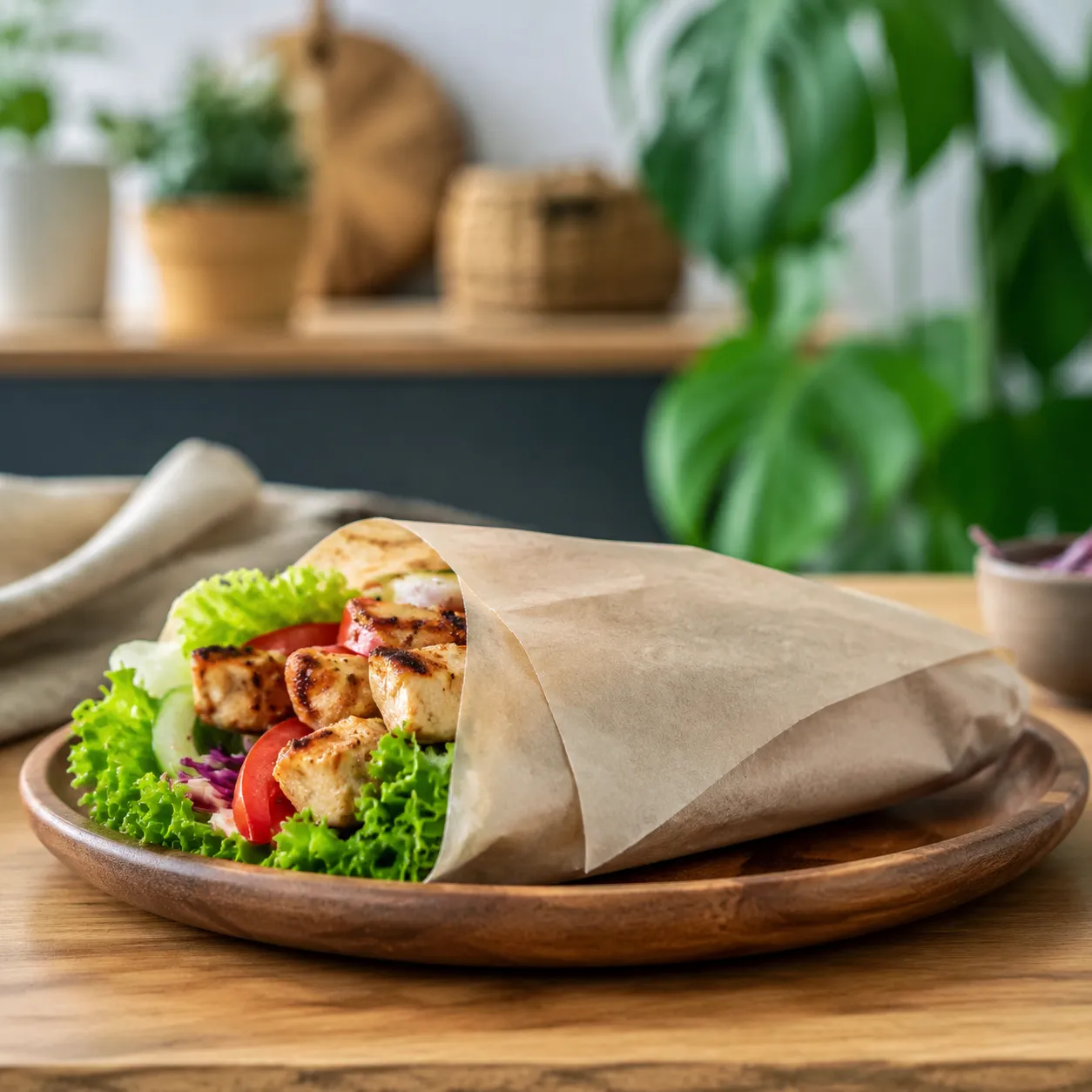
When I talk with US food brands and retailers, the question is always the same: "Can paper really beat plastic on cost and compliance?" In most cases, the answer is yes-if you choose the right food-grade wrapping paper and run it correctly on your lines.
Cost optimization with food-grade wrapping paper
Food-grade packaging paper helps control total packaging spend, not just unit price. Key levers:
-
- Right-basis weight: enough strength without over-spec.
- Standardized roll widths: less trimming, less waste.
- Fast, clean runnability: fewer line stops and rejects.
A well-optimized food-grade wrapping paper program often supports double-digit cost efficiencies at scale, especially when combined with simpler pack formats and reduced plastic components.
Reducing plastic tax liabilities with paper packaging
Many US and international markets are rolling out taxes and fees on plastic packaging. Shifting to eco-friendly food wrap and plastic-free food wrap reduces:
-
- Plastics-related compliance fees
- EPR (extended producer responsibility) costs
- Risk exposure from future regulations
Because our food-grade papers are 100% recyclable and degradable, they fit naturally into low-risk, low-tax packaging portfolios.
Material yield and 15% packaging cost reduction strategies
Clients commonly look for better material yield. Practical strategies include:
-
- Tighter dimensional control on rolls and sheets
- Consistent tensile strength so you can step down basis weight
- Optimized pack formats to reduce over-wrapping
By combining yield improvements with better damage prevention, some partners have reported around 15% packaging cost reductions across their programs when switching to our paper-based solutions.
Lifecycle cost: paper vs plastic food wrap
A fair comparison goes beyond price per pound. I look at:
| Factor | Paper Food Wrap | Plastic Food Wrap |
|---|---|---|
| Upfront material cost | Competitive for many SKUs | Sometimes lower per unit |
| End-of-life handling | Recyclable / degradable | Often landfill or incineration |
| Regulatory & tax exposure | Lower for paper substrates | Increasing for plastics |
| Brand & consumer perception | Strongly positive | Often negative |
When you factor in damage rates, compliance, and brand impact, paper packaging often delivers a better long-term ROI than plastic food wrap.
Recyclable and compostable food packaging paper
Our recyclable food wrapping paper and eco-friendly substrates are designed to:
-
- Enter existing paper recycling streams
- Support brands' "recycle-ready" claims
- Reduce landfill-bound packaging
Because we focus on plastic-free substrates, you avoid mixed-material laminates that are hard to recycle.
Biodegradable packaging solutions for food brands
For brands targeting biodegradable or compostable claims, our:
-
- Kraft paper rolls (including recycled options)
- Honeycomb packaging paper
- Paper cushion pads
provide biodegradable packaging solutions that align with circular-economy goals. Honeycomb paper, for example, can cut carbon emissions to a fraction of EPS foam while still protecting goods in transit.
Brand equity and eco-friendly packaging
Packaging is a touchpoint, not just a cost. Using eco-friendly food wrap and premium paper substrates supports:
-
- A clear sustainability story on pack
- Stronger shelf differentiation for gourmet and premium SKUs
- Alignment with retailer and marketplace "green" requirements
Customers report that switching to luxury food packaging paper and premium food gift wrap has reinforced their brand positioning without sacrificing protective performance.
Consumer trust in plastic-free food wrapping paper
US consumers are paying close attention to what touches their food. Plastic-free and paper-based solutions signal:
-
- Lower perceived risk of harmful chemicals
- Cleaner, simpler materials they can understand
- Responsible brand behavior
Using greaseproof paper roll, food-grade wax coating, and other non-toxic barrier choices helps maintain organoleptic properties-so food tastes and smells as it should, with no paper taint.
Meeting 2026 sustainability mandates with paper substrates
Many retailers and regulators are targeting 2026–2026 as decision points for:
-
- Plastic reduction targets
- Recyclability thresholds
- CO₂ and packaging footprint reporting
By moving now to sustainable food packaging based on paper substrates, you get ahead of those mandates instead of reacting to them. Our honeycomb wrapping paper and honeycomb kraft paper rolls are a practical way to replace EPS and plastic void fill in transit while supporting both cost and carbon goals, as outlined in our guidance on packaging paper testing standards for performance and compliance.
With the right food-grade wrapping paper system, you're not just checking a sustainability box-you're building a packaging platform that is safer, more compliant, and cost-effective for the long term.
Sourcing Premium Food-Grade Wrapping Paper: The Xianghe Advantage
When you're responsible for food packaging in the U.S. market, you can't afford supply risk, safety gaps, or inconsistent quality. I run Xianghe Paper with that in mind: food-grade wrapping paper must be safe, consistent, and scalable, with clear data behind every roll.
Evaluating Suppliers for Food-Grade Wrapping Paper
For food-contact substrates, I always recommend judging suppliers on three hard criteria:
-
- Food safety certifications (FDA-related compliance, ISO9001, ISO22000, QS, SGS, FSC).
- Proven export experience to North America and other strict-regulation markets.
- Transparent quality data on greaseproof, moisture resistance, and mechanical strength.
At Xianghe Paper, we've been focused on food-grade packaging paper since 2008, supplying retailers, chocolatiers, and supermarkets across 30+ countries.
OEM/ODM Capabilities for Custom Food Packaging Paper
Every food brand has different processes and equipment, so OEM/ODM flexibility matters. I support:
-
- OEM: you specify performance and artwork; we manufacture under your brand.
- ODM: we help design the right paper structure and format, then produce at scale.
This works well for private-label food gift wrap, specialty butcher paper, and chocolate gift wrapping paper where brand differentiation is key.
Custom Dimensions and Formats for Wrapping Paper Rolls
To keep line efficiency high, paper must fit your machinery and pack formats. We customize:
-
- Roll width & diameter for automated wrapping lines.
- Sheet sizes for hand-wrapping in bakeries, delis, or chocolate shops.
- Core size to match existing dispensers and converting equipment.
I treat dimensions as part of process optimization, not an afterthought, especially for high-volume food-grade kraft paper rolls.
Custom Printed Food Wrap and Branding Options
Food packaging is a brand touchpoint. I support:
-
- Custom logos, patterns, and seasonal designs on food gift wrap and chocolate paper.
- Color management aligned with your brand guidelines.
- Print layouts optimized to reduce waste on your cutting pattern.
For teams exploring design ideas, our guidance on choosing wrapping paper for different occasions is a useful starting point before locking in artwork.
Selecting Barrier Coatings for Different Food Types
Barrier choice depends on your food category and process. Typical directions I use:
-
- Dry foods / confectionery: standard glassine or lightly greaseproof paper.
- Oily foods / bakery: stronger greaseproof coatings to control oil migration.
- Fresh meat / cold-chain: moisture-resistant butcher paper with robust wet strength.
We work case-by-case, keeping coatings non-plastic and aligned with recyclability goals wherever possible.
Quality Control Metrics for Food Packaging Paper
For food-grade packaging paper, I focus on quantifiable metrics, not vague claims:
-
- Tensile strength and burst resistance for mechanical robustness.
- Greaseproof performance measured via grease kit values.
- Moisture barrier behavior tracked with MVTR-related testing data.
These metrics feed directly into our QA system so every batch of eco-friendly food wrap is traceable and consistent.
Testing Tensile Strength and Burst Resistance
Mechanical performance matters for shipping and handling. In our factory, we routinely test:
-
- Machine-direction and cross-direction tensile strength to avoid tearing on packing lines.
- Burst resistance to ensure wraps and bags hold up under load and pressure.
This is especially important for kraft food-grade packaging paper used as primary wraps and for paper cushion pads in transit.
Grease Kit Values and MVTR Testing in Paper Packaging
For food-contact wrapping paper, barrier behavior needs measured proof:
-
- Grease kit values: indicate how well the greaseproof paper roll resists oil penetration.
- MVTR testing: shows how much moisture vapor passes through the paper over time.
We use these results to fine-tune coatings for specific food types and storage times, balancing protection with recyclability and compostability.
Batch Testing Protocols for Food-Grade Wrapping Paper
To protect your brand, I insist on batch-level controls:
-
- Routine lab checks on basis weight, strength, and barrier performance.
- Visual and surface inspections for defects that could impact food safety.
- Retention samples for traceability in case of any customer claim.
This gives procurement teams confidence that every shipment of food-grade packaging paper aligns with agreed specs.
End-to-End Enterprise Packaging Services
Beyond individual SKUs, we support enterprise packaging programs:
-
- Portfolio planning across kraft, glassine, honeycomb packaging paper, and cushion pads.
- Application consulting to match substrates to each food category and channel.
- Sample runs so your operations and QA teams can validate performance before scale-up.
Our goal is to act as a packaging partner, not just a roll supplier.
Logistics and Real-Time Tracking for Bulk Paper Orders
For U.S. and global buyers, logistics reliability is critical. We offer:
-
- Bulk order handling for long-term programs and seasonal peaks.
- Real-time order tracking so you always know where your shipment is.
- Coordinated shipping plans aligned with your warehouse intake schedules.
That combination reduces stockout risks and keeps large food operations running smoothly.
Working with Xianghe Paper as a Long-Term Partner
When teams choose Xianghe Paper, they typically look for:
-
- Food-safe, certified substrates backed by SGS, FSC, ISO9001, ISO22000, QS, and FDA-related compliance.
- Proven cost reductions and damage reduction supported by honeycomb packaging paper and other eco-friendly solutions.
- Stable OEM/ODM collaboration over many years, with continuous improvement on barrier performance and sustainability.
If you're building a long-term strategy around recyclable, food-grade wrapping paper, I treat your business as a partnership, not a one-off order.
FAQs on Food Packaging Applications of Wrapping Paper
Is wrapping paper safe for direct food contact?
Food-grade wrapping paper is safe for direct food contact when it's made from certified, food-safe substrates and produced under strict hygiene controls. At Xianghe Paper, our food-contact papers are designed to be:
-
- Non-toxic and odor-free
- Compliant with FDA and ISO22000 food safety systems
- Greaseproof, moisture-resistant, and suitable for contact with dry, greasy, and cold foods (depending on the specific grade)
For direct contact, I always recommend using paper that's clearly specified as food-grade packaging paper, not general gift wrap.
What certifications should food-grade wrapping paper have?
For B2B food applications, I look for at least:
-
- FDA: Confirms suitability for food-contact materials in the U.S.
- ISO9001: Quality management consistency.
- ISO22000: Food safety management across the production chain.
- QS: Production license compliance for food packaging.
- SGS test reports: Independent verification of key safety parameters.
- FSC: Responsible, traceable forestry for the paper substrate.
Xianghe's food-grade papers are produced under these systems to help protect your brand and supply chain.
Can greaseproof paper fully replace plastic food wrap?
Greaseproof paper can replace plastic in many short- and medium-shelf-life applications, especially for:
-
- Bakery items
- Fast-food wraps
- Chocolate and confectionery packaging
But performance depends on:
-
- Oil resistance level
- Moisture barrier
- Required shelf life and storage conditions
If you need higher barrier performance, pairing greaseproof paper with food-safe cellophane wrap or coated grades (for example, our range of food wrapping paper solutions) often delivers a practical plastic-free alternative.
What is the difference between kraft and glassine for food packaging?
Here's how I compare them for food applications:
| Property | Kraft Paper Rolls | Glassine Paper |
|---|---|---|
| Fiber type | Virgin or recycled kraft | Highly refined, dense pulp |
| Look & feel | Brown/white, natural, opaque | Smooth, translucent, premium |
| Strength | High tensile & burst resistance | Good strength, thinner profile |
| Grease resistance | Needs greaseproof grade or coating | Naturally good, can be enhanced |
| Typical uses | Butcher paper, trays, outer wraps | Small glassine envelopes, inner wraps |
Kraft is my go-to for mechanical strength and heavy-duty wraps. Glassine is ideal where grease resistance and presentation matter, like confectionery and bulk glassine envelopes for small food items.
How does butcher paper keep meat fresh in cold storage?
Freeze meat butcher paper works because the substrate is engineered for:
-
- Good moisture barrier to slow purge and dehydration
- Grease and blood resistance so the wrap doesn't break down
- Mechanical strength in cold-chain handling
Food-grade butcher paper helps maintain appearance and reduces freezer burn when combined with proper wrapping technique and storage conditions. Xianghe's eco-friendly butcher paper and butcher paper rolls are designed with these needs in mind.
Are recycled fibers safe for food contact wrapping paper?
Recycled fibers can be safe when:
-
- They're used in indirect-contact layers (outer wraps, box liners)
- The mill follows strict decontamination and testing protocols
- The paper meets relevant food packaging safety standards
For direct-contact food packaging, I prefer virgin food-contact paper and virgin kraft pulp grades, especially in sensitive applications like chocolate, bakery, and fresh meat.
How do barrier coatings affect recyclability and compostability?
Barrier coatings are a trade-off between performance and end-of-life:
-
- Natural wax and water-based coatings: Better for recyclability and compostability, commonly used in food-grade wax coating papers.
- Plastic-like or heavy barrier layers: Improve MVTR and oil resistance but can reduce recyclability and require specialized waste streams.
At Xianghe, we focus on non-toxic barrier coatings and plastic-free structures to keep our food-grade packaging paper recyclable and, where possible, compostable.
What thickness of wrapping paper is best for different food types?
Thickness depends on weight, grease, and handling:
| Food Type | Recommended Approach |
|---|---|
| Light bakery (cookies, pastries) | Thin greaseproof or glassine wraps |
| Sandwiches & burgers | Medium-weight greaseproof kraft |
| Fresh meat & poultry | Heavier butcher paper rolls |
| Box liners for chocolate | Lightweight glassine or specialty wrap |
We adjust basis weight and structure according to your product and packing line requirements, balancing tensile strength, burst resistance, and barrier needs.
Can I get custom printed food wrapping paper in small MOQ?
Yes, custom printed food-grade wrapping paper is available with flexible MOQs, especially for:
-
- Premium food gift wrap
- Artisanal chocolate gift wrapping paper
- Confectionery and bakery wrapping paper
Our printed food wrap solutions are designed to be food-safe, brand-aligned, and compatible with high-speed packing lines. You can explore options via our printed food wrapping paper solutions at Xianghe's showroom.
How does wrapping paper impact food flavor and odor?
Poor-quality paper can:
-
- Transfer off-odors
- Affect taste and texture
- Compromise organoleptic properties
That's why we use:
-
- Food-grade, low-odor pulps and dyes
- Strict manufacturing hygiene and ISO22000 systems
- Testing for odor and migration
Properly specified food-grade wrapping paper will protect, not alter, your product's flavor and aroma.
What are the key costs to consider when switching from plastic to paper?
When customers in the U.S. move to plastic-free food wrap, I ask them to look at:
-
- Material cost per unit (paper vs plastic)
- Material yield and cut-size optimization
- Packaging damage rates and returns
- Plastic taxes and regulatory risk
- Recycling and waste management savings
- Brand equity and consumer trust gains
With well-designed food-grade packaging paper, many of our clients report around 15% packaging cost reductions and significant improvements in sustainability metrics over time.