


The Hidden Environmental Cost of Conventional Wrapping Paper
Conventional wrapping paper can look recyclable while creating significant environmental, financial, and compliance risks. A paper-based appearance does not guarantee responsible end-of-life performance. Polyethylene laminations, metallic foil stamping, plastic coatings, synthetic dyes, and heavy metal pigments can prevent recycling or contaminate recovered fibre streams.
Why Traditional Gift Wrap Fails ESG Audits
Many ESG audits evaluate the complete packaging lifecycle, not just the visible paper surface. Traditional gift wrap may fail because it contains:
-
- Polyethylene laminations that bond plastic to paper and make fibre separation difficult or impossible.
- Metallic foil stamping that adds non-paper materials and can reduce recyclability.
- Petroleum-based synthetic dyes that increase dependence on fossil resources.
- Heavy metal pigments and chemical additives that may contaminate recycling processes.
- Excessive paper weight or oversized formats that increase material consumption and transport emissions.
These features can undermine corporate claims relating to recyclable packaging, plastic-free packaging alternatives, circular economy packaging, and Scope 3 emissions reduction.
The Landfill Burden of Single-Use Packaging
Holiday gift wrap, promotional packaging, and corporate gift presentation materials are often used once and discarded within minutes. When multilayer construction or decorative finishes prevent recycling, the material usually goes to landfill or incineration.
This creates several sustainability concerns:
-
- Lost fibre that could have remained in the recycling system.
- Higher disposal volumes during seasonal and promotional campaigns.
- Additional transport and waste-management emissions.
- Greater pressure on landfill capacity.
- Reduced credibility for sustainable corporate gifting and CSR initiatives.
Lightweight packaging alone does not solve the problem. A thin paper that cannot be recycled may have a worse circularity profile than a slightly heavier, recyclable material with verified recycled content.
Financial and Regulatory Exposure
Packaging waste is increasingly connected to direct business costs. Under Extended Producer Responsibility (EPR) schemes, companies may pay fees based on packaging weight, material type, recyclability, and recovery performance. Packaging that contains plastic laminations or difficult-to-sort components can attract higher charges than simple, fibre-based formats.
Regulatory exposure is also increasing through:
-
- EPR reporting and fee obligations.
- Restrictions on unnecessary single-use packaging.
- Recyclability and recycled-content requirements.
- Packaging labelling and material-disclosure rules.
- Changing national and regional requirements, including the EU Packaging and Packaging Waste Regulation.
Poor material decisions can therefore affect both sustainability budgets and compliance risk. Procurement teams may face higher EPR fees, redesign costs, rejected packaging claims, and supply-chain disruption when products do not meet market-specific requirements.
A Practical Risk-Control Approach
Before approving wrapping paper for corporate or retail use, evaluate the complete material specification rather than relying on appearance or general "eco-friendly" language. Confirm:
-
- Fibre composition and recycled content
- Use of polyethylene, plastic films, foil, or non-paper coatings
- Ink, pigment, adhesive, and finishing chemistry
- Recyclability in the intended market
- Supplier documentation and certification evidence
- Expected EPR classification and disposal cost
Choosing simpler, recyclable paper structures can reduce waste, support corporate ESG reporting, and limit future regulatory exposure. It also gives sustainability claims a stronger factual basis than decorative packaging designed primarily for short-term visual impact.
What Makes Wrapping Paper Truly Sustainable?
Sustainable wrapping paper is more than paper that looks natural. I assess it across the full product life cycle: fiber sourcing, printing, coatings, use, and end-of-life disposal. A responsible specification should reduce environmental impact without creating new problems for recycling, supply chain performance, or customer communication.
Responsible Fiber Sourcing
The choice between recycled fiber and virgin pulp depends on the required strength, appearance, and end use.
| Fiber option | Main benefits | Key considerations |
|---|---|---|
| Post-consumer recycled paper | Diverts used paper from landfill and usually requires fewer virgin resources | Fiber length may be shorter, which can affect tensile strength and print quality |
| Sustainably managed virgin pulp | Provides consistent strength, brightness, and fold performance | Must come from responsibly managed forests with verified documentation |
| Recycled and virgin fiber blend | Balances performance, appearance, and recycled content | The percentage of each fiber type should be clearly declared |
FSC-certified wrapping paper and PEFC-certified materials can support responsible forestry claims. However, the logo alone is not enough. Procurement teams should request valid certificates and chain-of-custody records showing how certified fibers are controlled from forest to finished paper.
A reliable material review should confirm:
-
- Recycled content percentage and whether it is post-consumer
- Fiber origin and responsible forestry practices
- FSC or PEFC certificate scope and validity
- Supplier chain-of-custody documentation
- Fiber quality for printing, folding, and transport
Non-Toxic Inks and Sustainable Finishes
Printing can affect both worker safety and recyclability. Soy-based, vegetable-based, and water-based inks are generally preferred over systems with high levels of volatile organic compounds. The correct choice depends on colour strength, drying speed, print volume, and the paper's intended use.
For sustainable corporate packaging, I normally look for:
-
- Soy-based or vegetable-based inks for suitable print applications
- Water-based inks and coatings where they meet performance needs
- Low-odour formulations for retail and corporate gifting
- Acid-free paper for better storage stability
- Chlorine-free bleaching, including TCF or ECF processes
- Minimal additives that could interfere with paper recovery
Water-based barrier coatings can improve moisture resistance, but they still need technical review. A coating that appears environmentally preferable may reduce repulpability if it is too heavy, poorly bonded, or combined with other materials.
Recyclability, Biodegradability, and Circularity
The simplest sustainable design is usually easy to identify, use, and recover. Natural kraft paper, lightweight tissue paper, and suitable greaseproof paper can support plastic-free packaging when their performance requirements are properly defined.
Not every biodegradable gift wrap is automatically suitable for every disposal system. Home-compostable materials can break down in controlled household conditions, while industrially compostable materials usually require a commercial composting facility. Local collection systems must be checked before making disposal claims.
| Design choice | Typical end-of-life outcome |
|---|---|
| Uncoated paper with recyclable ink | Usually suitable for paper recycling |
| Paper with light water-based coating | May be recyclable if accepted by local mills |
| Plastic-laminated or foil-laminated paper | Often difficult or impossible to recycle |
| Certified compostable paper product | Suitable only where the correct composting system exists |
| Lightweight tissue or kraft paper | Can reduce material use and support efficient recovery |
Paper weight also matters. Heavy stock uses more raw material and increases shipping emissions, while paper that is too light may tear during wrapping or transport. The best specification uses the lowest basis weight that still meets tensile strength, burst resistance, fold integrity, and visual requirements.
For circular economy packaging, the design should avoid unnecessary laminations, metallic foils, mixed-material labels, and hard-to-remove adhesives. Clear disposal instructions can also improve recovery rates. Information on material sourcing and end-of-life options can be included through a small printed message or a QR code, provided the claim is accurate and supported by supplier evidence.
When selecting materials for global markets, local recycling infrastructure and climate conditions should be considered together. Paper designed for humid logistics routes may need additional protection, so material choices should be tested rather than based only on appearance. Guidance on how wrapping paper performs in different climate conditions can help procurement teams set practical specifications.
Sustainable Material Checklist
Before approving a wrapping paper specification, confirm that it has:
-
- Verified recycled or responsibly sourced fiber
- FSC or PEFC documentation where required
- Recyclable inks and limited chemical additives
- No unnecessary plastic or foil lamination
- Suitable strength at an efficient paper weight
- Clear recycling or composting instructions
- End-of-life compatibility with the target market
- Supplier evidence for all environmental claims
Truly sustainable wrapping paper balances recycled content, responsible forestry, safe printing, efficient material use, and realistic end-of-life options. A paper product is only as sustainable as its complete design and supply chain.
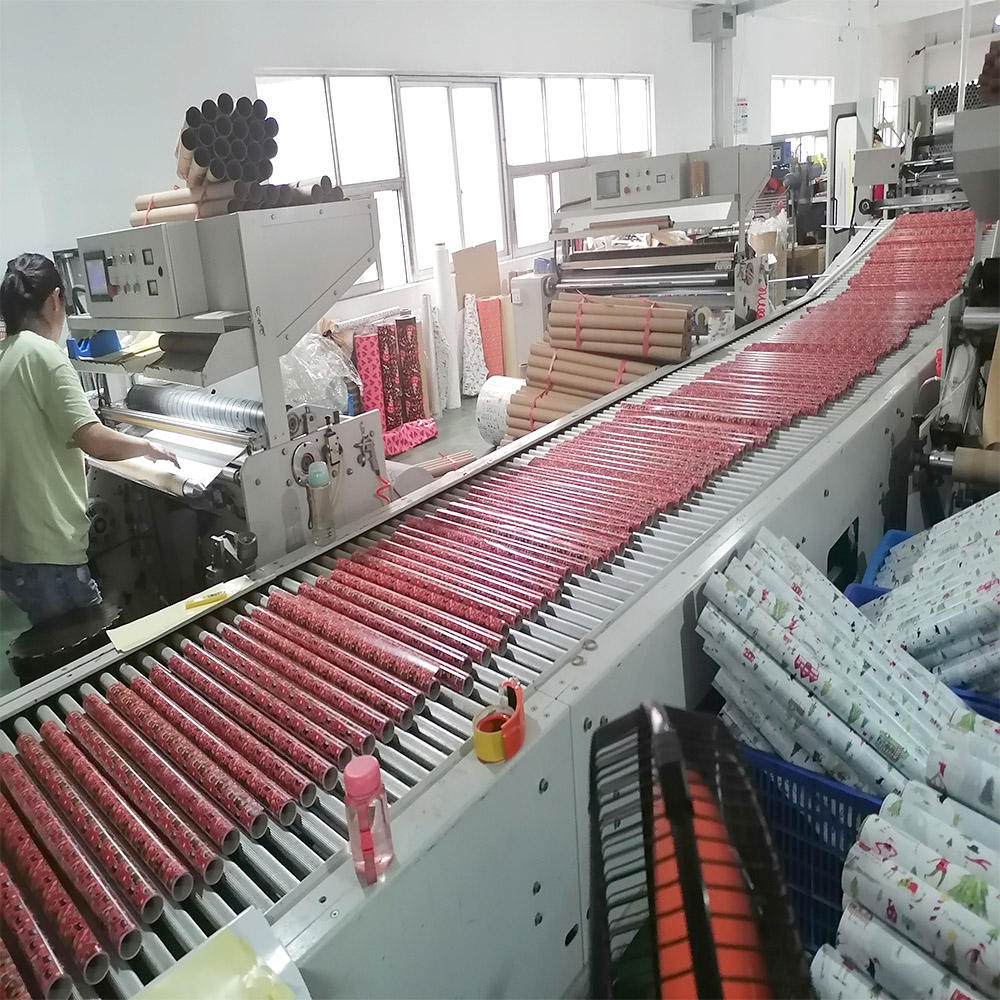
How Wrapping Paper Supports Corporate ESG and CSR Goals
Wrapping paper is a small packaging decision with a measurable effect on environmental, social, and governance performance. The right material can reduce packaging waste, support Scope 3 emissions reduction, improve supply chain transparency, and give procurement teams stronger evidence for corporate ESG reporting.
Environmental Goals and Scope 3 Emissions Reduction
Packaging materials contribute to Scope 3 emissions through raw-material sourcing, paper manufacturing, printing, transport, and disposal. Lightweight tissue paper, right-sized sheets, and efficiently packed rolls can reduce material consumption and upstream transportation emissions without weakening the unboxing experience.
Practical measures include:
-
- Reduce material use: Choose sheet and roll dimensions that match the product instead of relying on oversized formats.
- Lower shipping weight: Use lightweight tissue or optimized paper grades where strength requirements allow.
- Replace plastic components: Substitute plastic sleeves, liners, and decorative films with recyclable paper alternatives.
- Support circular economy packaging: Select paper that can be recycled, reused, or safely composted within the target market.
- Avoid unnecessary finishes: Plastic laminations, foil layers, and difficult-to-separate coatings can limit recycling and increase end-of-life impacts.
A plastic-free packaging system is most effective when every component is compatible with the same recycling or recovery route. This helps companies move from isolated material substitutions to more practical closed-loop product cycles.
Social Goals and Transparent Supply Chains
Corporate Social Responsibility also covers how packaging is made and sourced. Lower-toxicity inks, safer production processes, and responsible forestry practices can reduce chemical exposure for manufacturing workers, logistics teams, retail staff, and consumers.
Procurement teams should request clear evidence of:
-
- Responsible fibre sourcing and certified forest management
- Recycled-content percentages and material declarations
- Ink, coating, adhesive, and chemical compliance
- Labour, health, and safety standards at production sites
- Supplier policies covering ethical manufacturing and environmental protection
Verified information builds more consumer trust than broad claims such as "green" or "eco-friendly." An FSC-certified wrapping paper product, for example, should be supported by valid certification details and applicable chain-of-custody documentation. Disposal instructions should also reflect the actual material structure and local recycling conditions.
Clear communication helps avoid greenwashing. Companies should state specific facts, such as recycled content, recyclable design, or certified fibre sourcing, rather than suggesting that every paper product is automatically sustainable.
Governance and Compliance Risk Mitigation
Packaging decisions increasingly affect regulatory compliance, particularly as Extended Producer Responsibility schemes and international packaging rules expand. Companies operating across Europe and other global markets should prepare for requirements related to packaging weight, recyclability, recycled content, reporting, and producer responsibility fees, including the EU Packaging and Packaging Waste Regulation.
A governance-focused packaging programme should maintain:
-
- Supplier traceability: Record raw-material sources, production sites, converters, and shipment information.
- Chain-of-custody records: Verify the movement of certified fibre through the supply chain.
- Material declarations: Document paper composition, recycled content, coatings, inks, adhesives, and additives.
- Audit documentation: Use consistent environmental, ethical, quality, and chemical-compliance records.
- Performance data: Keep test results for strength, print quality, moisture resistance, and recyclability-related requirements.
- Reporting links: Connect packaging volumes and improvements with corporate ESG reporting and procurement targets.
Using recognised packaging paper industry standards and documented packaging paper testing standards gives internal teams a consistent basis for supplier comparison and compliance reviews.
Connecting Packaging Decisions with ESG Reporting
Wrapping paper should be measured as part of the wider packaging portfolio, not treated as an isolated marketing item. Useful performance indicators include:
| ESG area | Practical packaging measure |
|---|---|
| Environmental | Paper weight per package, recycled content, plastic-free percentage, recyclability rate |
| Climate | Packaging-related Scope 3 emissions, transport weight, material reduction |
| Social | Supplier audit coverage, chemical compliance, responsible fibre sourcing |
| Governance | Chain-of-custody coverage, EPR reporting accuracy, documented supplier records |
This approach turns sustainable corporate gifting and retail packaging into measurable business activity. It also helps marketing, procurement, logistics, and ESG teams work from the same data when setting targets, reviewing suppliers, and reporting progress.
Sustainable Wrapping Paper and Corporate Carbon Reduction
Packaging materials can have a measurable effect on Scope 3 emissions, especially when a company buys large volumes for retail, promotions, events, or corporate gifting. The carbon footprint of wrapping paper is not limited to the finished sheet. It includes forest management, recycled-fiber processing, pulping, printing, converting, transportation, storage, and end-of-life treatment.
For procurement teams, the right comparison is not simply "paper versus plastic." It is the full life cycle of each option.
How Wrapping Paper Creates Scope 3 Emissions
A packaging material can contribute to indirect emissions at several points:
-
- Raw-material sourcing: Virgin pulp requires managed forestry, harvesting, pulping, and transport. Recycled fiber avoids some demand for new pulp but still requires collection, sorting, cleaning, and processing.
- Manufacturing: Energy use, water consumption, drying, coating, and finishing affect the paper's product carbon footprint.
- Printing and converting: Inks, drying systems, laminations, foil stamping, adhesives, and cutting add material and energy impacts.
- Transportation: Heavy rolls, oversized sheets, and inefficient cartons increase freight emissions across international supply chains.
- Disposal: Recyclable paper can support circular economy packaging, while plastic-laminated or heavily coated paper may be rejected by recycling facilities and sent to landfill or incineration.
Companies can also review the raw materials used in packaging paper when building supplier questionnaires and carbon data requests.
Virgin Fiber, Recycled Fiber, and Laminated Paper
Each material has different environmental and performance considerations.
| Material option | Carbon and circularity considerations | Procurement points |
|---|---|---|
| Sustainably managed virgin fiber | Provides consistent strength and print quality when sourced from certified forests; emissions depend on forestry, mill energy, and transport | Request FSC or PEFC certification and chain-of-custody records |
| Post-consumer recycled fiber | Reduces demand for new pulp and supports material recovery; repeated recycling can reduce fiber strength | Confirm recycled-content percentage, fiber quality, and processing documentation |
| Plastic-laminated paper | May combine paper and plastic that cannot be separated economically; often limits recycling and increases end-of-life risk | Avoid where practical and assess local recycling acceptance before approval |
A recycled paper is not automatically the lowest-carbon choice in every application. Transport distance, mill energy, recycled-content level, paper weight, print process, and disposal route all affect the result. Likewise, FSC-certified wrapping paper confirms responsible forest sourcing, but certification alone does not describe the complete product carbon footprint.
Reduce Emissions Through Material Efficiency
Lightweight design is one of the most practical ways to achieve Scope 3 emissions reduction. A thinner paper that still meets strength and appearance requirements uses less raw material and weighs less during shipping.
Useful actions include:
-
- Choosing lightweight tissue or kraft paper where the application allows it
- Optimising sheet and roll dimensions to reduce trim waste
- Matching paper size to the product instead of using oversized formats
- Increasing carton utilisation and reducing empty transport space
- Removing unnecessary coatings, foil layers, and plastic accessories
- Testing paper strength before increasing basis weight as a precaution
Packaging engineers should assess tear resistance, fold integrity, print quality, and moisture performance together. A material that fails in transit can create more emissions through product damage, repacking, replacement shipments, and waste.

Use Lifecycle Assessment Data
A lifecycle assessment, or LCA, estimates environmental impacts across defined stages of a product's life. For wrapping paper, useful data may cover:
-
- Fiber sourcing and pulp production
- Paper manufacturing and finishing
- Printing and converting
- Delivery to the customer or distribution centre
- Recycling, composting, incineration, or landfill
When comparing suppliers, procurement teams should check whether data is based on a recognised methodology, clearly stated assumptions, and a defined functional unit such as one kilogram of paper or one thousand wrapped units. Supplier-specific environmental product data is more useful than broad claims such as "green" or "carbon neutral."
Set Measurable Packaging Targets
Corporate sustainability targets should connect material decisions with measurable results. Practical targets may include:
-
- Reduce wrapping-paper weight per finished package by a defined percentage
- Increase verified post-consumer recycled content
- Source all certified virgin fiber through documented chain of custody
- Eliminate plastic laminations from specified packaging formats
- Increase the percentage of paper accepted in target recycling systems
- Reduce packaging-related emissions per order, product, or revenue unit
- Track waste rates from printing, cutting, rejected batches, and fulfilment
Targets should include a baseline year, responsible department, measurement method, and review schedule. This prevents packaging improvements from becoming isolated marketing claims.
Report Progress in Corporate Sustainability Disclosures
Packaging data can support Corporate ESG reporting, supplier scorecards, and supply chain decarbonisation plans. Companies should record:
-
- Paper type, basis weight, and total annual volume
- Virgin and recycled-content percentages
- FSC or PEFC certification status
- Manufacturing and delivery regions
- Product carbon or lifecycle data where available
- Recyclability, compostability, and disposal guidance
- Annual packaging waste and material-reduction results
Clear records help sustainability, procurement, finance, and logistics teams work from the same figures. They also make it easier to evaluate total packaging cost, EPR exposure, and carbon performance when specifications change.
Building a Sustainable Unboxing Experience
Make Sustainability Visible
Unboxing shapes how customers judge a brand. Natural textures, unbleached kraft paper, and simple layouts can communicate quality without relying on excessive decoration. For corporate gifting and retail packaging, this creates a premium feel while reducing material use and supporting an eco-friendly unboxing experience.
The best wrapping paper balances three requirements:
-
- Sustainability: recyclable, responsibly sourced, and free from unnecessary plastic.
- Performance: strong enough to resist tearing, creasing, and normal handling.
- Brand appeal: consistent color, clean printing, and a professional finish.
Lightweight kraft paper and recyclable custom tissue paper are effective for branded product presentation. They reduce packaging weight while adding texture and structure. Businesses already reviewing paper-based branding can also apply the material-efficiency principles used in eco-friendly custom paper bags to wrapping paper and tissue formats.
Customize Without Blocking Recycling
Custom wrapping paper does not need plastic lamination, metallic foil, or heavy coatings to look distinctive. More recyclable options include:
-
- Embossing for a tactile logo or pattern.
- Watermark printing for subtle brand identification.
- Minimalist spot colors to reduce ink coverage.
- Soy-based or water-based inks instead of solvent-heavy systems.
- Recyclable adhesives that do not interfere with standard paper recovery.
- Water-based barrier coatings where limited moisture resistance is required.
Before approving a design, I recommend checking the complete material combination rather than assessing the paper alone. An otherwise recyclable sheet may become difficult to process if it includes plastic film, extensive foil, incompatible adhesive, or a coating that cannot be separated during pulping.
Turn Packaging Into a Sustainability Story
Wrapping paper can explain a company's environmental approach at the moment customers interact with the product. A small QR code can link to:
-
- Fiber sourcing and certification details.
- Recycled-content information.
- Clear recycling or composting instructions.
- Packaging reduction milestones.
- Supplier and manufacturing information.
Certified marks should be displayed accurately and only when the relevant product and supply chain are covered by the certification. An FSC-certified wrapping paper claim, for example, should be supported by valid documentation and chain-of-custody records.
Green messaging should remain specific and verifiable. Statements such as "made with 80% post-consumer recycled fiber" or "recyclable where paper recycling is available" are more credible than broad claims such as "100% sustainable." Clear disposal guidance helps customers act correctly and protects the company from unsupported environmental marketing claims.
How to Source Sustainable Wrapping Paper at Scale
Large-volume procurement requires more than choosing FSC-certified wrapping paper or recycled paper by appearance. I evaluate the material, supplier, performance, documentation, and total cost together. This approach helps purchasing, marketing, logistics, and ESG teams use the same decision criteria.
Certification and Supplier Documentation Checklist
A qualified supplier should provide current, product-specific evidence rather than general environmental statements.
| Area | Documents and evidence to request |
|---|---|
| Fiber sourcing | FSC or PEFC certificate, certificate scope, and chain-of-custody records |
| Recycled content | Recycled-content declaration, fiber composition, and post-consumer content percentage |
| Quality management | ISO 9001 certificate and quality-control procedures |
| Environmental management | ISO 14001 certificate, environmental objectives, and corrective-action records |
| Chemical compliance | RoHS and REACH declarations where relevant to inks, coatings, pigments, and additives |
| Material safety | Technical data sheet, safety data information, and restricted-substance statement |
| Environmental data | Product carbon data, lifecycle information, recyclability guidance, and disposal instructions |
| Supply chain control | Approved raw-material list, production traceability, and batch records |
FSC and PEFC address responsible forest management and supply-chain traceability. They do not automatically confirm recycled content, recyclability, low carbon impact, or chemical safety. Each claim should be checked against the exact paper grade and production site.
Check Paper Performance Before Ordering
Sustainable wrapping paper still needs to protect products and perform well during printing, folding, packing, and shipping. I recommend testing production samples under actual operating conditions.
| Performance requirement | Why it matters |
|---|---|
| Tensile strength | Reduces tearing when paper is pulled, wrapped, or handled |
| Burst resistance | Helps prevent sudden failure around corners and packed items |
| Tear resistance | Supports reliable folding and opening |
| Fold integrity | Limits cracking, splitting, and damage on sharp folds |
| Print quality | Protects brand colors, text, logos, and sustainability messages |
| Color consistency | Keeps repeated orders visually consistent across markets |
| Finish performance | Ensures embossing, watermark printing, and spot colors remain clear |
| Moisture resistance | Helps paper withstand storage and short-term handling in humid conditions |
Paper that cracks during folding can increase waste and slow packing lines. Suppliers should verify caliper, fiber direction, moisture level, and fold performance before mass production. Practical guidance on why wrapping paper cracks during folding can also support incoming quality checks.
For packaging exposed to light moisture, ask whether a water-based barrier coating is suitable. It may provide protection without the recycling problems associated with polyethylene laminations. The coating must still be tested for repulpability, print adhesion, odor, and end-of-life compatibility.

Test for Real Business Conditions
Laboratory data is useful, but final approval should reflect how the paper will be used. Test samples for:
-
- Bulk shipping, stacking, and warehouse handling
- Retail wrapping and repeated folding
- Corporate gifting and premium presentation
- Automated or semi-automated packing processes
- Humid storage and international transport
- Ink adhesion, scuffing, and color transfer
- Recyclability after printing and finishing
A supplier should also control ink adhesion and drying. Poor adhesion can create scuffing, transfer, and rejected batches; technical guidance on ink adhesion on wrapping paper is relevant when approving custom printed tissue or kraft paper.
Compare Total Packaging Cost
The lowest price per sheet is rarely the lowest total cost. I compare the full cost of ownership across material use, shipping, waste, labor, and disposal.
| Cost factor | Procurement consideration |
|---|---|
| Paper weight | Lightweight grades can reduce material and freight costs |
| Sheet or roll dimensions | Right-sized formats lower trimming and packing waste |
| Recycled content | May affect strength, print settings, and production yield |
| Minimum order quantity | Larger runs can reduce unit price but increase inventory risk |
| Waste rate | Include rejected sheets, cutting waste, and damaged stock |
| Shipping weight | Important for international freight and Scope 3 accounting |
| Disposal cost | Recyclable formats may reduce residual waste costs |
| Customization | Compare tooling, printing, finishing, and setup charges |
A scalable program should define forecast volumes, approved paper grades, reorder points, and minimum order quantities. This avoids unnecessary overproduction while preserving consistent supply for seasonal campaigns and corporate gifting.
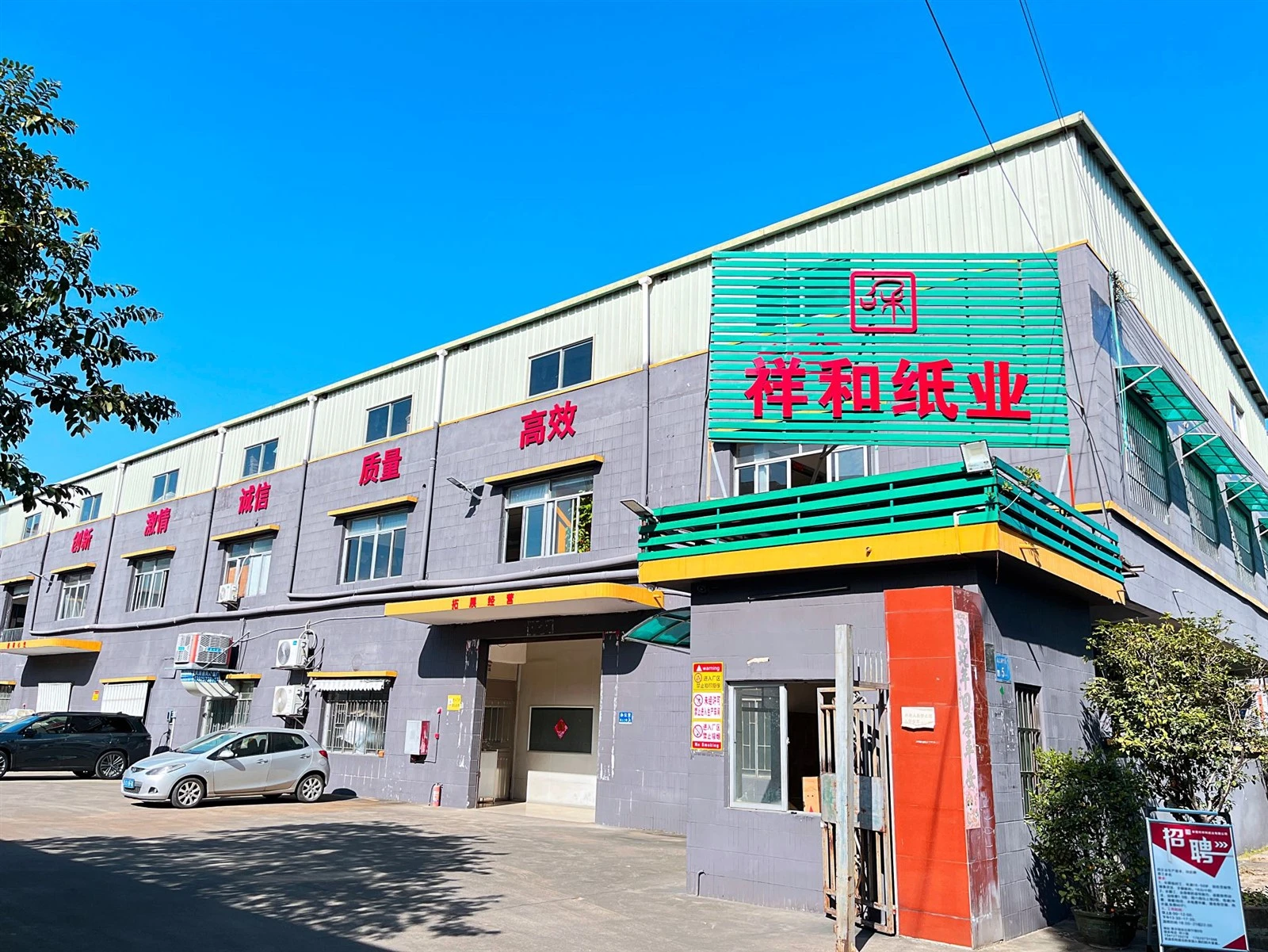
Choose a Qualified Paper Manufacturing Partner
Supplier evaluation should cover both sustainability controls and manufacturing capability. I review:
-
- Raw-material sourcing and incoming inspection
- FSC or PEFC chain-of-custody control
- Printing, coating, slitting, folding, and converting capacity
- Batch traceability and quality inspection records
- Production samples and pre-shipment approval procedures
- Corrective-action and complaint-handling processes
- Delivery reliability and international export experience
- Capacity to support repeat orders and custom specifications
Dongguan Xianghe Paper Co., Ltd. supports business buyers that need compliant materials, controlled production, and tailored B2B customization. A responsible manufacturing partner should provide clear material declarations, practical performance data, consistent print quality, and documentation that can support procurement reviews and corporate ESG reporting.
A reliable sourcing decision connects FSC-certified wrapping paper, recycled content, product performance, supplier traceability, and total cost. This makes sustainable wrapping paper easier to scale across retail packaging, corporate gifting, promotional campaigns, and global distribution.
Common Challenges When Switching to Sustainable Wrapping Paper
Switching to sustainable wrapping paper can improve recyclability and support corporate ESG reporting, but the change requires careful material and supplier management. Recycled fibers, unbleached kraft paper, and plastic-free finishes may perform differently from conventional coated stock.
Key Challenges and Practical Solutions
| Challenge | Business risk | Practical solution |
|---|---|---|
| Premium appearance | Recycled or unbleached fibers may have visible flecks, warmer tones, or a less uniform surface. | Use minimalist artwork, natural textures, embossing, watermark printing, and carefully selected spot colors. |
| Color variation | Fiber composition and absorbency can affect color consistency between production runs. | Approve production samples, define color tolerances, and use standardized print controls. |
| Moisture protection | Plastic laminations can improve water resistance but often make paper difficult to recycle. | Consider recyclable water-based barrier coatings and test the finished paper under realistic shipping conditions. |
| Strength and foldability | High recycled content may reduce tear resistance, tensile strength, or folding performance. | Set minimum performance requirements and test burst, tear, tensile, and fold integrity before bulk production. |
| Higher project costs | Certification, testing, recycled content, and custom printing may increase the unit price. | Compare total packaging cost, including freight weight, waste, disposal, compliance, and brand value-not only price per sheet. |
| Unverified sustainability claims | Vague claims such as "green" or "eco-friendly" can create regulatory and reputational risk. | Keep current material declarations, recycled-content evidence, certification records, and disposal instructions. |
| Cross-functional coordination | Procurement, marketing, logistics, and ESG teams may use different material and reporting requirements. | Create one approved packaging specification covering composition, performance, artwork, certifications, and end-of-life handling. |
Maintain Appearance Without Sacrificing Recyclability
Recycled wrapping paper does not need heavy coatings or complex finishes to look professional. Natural kraft paper, soft unbleached shades, and restrained branding can create a premium eco-friendly unboxing experience. For custom designs, soy-based inks, water-based inks, and limited-color printing help preserve recyclability while maintaining clear brand presentation.
Before approving a finished product, I recommend comparing coated and recycled paper options for appearance, recyclability, and end-of-life performance, as explained in this guide to coated wrapping paper versus recycled paper sustainability.
Balance Recycled Content and Performance
The highest recycled content is not always the most suitable choice for corporate packaging. Wrapping paper must still protect products, fold cleanly, withstand handling, and maintain print quality. A practical specification should state:
-
- Recycled content percentage and fiber type
- Basis weight and sheet or roll dimensions
- Tear, tensile, and burst resistance
- Moisture resistance requirements
- Approved inks, coatings, adhesives, and finishes
- Recycling or composting instructions
- Required FSC, PEFC, or other supporting documentation
Keep Sustainability Claims Verifiable
Sustainable wrapping paper should support measurable claims rather than broad marketing language. Procurement and ESG teams should match every public statement with reliable evidence, including:
-
- Chain-of-custody documentation
- Recycled-content test reports or supplier declarations
- Ink and coating specifications
- Packaging recyclability assessment
- Supplier quality and environmental certifications
- Clear disposal guidance for customers and operations teams
This process helps coordinate purchasing, brand communication, logistics, and Corporate Social Responsibility reporting while reducing the risk of greenwashing or non-compliance.
Frequently Asked Questions About Sustainable Wrapping Paper
Most Sustainable Wrapping Paper for Corporate Packaging
The most sustainable option is usually recyclable, lightweight paper made with recycled or responsibly sourced fibers. Unbleached kraft paper, recyclable custom tissue paper, and paper with minimal printing can reduce material use and disposal impacts. The best choice depends on the required strength, moisture resistance, print quality, and local recycling infrastructure.
FSC-Certified Wrapping Paper and Recyclability
FSC-certified wrapping paper is generally recyclable when it is free from plastic laminations, metallic foil, heavy coatings, and non-paper attachments. FSC certification verifies responsible forest sourcing; it does not, by itself, confirm recyclability. Procurement teams should request both the FSC chain-of-custody documentation and the product's recycling information.
Wrapping Paper and Scope 3 Emissions Reduction
Wrapping paper affects Scope 3 emissions through:
-
- Forest management and raw-material sourcing
- Pulp and paper manufacturing
- Printing and converting
- Transportation and storage
- Disposal or recycling
Lightweight paper, higher recycled content, efficient roll or sheet sizes, and reduced packaging waste can support supply chain decarbonisation. A lifecycle assessment provides a more reliable comparison than material claims alone.
Recycled Wrapping Paper Compared with FSC-Certified Paper
These terms describe different attributes:
| Material claim | What it confirms |
|---|---|
| Recycled paper | Contains post-consumer or pre-consumer recycled fibre |
| FSC-certified paper | Fibre comes from responsibly managed, certified forests |
| FSC Recycled paper | Uses verified recycled fibre under the FSC system |
| Unbleached kraft paper | Uses a natural brown appearance and often fewer bleaching steps |
A product may be both recycled and FSC-certified. Companies should check the exact recycled-content percentage and certification scope.
Soy-Based Inks and Water-Based Coatings
Soy-based and other vegetable-based inks can reduce reliance on petroleum-based solvents. Water-based inks are also commonly preferred for paper packaging because they can support cleaner production and easier recycling. However, the full ink formula, coverage level, drying process, and local mill requirements still matter.
Water-based barrier coatings may improve moisture resistance, but they should be tested for repulpability. Avoid plastic films, difficult-to-remove laminations, and additives that can prevent paper from entering standard recycling streams.
Plastic-Free Custom-Printed Wrapping Paper
Custom-printed wrapping paper can remain plastic-free and recyclable when it uses:
-
- Recyclable paper stock
- Soy-based or water-based inks
- Minimal spot colours
- Embossing or watermark details instead of foil laminations
- Paper-based adhesives and labels
- No polyethylene film or plastic glitter
Recyclable custom tissue paper is suitable for branded product presentation when the tissue, ink, and attachments are compatible with local recycling systems.
Verifying Sustainable Wrapping Paper Claims
I recommend checking claims against supplier records rather than relying on marketing language. Request:
-
- Certification numbers and issuing organisations
- Chain-of-custody documentation
- Recycled-content declarations
- Ink, coating, adhesive, and laminate details
- Product test results for recyclability or repulpability
- Country of manufacture and material origin
- Disposal instructions supported by local infrastructure
Clear documentation helps prevent greenwashing and strengthens Corporate ESG reporting. Guidance on the role of wrapping paper in sustainable packaging can also help teams compare material and end-of-life considerations.
Certifications for Corporate Procurement Teams
Depending on the market and product specification, procurement teams may request:
-
- FSC or PEFC for responsible forestry and chain of custody
- ISO 9001 for quality management
- ISO 14001 for environmental management
- REACH and RoHS declarations where relevant
- Recycled-content evidence
- Product safety and restricted-substance declarations
- Environmental product data or lifecycle information
Not every certification applies to every order. The certificate should match the actual factory, material, product, and production scope.
Sustainable Wrapping Paper and EPR Compliance
Sustainable wrapping paper can support Extended Producer Responsibility (EPR) compliance by reducing difficult-to-recycle components, lowering packaging weight, and improving material reporting. EPR obligations vary by country and may depend on packaging weight, material type, recycled content, and sales volume.
Companies should maintain accurate packaging data, including:
-
- Paper weight and dimensions
- Fibre type and recycled content
- Coatings, inks, adhesives, and attachments
- Units placed on each market
- Recyclability or disposal pathway
Measuring Sustainable Packaging ROI
Sustainable packaging ROI should include more than the price per sheet. Track:
| Metric | Business value |
|---|---|
| Material weight per unit | Lower purchase and transport costs |
| Recycled-content percentage | Progress toward ESG targets |
| Packaging waste rate | Lower disposal and material losses |
| Shipping volume and weight | Reduced freight emissions |
| EPR fees | Potential compliance cost reduction |
| Damage and replacement rate | Protection of product margins |
| Customer or buyer feedback | Brand and retention value |
| Audit readiness | Lower compliance and reporting risk |
A practical calculation compares total packaging cost before and after the change, including material, freight, waste, disposal, compliance, and quality costs.
Sustainable Wrapping Paper Supplier Audit Checklist
A corporate supplier audit should cover:
-
- Raw materials: fibre origin, recycled content, and forest certifications
- Production: paper-making, printing, coating, and converting controls
- Chemical management: inks, dyes, adhesives, coatings, and restricted substances
- Quality: tensile strength, tear resistance, burst resistance, fold integrity, and colour consistency
- Environmental controls: waste handling, energy use, water management, and emissions records
- Traceability: batch records, chain-of-custody documents, and material declarations
- Social compliance: worker safety, labour practices, and ethical manufacturing
- Delivery performance: lead times, minimum order quantities, defect rates, and corrective actions
Experienced paper manufacturers such as Dongguan Xianghe Paper Co., Ltd. can support B2B buyers with tailored specifications, quality control, custom printing, and documentation for sustainable corporate packaging programmes.