


Why Bubble Wrap Quality Matters
When you're shipping fragile products, bubble wrap quality isn't a small detail-it decides whether your item arrives perfect or broken. Good bubble cushioning material absorbs shock, protects corners and edges, and keeps electronics, glassware, cosmetics, and precision parts safe from drops, vibration, and pressure in transit.
With low-quality bubble wrap, the air cells pop too easily or arrive half-deflated. That means:
- Less cushioning and impact resistance
- Higher risk of cracked screens, chipped glass, and dented products
- More returns, refunds, and repacking costs
For any business, using weak or thin wrap doesn't "save money." It quietly increases:
- Damage rates and reshipment costs
- Customer complaints and negative reviews
- Packaging waste and labor time
I focus on strong, durable bubble wrap because stable protection equals lower overall shipping costs and better customer satisfaction. Reliable bubble wrap is one of the most cost-effective upgrades you can make in your packaging process.
Key Factors to Evaluate Bubble Wrap Quality
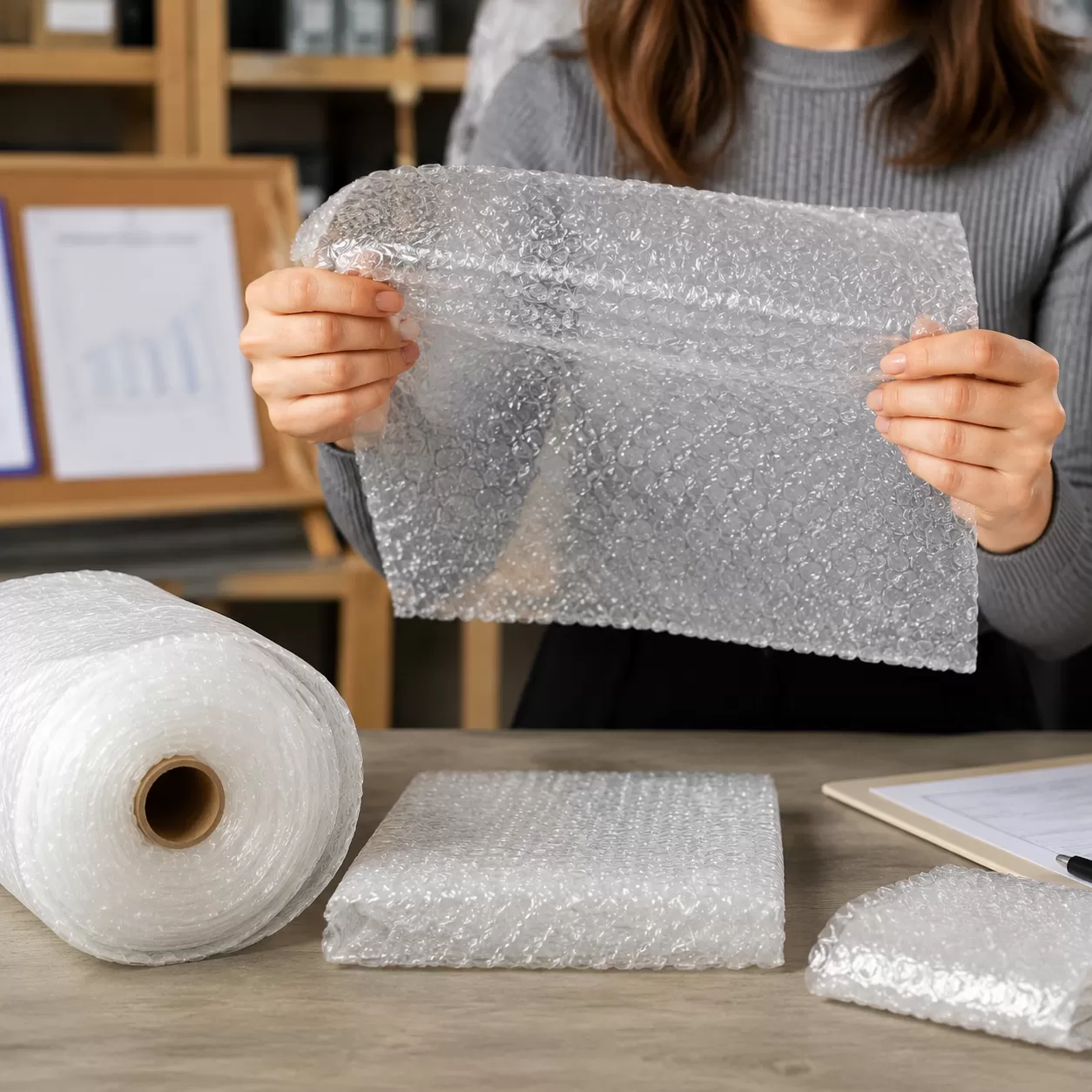
When you're comparing bubble wrap, three things matter most: thickness, strength, and durability. These directly decide how well your products survive shipping.
Bubble Wrap Thickness Guide
Thickness is usually measured in mils or microns. In simple terms, thicker film = more cushioning and impact resistance.
- For light items: standard thin bubble wrap can work.
- For fragile or heavier items: go thicker for deeper cushioning and better shock absorption.
- For long-distance shipping: thicker wrap helps bubbles stay inflated and protect longer.
If you're shipping in place of paper or foam, or pairing with paper cushion pads for extra protection, thicker bubble cushioning material is the safer bet.
For example, many of our U.S. clients use thicker wrap together with paper cushion pads to upgrade protection without blowing up shipping costs.
Bubble Wrap Strength: Material and Bubble Integrity
Strong bubble wrap for protection starts with good raw material and tight production control:
- Material composition: High‑quality polyethylene resists tearing and holds air better. Cheap film feels flimsy and stretches too easily.
- Bubble integrity: Bubbles should be evenly sized, fully inflated, and firmly sealed. No half‑flat or over‑stretched sections.
- Simple strength test: Grab a strip, twist and squeeze hard:
- Good wrap: bubbles don't all pop at once, film doesn't rip.
- Poor wrap: loud chain popping, film tears fast.
If your bubbles pop just from normal hand pressure, they won't survive carriers, conveyor belts, and warehouse handling.
Bubble Wrap Durability: Puncture and Storage
Bubble wrap durability is about how well it holds up over time and in tough conditions:
- Puncture resistance: It should handle corners, screws, and sharp edges without instantly deflating.
- Environmental conditions: Quality wrap stays flexible in hot warehouses and colder climates, instead of getting brittle.
- Long‑term storage: Rolls shouldn't yellow, stick together, or lose air quickly when stored for months.
For operations storing bulk protective bubble wrap rolls, durable film means less waste and fewer surprises.
Other Key Considerations: Bubble Size and Visual Checks
A quick visual and touch check tells you a lot about bubble wrap quality:
- Bubble size impact:
- Small bubbles: Better for light, small, or surface‑sensitive items (cosmetics, accessories, electronics).
- Large bubbles: Better for heavier products, larger gaps in boxes, and rough handling.
- Look for defects:
- Uneven or missing bubbles
- Obvious air leaks or flat strips
- Poor edge sealing or thin, cloudy film
If the wrap looks patchy, inconsistent, or feels "crinkly" and weak, it's not the best bubble wrap for shipping or for protecting fragile items.
Practical Tips for Choosing the Right Bubble Wrap Quality

When I choose bubble wrap for shipping or storage, I always match the bubble wrap quality to the job instead of grabbing whatever's cheapest. Here's the simple way to do it.
Match Bubble Wrap to What You're Shipping
Use this as a quick guide:
- Very fragile items (glassware, ceramics, collectibles, electronics):
- Small bubbles + thicker film
- Multi-layer wrapping or double boxing
- Consider anti-static bubble wrap for electronics
- Medium items (home goods, decor, small appliances):
- Standard bubble wrap rolls with medium bubbles
- One or two layers is usually enough
- Heavy or awkward items (auto parts, machinery, tools):
- Heavy-duty bubble wrap with larger, stronger bubbles
- Thicker plastic, sometimes combined with foam or cardboard
This is the core of bubble wrap quality evaluation: always match bubble wrap thickness, bubble size, and strength to the risk level of the shipment.
Compare Bubble Wrap Grades and Types
Not all bubble cushioning material is the same. When I compare options, I focus on:
- Standard bubble wrap
- Best for everyday e-commerce and retail shipping
- Good balance of protection and cost
- Heavy-duty / industrial bubble wrap
- Strong bubble wrap for protection of heavy or sharp-edged items
- Higher puncture resistance and better bubble wrap durability
- Anti-static bubble wrap
- Must-have for electronics and circuit boards
- Prevents static damage in transit
- Eco-friendly bubble wrap
- Recycled or recyclable materials
- Good for brands that care about sustainability and packaging image
If you're already using packaging paper or mailers, pairing them with high-quality bubble packaging can seriously cut down on damages. You can see how different packaging materials are produced in this overview of the packaging paper production process.
Balance Quality and Budget for Bulk Purchases
For U.S. businesses shipping daily, the right move is usually:
- Don't chase the lowest price per roll
Cheap film pops fast and leads to returns, replacements, and poor reviews. - Look at total cost per safe delivery, not just packaging cost
A slightly more expensive, durable bubble wrap supplier is often cheaper long term. - Buy in bulk
- Negotiate tiered pricing
- Standardize on a few core sizes and types
- Test before committing
- Order small batches of different grades
- Run simple bubble wrap strength tests (squeeze, drop tests, simulated shipping)
How to Source Reliable Bubble Wrap from Trusted Suppliers
When I vet a reliable bubble wrap manufacturer or distributor in the U.S., I check:
- Consistent specs: film thickness, bubble size, roll length must match what's advertised
- Quality certificates or standards where available
- Lead times and stock levels for ongoing orders
- Custom options: widths, perforations, and printing if you need branded packaging
- Support and responsiveness: how quickly they quote, ship, and resolve issues
If you also need other packing materials, working with a supplier that offers a full range of protective packaging products through one catalog, like the product lineup shown in their packaging products section, makes reordering easier and keeps your packaging consistent.
Whether you're shipping from a home-based e-commerce shop or a large U.S. warehouse, choosing the best bubble wrap for shipping comes down to one rule: match protection level to product risk, then lock in a dependable supplier that can deliver the same quality every time.
Benefits of High-Quality Bubble Wrap from Dongguan Xianghe Paper Co., Ltd.
When you're shipping products in the U.S. every day, bubble wrap quality isn't optional-it's what keeps your goods safe and your customers happy. Our high‑quality bubble wrap is engineered for businesses that can't afford product damage, from e‑commerce brands to industrial shippers.
Our Quality Standards
We run strict quality control on every bubble cushioning roll:
- Consistent bubble size and thickness for reliable protection
- Strong, tear‑resistant film to prevent bubble loss in transit
- Clean, dust‑free production to protect sensitive and food-adjacent products
We apply the same mindset we use in our precision paper manufacturing processes to our bubble wrap lines, so you get stable, repeatable quality.
Product Range & Custom Options
You can dial in the exact bubble wrap quality you need:
| Option Type | What You Get |
|---|---|
| Bubble sizes | Small, medium, large for different protection levels |
| Roll widths & lengths | Standard and custom for your packing setup |
| Eco-friendly options | Recyclable and reduced-plastic bubble wrap |
| Specialty types | Anti-static bubble wrap, heavy-duty grades |
We also offer related protective materials like honeycomb paper sleeves for moving fragile items as a paper-based alternative to plastic bubble wrap: honeycomb paper sleeves for moving.
Support, Bulk Deals, and Shipping
We design our service around how U.S. companies actually buy packaging:
- Dedicated support for choosing the best bubble wrap for shipping fragile items, electronics, or heavy parts
- Bulk order discounts for recurring shipments and large warehouses
- Stable lead times and global shipping, with strong coverage to U.S. ports and fulfillment centers
If you're searching "bubble wrap near me" or need a reliable bubble wrap manufacturer that can grow with your volume, Dongguan Xianghe Paper Co., Ltd. gives you high‑quality bubble packaging, predictable supply, and real cost control.
Common applications of bubble wrap
Bubble wrap for e‑commerce and retail shipping
In U.S. e‑commerce and retail, high‑quality bubble wrap is the go‑to cushioning material for protecting everything from cosmetics and books to electronics and glassware during delivery. I use strong bubble wrap for protection inside cartons, mailers, and even paired with large kraft gift bags for in‑store pickup orders so fragile items arrive intact and customers stay happy.
- Ideal for: online orders, subscription boxes, fragile gifts
- Best picks: standard and heavy‑duty protective bubble wrap rolls
Industrial use for machinery and components
In industrial settings, bubble wrap quality evaluation matters even more. Heavy parts, metal components, and machinery edges need durable bubble wrap with high puncture resistance so sharp corners don't blow out the bubbles.
- Ideal for: auto parts, machine components, tools
- Best picks: heavy‑duty, large‑bubble wrap for impact absorption
Personal use for moving and storage
For home moves and storage, most U.S. customers look for bubble wrap for fragile items like dishes, mirrors, collectibles, and framed art. It's lightweight, easy to cut, and works great along with sturdy cartons or even kraft goodie bags for small breakables.
- Ideal for: moving homes, seasonal storage, home organization
- Best picks: standard bubble wrap with medium bubbles
Specialized bubble wrap for electronics
For electronics, I always recommend anti-static bubble wrap to prevent static discharge that can damage circuit boards, chips, and other sensitive parts. This is the best bubble wrap for shipping laptops, phones, PC parts, and other high-value tech.
- Ideal for: circuit boards, computer parts, phones, audio gear
- Best picks: pink anti-static bubble cushioning material, small bubbles for tight fit