

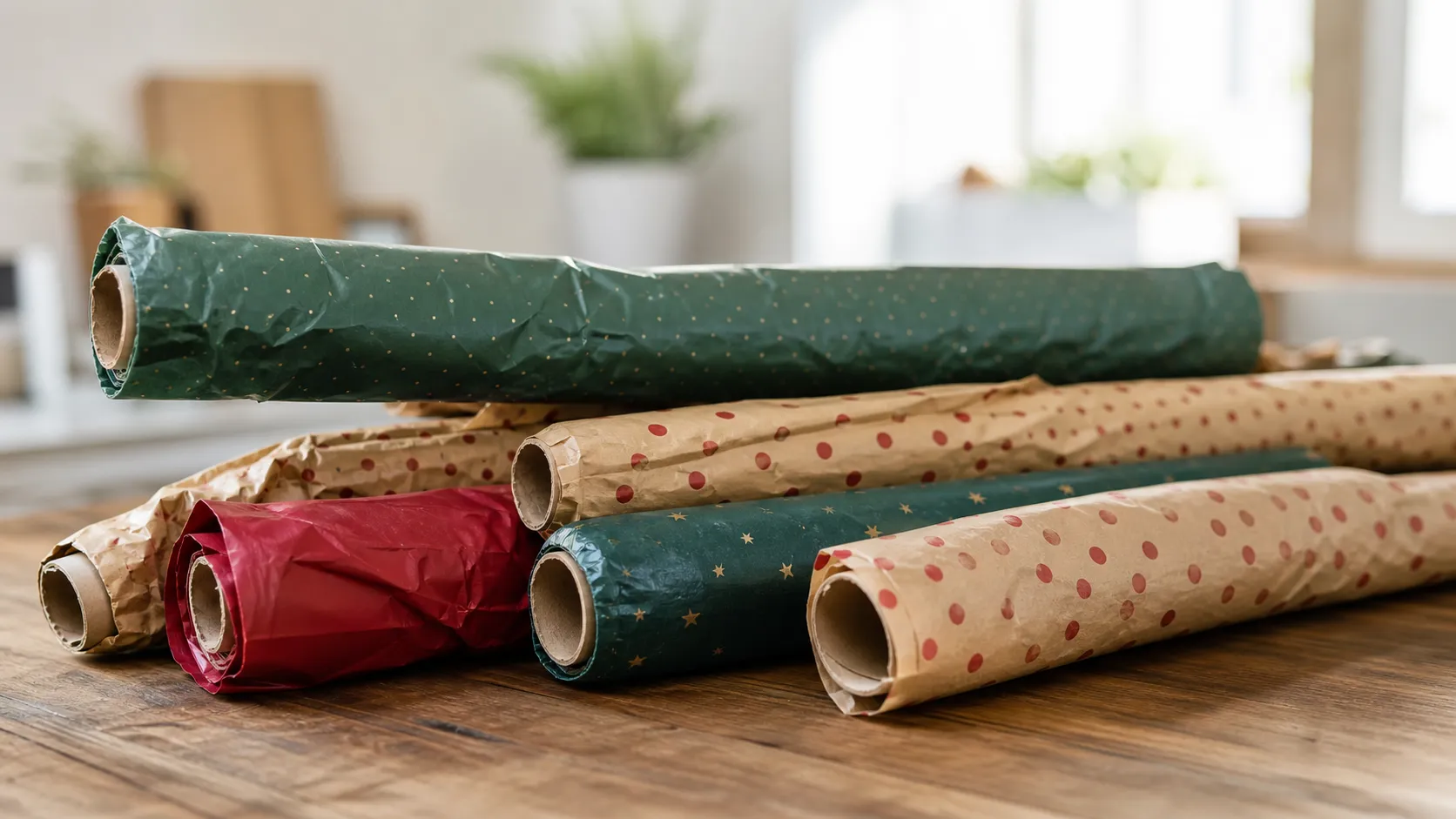
Why Wrapping Paper Rolls Develop Wrinkles
Wrapping paper rolls wrinkle for a few simple reasons: moisture, pressure, and poor winding. I see it most often when thin paper with a low paper GSM is stored in the wrong place, stacked under weight, or wound too loosely around a weak cardboard core. Once the roll loses shape, the surface turns wavy, creased, and harder to use.
Moisture and Pressure
-
- Paper naturally absorbs moisture from the air, which causes hygroscopic paper expansion.
- That expansion softens the sheet and makes cellulosic fiber distortion more likely.
- Heavy boxes, tight shelves, and stacked rolls add pressure that creates flat spots and permanent creases.
- Even a small amount of dampness can weaken the surface enough for wrinkles to form fast.
Thin Paper Wrinkles Faster
-
- Thin wrapping paper has a lower basis weight, so it bends more easily.
- Less stiffness means less resistance to folding, rippling, and edge damage.
- Lightweight stock also reacts faster to humidity changes, so it waves sooner than heavyweight kraft wrapping paper.
- In my experience, premium heavier paper stays cleaner, flatter, and easier to handle over time.
Poor Winding Creates Wavy Rolls
-
- Loose cores allow the paper to shift, which breaks the roll's round shape.
- Uneven roll winding tension creates air pockets that show up as bumps and waves.
- If the cardboard core integrity is weak, the center collapses and the outer layers wrinkle with it.
- A roll that starts uneven rarely fixes itself; the surface usually gets worse with handling.
Storage Conditions Matter Most
-
- Heat, moisture, and pressure work together to damage a roll faster than most people expect.
- A dry, stable space helps preserve shape and keeps the paper smooth.
- Damp basements, hot attics, and crowded closets are common causes of early wrinkles.
- Good storage is not a small detail here; it is the main defense against damage.
How Humidity Makes Wrapping Paper Roll Wrinkle
I see humidity as one of the biggest reasons a wrapping paper roll starts looking soft, wavy, and hard to use. Paper is naturally hygroscopic, which means it absorbs moisture from the air. Once that happens, the fibers swell, the roll loses its shape, and the surface starts to buckle.
Moisture Absorption in Paper
When paper fibers take in water vapor, they expand at uneven rates. That uneven movement is what causes:
-
- Cellulosic fiber distortion
- Rippling along the roll surface
- Loose, wavy edges that don't stay flat
- Weak spots that crease faster during use
I recommend checking the moisture resistance of wrapping paper before storing it for long periods, especially if you live in a humid climate.
Why Damp Storage Spaces Cause Buckling
Basements, attics, and garages are common problem areas because they usually swing between damp, hot, and dry conditions. That mix pushes the paper fibers in different directions and creates permanent bends.
-
- Basements trap moisture and speed up swelling
- Attics heat up fast, then cool down sharply
- Garages often let in humidity, dust, and temperature changes
A roll stored in one of these spaces can look fine at first, then develop visible waves and soft spots within days.
Temperature Swings Make It Worse
Humidity alone is bad enough, but temperature swings make the damage more obvious. Warm air holds more moisture, and when the air cools down, that moisture settles into the paper. Over time, the roll goes through repeated expansion and contraction, which weakens the structure.
That is why humidity-controlled storage matters so much for keeping paper crisp and usable.
Quick Moisture Damage Check
I look for these signs before the damage gets serious:
-
- A soft or slightly swollen roll surface
- Edges that curl or feel uneven
- Dull, limp paper instead of a crisp finish
- Small waves that stay in place after unrolling
- A musty smell or visible damp spots
If I spot those early, I move the roll to a dry space right away and keep it away from heat, sunlight, and closed-off damp rooms.
Storage Mistakes That Crush Wrapping Paper Rolls
If wrapping paper rolls look fine at first and then come out flat, wavy, or torn, the problem is usually storage. I see the same damage patterns over and over: pressure marks, bent edges, and moisture exposure that slowly ruins the roll shape.
Horizontal Stacking
-
- Laying rolls flat creates pressure points, especially on the bottom roll.
- That weight leaves flat spots and permanent creases in the paper.
- Long-term stacking also shifts the cardboard core, which weakens roll shape.
Tight Storage Spaces
-
- Crowded shelves and packed closets squeeze the roll from both sides.
- Tight bins can bend the ends and create a wavy surface.
- A roll needs room to stay round, which is why vertical paper roll storage works better than compression storage.
Unsealed Rolls
-
- Leaving rolls open exposes them to dust, damp air, and accidental edge damage.
- Moisture absorption in paper can start fast in humid rooms, even before the paper feels wet.
- I always recommend a wrapping paper storage container or sealed sleeve for cleaner, humidity-controlled storage.
Rough Handling and Tape Damage
-
- Pulling paper too hard or dragging it across shelves frays the edges.
- Tape stuck directly to the sheet can tear fibers when removed.
- Paper roll edge protection matters, especially for premium prints and heavyweight kraft wrapping paper that should stay crisp.
Quick Fix List
-
- Store rolls upright whenever possible.
- Keep them in a dry, clean container.
- Avoid stacking heavy items on top.
- Handle the ends gently and secure loose paper with clips instead of tape.
- Choose rolls with solid cardboard core integrity and consistent winding tension when you want better shelf life and less edge wear.
I also pay attention to paper quality from the start; rolls made to consistent industry standards for packaging paper tend to hold their shape better during storage and everyday use.

Low GSM Wrapping Paper and Weak Roll Structure
Why Thin Paper Wrinkles Faster
Low GSM wrapping paper has less body, so it folds, waves, and tears more easily. In simple terms, paper GSM and basis weight tell me how much material is in the sheet, and that extra mass usually means better stiffness and better wrinkle resistance. Thin stock bends faster under pressure, so even light handling can leave marks.
What Weak Roll Structure Does
A roll is only as strong as its build. If the roll winding tension is uneven or the cardboard core integrity is weak, the paper can shift, loosen, and develop a wavy surface. I see this a lot with rolls that look fine at first but start to deform after storage or transport.
-
- Loose winding creates air pockets and soft spots
- Uneven tension leaves the roll surface lumpy
- Weak cores let the roll oval out instead of staying round
- Thin paper shows every small defect faster
Why Premium Kraft Holds Up Better
I prefer heavier stock when I want cleaner storage and smoother wrapping. Heavyweight kraft wrapping paper has more structure, so it resists cellulosic fiber distortion better and keeps its shape longer. It also handles daily use more reliably, especially when the paper is going through frequent unrolling and rewinding.
If I am choosing a tougher option for long-term storage, I look for a well-made kraft paper roll with consistent winding and a solid core. That kind of build is much closer to anti-crease paper manufacturing standards and gives better shelf life in real-world use.
What I Watch For
-
- Higher GSM for better stiffness
- Clean, even winding from edge to edge
- Strong core support
- Smooth release when unrolling
- Less waviness after storage
How to Fix Wrinkled Wrapping Paper Rolls
Wrinkles do not always mean the roll is done for. I start with the gentlest fix first, then move up only if the paper still has a clean surface and solid cardboard core integrity.
Low-Heat Paper Ironing
-
- I use the lowest heat setting possible and keep the iron moving.
- I place a clean cotton cloth or plain kraft sheet between the heat and the print.
- I avoid steam on delicate paper, because extra moisture can make the waves worse.
- If the paper feels thin or glossy, I stop fast and switch to a dry method instead.
Weight Compression
-
- I unroll the damaged section and flatten it between two clean boards or heavy books.
- I leave it under even pressure for several hours, or overnight for deeper bends.
- This works well for light moisture absorption in paper and minor curling.
- A dry room helps the paper reset faster and more evenly.
Smooth Gift Wrapping Technique
-
- When the wrinkles are small, I smooth the paper with my palm as I wrap.
- I pull gently from the center outward to push out trapped air.
- A ruler edge, card, or bone folder can help flatten stubborn waves.
- I keep tension light so I do not stretch or tear thin paper.
When It Is Too Damaged
-
- I replace the roll if I see crushed edges, deep creases, mold, or tearing.
- If the roll keeps springing back out of shape, the winding damage is usually permanent.
- In that case, I move to better-made stock with stronger roll winding tension and cleaner storage life, such as a wrapping paper large roll.
Best Ways to Store Wrapping Paper Rolls
I keep wrapping paper rolls upright whenever I can because vertical paper roll storage helps them stay round and reduces flat spots and wavy edges. When a roll sits on its side for too long, the weight can bend the cardboard core and leave creases that show up later on the gift.
Smart storage setup
-
- Use a wrapping paper storage container for everyday rolls
- Use under-bed bins when space is tight, but keep the rolls straight
- Use hanging organizers for long rolls so they stay supported end to end
- Add sleeves, cuffs, or clips to protect loose ends without tearing the paper
- Use paper edge protection to keep corners from fraying
I also pay attention to storage conditions because moisture is what turns a decent roll into a wrinkled one fast. A sealed container or sleeve helps block dust and humidity, and it keeps the paper cleaner for longer. For a deeper look at the basics, I follow the advice in this guide on storage conditions for wrapping paper.
The goal is simple: keep the roll round, dry, and supported. That one habit saves the paper, keeps the print looking sharp, and makes wrapping easier when I need it.
Prevent Wrinkles in Wrapping Paper Rolls
I keep wrapping paper rolls smooth by controlling the storage environment first. When I choose paper with a cleaner finish and stronger structure, like the options I cover in my guide to the function of wrapping paper, it is easier to protect the roll and keep it presentable.
Keep humidity stable
-
- I store rolls in humidity-controlled storage so the paper fibers do not swell and relax.
- Even small moisture changes can trigger hygroscopic paper expansion and turn a flat roll into a wavy one.
- For most homes and shops, a dry indoor space is far better than a room that swings between damp and dry.
Use sealed sleeves
-
- A sealed plastic sleeve helps block moisture absorption in paper and keeps dust off the edges.
- I also like a wrapping paper storage container because it adds another layer of protection during long storage.
- If the roll stays sealed, the paper keeps its shape longer and the surface stays cleaner.
Avoid heat and damp spaces
-
- I never leave rolls in direct sunlight, near heaters, or in damp spaces like basements, attics, or garages.
- Heat and moisture work together to bend the roll and weaken the sheet.
- A cool, shaded, dry spot is the safest option for long-term storage.
Secure loose ends gently
-
- I close loose ends with soft clips or a light sleeve instead of tight tape that can tear the paper.
- Paper edge protection matters because crushed edges usually turn into wrinkles the next time the roll is used.
- A clean hold keeps the roll tight without damaging the print or finish.
Choosing Wrinkle-Resistant Wrapping Paper
When I buy wrapping paper, I look for more than just the print. I want a roll that stays flat, resists wrinkling, and still looks clean after storage.
-
- Higher paper GSM usually means better stiffness, so the sheet is less likely to wave, fold, or pick up dents in storage.
- Uniform fiber structure matters because uneven fibers absorb moisture at different rates, which can lead to cellulosic fiber distortion and visible rippling.
- Strong cardboard core integrity helps the roll stay round, while proper roll winding tension keeps the surface even from end to end.
- Heavyweight kraft wrapping paper usually holds up better over time, especially when I need something easier to store, cut, and wrap with.
- For lighter packaging needs, I also pay attention to how the material is finished; a clean, consistent sheet like white tissue paper for packaging can still offer a tidy, controlled look when handled properly.
What I check fast
| Check | Why it helps |
|---|---|
| Paper GSM | Adds stiffness and wrinkle resistance |
| Fiber consistency | Helps reduce moisture-driven warping |
| Core strength | Keeps the roll shape stable |
| Winding quality | Lowers waves, gaps, and edge damage |
Premium wrapping paper is easier for me to store and use because it starts with a better structure. That means less curling, less tearing, and a smoother gift wrapping technique from the start.
Wrapping Paper Storage Tips for Wrapping Paper Rolls
If I want wrapping paper to stay crisp, I do not leave it loose in a closet and hope for the best. I keep it dry, upright, and protected from pressure, because that is what keeps paper GSM from turning into bent edges and wavy rolls.
Home Storage
For everyday holiday use, I treat wrapping paper rolls like fragile inventory, not loose supplies.
-
- Use vertical paper roll storage whenever possible to keep the roll round.
- Store rolls in a wrapping paper storage container or long bin so they do not get crushed.
- Keep them away from windows, heaters, and damp corners.
- Add paper roll edge protection with sleeves, cuffs, or clips so the ends stay clean.
Retail and Craft Storage
For small retailers, crafters, and florists, the goal is simple: protect roll shape and preserve cardboard core integrity.
-
- Keep stock in humidity-controlled storage so moisture absorption in paper stays low.
- Avoid tight stacking that changes roll winding tension and creates flat spots.
- Store premium rolls upright or on racks, not under heavy boxes.
- If I handle large-format stock often, I choose durable options like wrapping paper for big gifts because they are easier to manage in busy spaces.
Simple Routine
I follow the same quick routine across home, retail, and craft spaces:
| Step | What I Do | Why It Helps |
|---|---|---|
| Inspect | Check for soft spots, waves, or damp edges | Catches damage early |
| Seal | Close open ends and cover exposed rolls | Blocks dust and moisture |
| Stand | Store rolls upright | Keeps the roll shape stable |
| Rotate | Use older stock first | Prevents long-term pressure marks |
A clean routine like this keeps wrapping paper ready for smooth gift wrapping and reduces waste before the busy season starts.
FAQ About Wrapping Paper Roll Wrinkles
Can I iron wrapping paper safely?
-
- Yes, but I only use low-heat paper ironing with no steam.
- Put a clean cotton cloth between the iron and the paper to protect the print.
- Move fast and test one corner first, because too much heat can warp the fibers and cause more cellulosic fiber distortion.
- If the paper is glossy, coated, or very thin, I skip ironing and use light weight compression instead.
Is vertical storage really better than horizontal storage?
-
- Yes, vertical paper roll storage usually keeps rolls round and helps prevent flat spots.
- Horizontal stacking adds pressure, which can leave creases and crush the core over time.
- I use vertical storage when possible, especially for long-term holding and premium stock.
- A good wrapping paper storage container with a snug fit works better than a crowded shelf.
What humidity level is best for paper rolls?
-
- I keep paper in humidity-controlled storage around 40% to 55% relative humidity.
- That range helps reduce moisture absorption in paper and limits hygroscopic paper expansion.
- Too much humidity makes rolls buckle; too little can make paper brittle and easier to crack.
- Stable conditions matter more than chasing a perfect number.
How do I know if a roll was damaged by moisture?
-
- Watch for waves, edge curl, soft spots, discoloration, or a musty smell.
- The surface may feel limp or uneven instead of smooth and crisp.
- If the roll looks swollen on one side, the moisture likely hit unevenly.
- Once the fibers have expanded and set that way, the wrinkles may not fully go away.
What GSM is best for wrinkle-resistant wrapping paper?
-
- I usually look for 80 GSM to 120 GSM if I want better wrinkle resistance and easier handling.
- Higher paper GSM or basis weight gives the sheet more stiffness and better shape retention.
- Thin paper folds faster, while heavier stock holds up better during storage and wrapping.
- For a sturdier option, I prefer a clean, well-wound heavyweight kraft wrapping paper or a well-made eco-friendly wrapping paper roll with strong cardboard core integrity and even roll winding tension.