

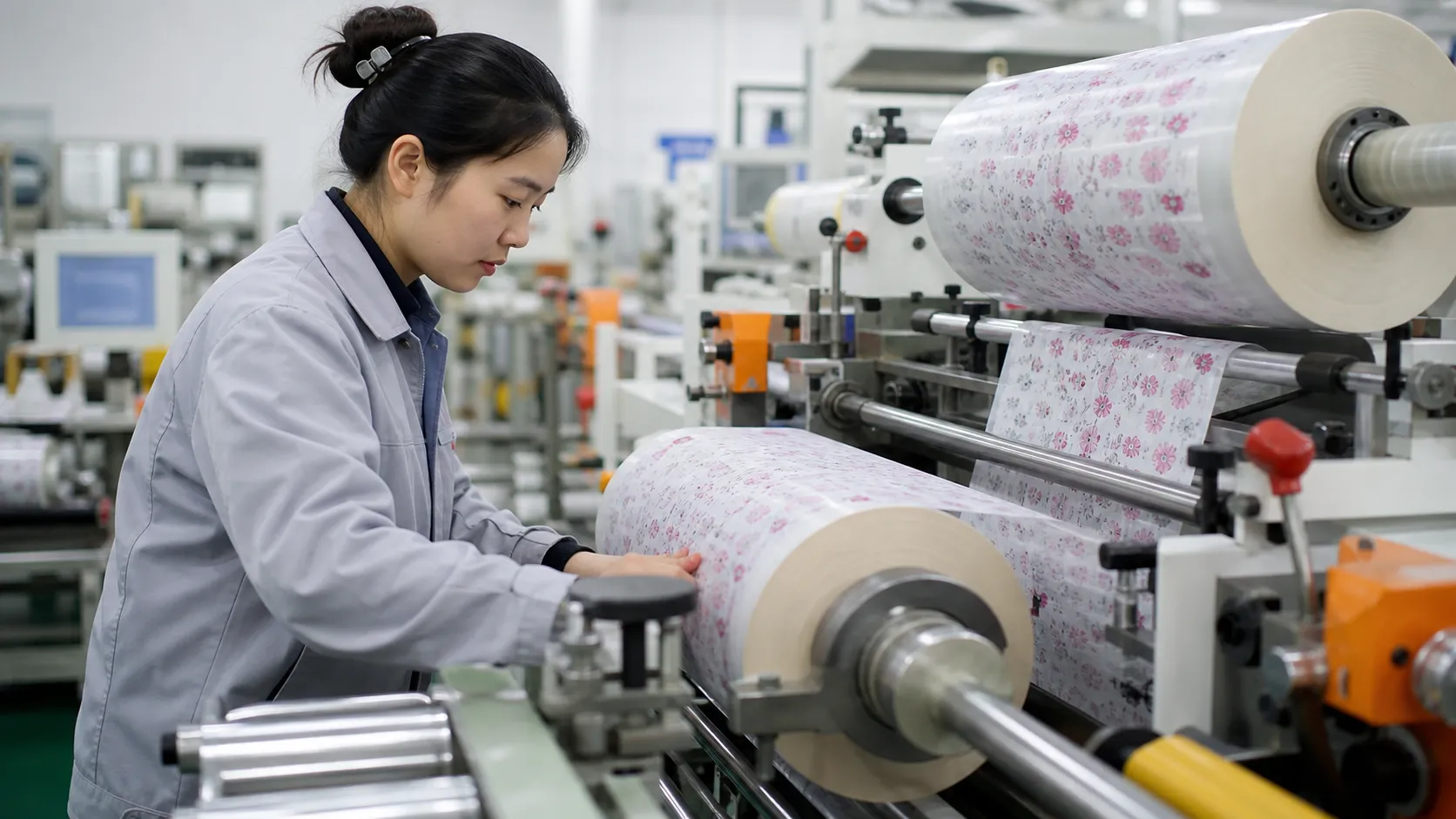
Tensile Strength and Elongation
When I evaluate wrapping paper strength, I start with two basics: how hard the paper can be pulled and how far it can stretch before it fails. That matters for kraft paper rolls, food wraps, and other paper packaging that has to hold up during wrapping, handling, and transit.
Strip Test Basics
The strip test is the standard way to measure tensile strength and elongation. A paper strip is pulled from both ends until it breaks.
What I look for:
- Peak tensile force: the maximum force the paper can handle before rupture
- Elongation at break: how much the paper stretches before it snaps
- Tensile energy absorption (TEA): how much energy the paper absorbs during stretching
These numbers tell me more than a simple "strong" or "weak" label. They show how the paper behaves under real stress.
Why MD and CD Matter
Paper does not perform the same way in every direction. Fiber alignment creates paper fiber anisotropy, so strength changes depending on the pull direction.
-
- Machine Direction (MD) usually gives different results than Cross Direction (CD)
- MD and CD data help me predict how the paper will handle folding, wrapping, and load stress
- If I only check one direction, I can miss weak points that show up in real use
What the Results Tell Buyers
For me, tensile testing is a practical buying tool. It helps match the paper to the job:
- Better pull strength for heavy-duty wrapping
- More stretch tolerance for handling and packing
- Clearer control over performance across different grades and GSM ratings
For global packaging buyers, this is the first checkpoint for reliable, eco-friendly plastic-free wrapping paper.
Mullen Burst Strength
When I check wrapping paper for pressure resistance, I start with the Mullen burst strength test. It presses a rubber diaphragm against the sheet until it breaks, which shows how well the paper handles force coming from multiple directions, not just a straight pull. For a broader view of packaging paper testing standards, this is one of the fastest ways to compare paper grades.
Burst Index and GSM
-
- Burst strength shows the pressure level a sheet can take before rupture.
- Burst index puts that result in context by comparing it with the paper's grammage (GSM rating).
- A higher burst index usually means better strength efficiency, not just heavier paper.
What It Tells Buyers and QA Teams
-
- It helps me judge whether the paper can hold up during packing, stacking, and transit.
- It is useful for spotting weak sheets that may look fine but fail under real handling.
- It gives QA teams a quick check for consistency between batches, fiber blend, and coating performance.
- It is especially relevant when the goal is stronger wrapping with less material waste.
Elmendorf Tear Resistance in Wrapping Paper
When I check wrapping paper performance, I look closely at Elmendorf tear resistance because a paper can pass a simple pull test and still fail fast once a small nick starts moving. The Elmendorf method measures tear propagation-how much force it takes for an existing cut to keep running through the sheet, which is why it matters for real handling, not just lab strength.
A tiny edge flaw can turn into a full tear during folding, packing, or transit. That is especially important for kraft wrapping paper, food wrap, and protective paper used in busy shipping lines. If you want a deeper breakdown of how paper tears behave in practice, I also recommend this guide on what determines the tear resistance of wrapping paper.
Why It Matters
-
- Small nicks become big failures: once tearing starts, the sheet can split quickly.
- Handling stress is real: wrapping, twisting, and stacking all create tear points.
- Best-fit use cases: gift wrap, butcher paper, transit wraps, liners, and paper that must stay intact after cutting or creasing.
What I Focus On
-
- Tear propagation: how fast the tear travels after it starts.
- Edge durability: how well the paper holds up around cuts and folds.
- Practical use: whether the paper can stay usable in fast-moving packing lines and e-commerce packaging transit damage reduction workflows.
For wrapping paper buyers, Elmendorf tear resistance is one of the clearest signs that the paper can handle real-world abuse without falling apart.
Puncture Resistance and Impact Strength
When I pack sharp corners, metal parts, or uneven shapes, tensile strength alone is not enough. A strip can look strong in pull testing and still fail the moment a point load or drop hits it.
I focus on puncture resistance test results and impact strength because they show how paper handles real abuse, not just straight-line pulling.
-
- Probe method: a pointed probe presses into the sheet to measure how much force it takes before the paper gives way.
- Pendulum method: a swinging impact checks how well the paper absorbs sudden force.
- Best use case: sharp-edged, irregular, or heavy products that can cut through weak wrap during handling.
- Why it matters: puncture resistance often beats simple tensile data when the risk is edge damage, corner crush, or transit shock.
For paper-based protection like structural 3D honeycomb paper cushioning, I look for a balance of puncture resistance, rebound, and cushioning so the wrap protects without adding plastic fillers. That is especially useful in e-commerce packaging transit damage reduction and other high-mix shipping jobs.
Folding Endurance and Crease Flexing
When I spec wrapping paper, I pay close attention to how it holds up after repeated folds. A sheet can look strong on the roll and still fail at seams, corners, or sharp fold lines once it is handled, packed, and opened.
Repeated Fold Testing
Folding endurance shows how many bends a paper can take before it weakens, cracks, or splits. Crease flexing goes one step further by checking what happens right on the fold line, where stress builds fast.
-
- Repeated fold testing helps spot weak paper before it reaches production.
- Sharp fold lines matter most on gift wrap, liners, and folded paper packs.
- Poor fold performance often shows up as cracking, whitening, or edge breaks.
For a deeper look at real folding failures, I use this guide on why wrapping paper cracks during folding and handling as a practical reference.
Where It Matters Most
I care about folding endurance in products that are handled often or folded into tight shapes:
-
- gift wrap that needs clean corners and neat seams
- liners that must stay intact inside cartons or bags
- folded paper used for packing, wrapping, or presentation
What Good Results Tell Me
Strong folding endurance means the paper is less likely to split at the crease, which supports a cleaner finish and fewer complaints in transit or retail use. For global buyers, that matters because the paper has to survive real handling, not just lab appearance.

Honeycomb Paper Cushioning
When I need paper-based protection that does more than fill space, I look at structural 3D honeycomb paper cushioning. The real check is simple: can it compress, rebound, and keep fragile goods stable after impact?
Compression and Rebound
I test honeycomb paper for two things:
-
- Compression strength: how well it holds shape under stacking and transit pressure
- Rebound performance: how fast it springs back after impact or load release
That balance matters because shock absorption is what protects glassware, cosmetics, and other breakable items during e-commerce shipping and warehouse handling. In practice, strong rebound helps the pack keep cushioning instead of flattening out too fast.
For a deeper look at product structure and use cases, I often point buyers to this honeycomb packing paper for moving.
Why It Works Better Than Loose Fill
Honeycomb paper is not just a filler. It creates a wrapped layer that helps:
-
- absorb impact
- reduce product movement
- replace plastic fillers
- lower shipping damage risk
Bubble Wrap and EPS
Compared with bubble wrap and EPS foam, honeycomb paper is easier to position as an eco-friendly, plastic-free option for many packing lines. It is especially useful when I want:
-
- cleaner packing without loose plastic waste
- stronger paper contact around the product
- better fit for irregular shapes
If I need a practical side-by-side view, I use this honeycomb packing paper vs bubble wrap comparison to match the material to the shipping risk.
Quick Fit Guide
| Need | Best Use |
|---|---|
| Light cushioning | Paper wrapping and surface protection |
| Higher impact protection | Honeycomb paper layers |
| Plastic-free shipping | Paper-based replacement for bubble wrap or EPS |
For fragile, bulky, or irregular products, honeycomb cushioning gives me a simple way to improve protection without adding plastic fillers.
Moisture, Oil, and Grease Resistance in Wrapping Paper
Cobb and wet strength matter
When I test food and cold-chain wrapping paper, I do not stop at GSM. I check how the paper handles water, oil, and real handling stress.
-
- Cobb water absorption test: shows how much water the paper takes in under moisture exposure; lower absorption usually means better performance in humid storage and chilled transit.
- Grease resistance and wet tensile strength: matter for food wraps, frozen meat butcher paper, and chocolate gift wrapping paper, where condensation, oil, and surface moisture can weaken the sheet fast.
- Practical takeaway: a strong wrap should keep its shape, stay readable, and protect the product without turning soft, tearing early, or leaking through.
For me, this is the difference between paper that only looks good on a spec sheet and paper that actually works for food contact, cold-chain shipping, and eco-friendly plastic-free wrapping paper use.
Machine Direction vs Cross Direction
When I spec wrapping paper, I never look at one strength number alone. Paper fiber anisotropy means the sheet behaves differently depending on direction, and that affects real handling stress fast.
Why Direction Changes Strength
-
- Machine Direction (MD) runs along the paper web.
- Cross Direction (CD) runs across it.
- Strength, stretch, and tear behavior can shift between the two because fibers are aligned during making.
In plain terms, a sheet may feel firm in one direction and weak in the other. That matters for folding, wrapping, stacking, and transit.
How I Spec It
I match the paper to the job, not just the label. For example, wrapping paper for big gifts needs clean folds and stable performance when it is pulled, creased, and handled again and again.
I look for:
- MD and CD balance for wrapping and seam stress
- GSM rating that fits the load without overbuying paper
- Fiber blend and coating that support the needed finish and durability
- Real-use testing under the way the paper will actually be packed, shipped, or displayed
What This Means for Buyers
If I only test one direction, I can miss the failure point. For packaging buyers, that can mean split corners, uneven folds, or tears during transit. For global orders, I keep the spec simple: test both directions, use the paper in its real format, and choose the grade that holds up under daily handling.
ISO, TAPPI, and ASTM Standards
When I compare paper strength data, I do not look at the number alone. I look at the method behind it. That is the only way to make a Mullen burst strength test, Elmendorf tear resistance, puncture resistance test, or tensile data worth trusting.
Which Standard Fits Which Test
-
- ISO standards work well when I need broad international consistency for paper performance.
- TAPPI and ISO paper testing standards are common for paper-specific tests like tensile, burst, tear, and Cobb water absorption.
- ASTM is often used when buyers want a familiar U.S. benchmark for lab-to-lab comparison.
For paper-based protection, I also keep the use case in mind. On our side, I align testing with the performance needs of cushioning paper safety and environmental features so the lab result matches real handling stress, not just a clean sample on paper.
Why Conditioning Matters
Paper changes with air moisture fast. If I test a sheet in a dry room and compare it with a sheet tested in humid air, the results can shift a lot.
I keep the setup controlled by using:
-
- Environmental conditioning relative humidity that matches the test method
- Stable temperature before and during testing
- The same sample time in the conditioning room
That matters for greaseproof barrier test results, wet tensile strength, and even GSM rating comparisons, because moisture can change how the sheet behaves.
Why Calibration Matters
A test is only as good as the machine behind it. I make sure:
-
- Load cells are calibrated
- Burst, tear, and puncture devices are checked regularly
- Sample cutters and thickness tools stay accurate
- Lab settings stay consistent across runs
How I Compare Results Fairly
To compare lab results the right way, I keep the test conditions the same:
-
- Same paper grade and paper fiber anisotropy direction
- Same Machine Direction (MD) vs. Cross Direction (CD)
- Same coating, fiber blend, and Grams per square meter (GSM) rating
- Same conditioning time and test standard
That is how I turn lab data into a real buying decision for eco-friendly plastic-free wrapping paper and structural 3D honeycomb paper cushioning.
How to Read Test Results
I do not look at paper test data as a stack of numbers. I read it against the actual risk: tearing in transit, burst under pressure, or failure in humid or food-contact use. That is the fastest way to choose the right wrapping paper strength without overspending on specs you do not need.
Match the metric to the risk
-
- Tear-prone wraps: focus on tear resistance, MD vs. CD balance, and fiber direction.
- Heavy or stacked loads: check the Mullen burst strength test and compare it with the GSM rating.
- Sharp or irregular products: prioritize puncture resistance and impact strength over tensile data alone.
- Food and cold-chain jobs: look at Cobb water absorption, grease resistance, and wet tensile performance.
| Packaging risk | What I check first | What it tells me |
|---|---|---|
| Easy tearing | Tensile, tear, TEA | How the paper handles pull and sudden stress |
| Compression or stacking | Burst strength, GSM | How much pressure the sheet can take |
| Sharp edges | Puncture resistance test | Whether the paper holds up under point pressure |
| Moisture or grease | Water and grease barrier data | How stable it stays in real use |
Choose the right build
I match the test result to the paper construction, not just the headline number:
-
- Higher GSM can help with strength, but it is not the full story.
- Coating can improve moisture or grease resistance without changing the base fiber structure too much.
- Fiber blend affects flexibility, tear behavior, and paper fiber anisotropy, especially between Machine Direction (MD) vs. Cross Direction (CD).
For paper-based protection, I also look at structural options like a branded honeycomb sleeve when the job needs better cushioning and transit protection.
Balance protection and cost
My rule is simple: I choose the lowest spec that still passes the real handling risk and compliance target. That keeps packaging practical, supports eco-friendly plastic-free wrapping paper goals, and avoids overbuying material that does not improve performance.
When I review results, I also check:
-
- Environmental conditioning relative humidity used in the test
- Whether the lab followed TAPPI and ISO paper testing standards
- If the data supports the required food-grade, recycled, or protective use case
That is how I turn test sheets into a clear buying decision: enough strength, the right barrier, and no wasted cost.
Wrapping Paper Strength Testing FAQs
Which test matters most for tear-prone wraps?
For wraps that snag or split easily, I focus on Elmendorf tear resistance first.
-
- It shows how fast a small nick can spread
- It matters more than simple pull strength when paper gets handled a lot
- It is useful for gift wrap, liners, and shipping wraps that face edge stress
| Risk | Best test |
|---|---|
| Small cuts turning into full tears | Elmendorf tear resistance |
| Heavy pulling during wrapping | Tensile strength |
| Sharp product edges | Puncture resistance test |
Burst vs tensile strength
These are not the same.
| Test | What it checks | What it tells me |
|---|---|---|
| Burst strength | Pressure pushing through the sheet | How well the paper resists overall rupture |
| Tensile strength | Pull force on a strip | How much load the paper can take before breaking |
For Mullen burst strength test results, I look at the burst index against the GSM rating. For tensile data, I check peak force, elongation, and Tensile Energy Absorption (TEA).
How does humidity change performance?
Paper performance can shift a lot with moisture in the air.
-
- High humidity usually lowers stiffness and strength
- Wet conditions can reduce tear and fold performance
- Results should be checked after proper environmental conditioning relative humidity
That is why I trust test reports only when the lab conditions are clear and repeatable.
How do I choose paper for food contact or transit damage reduction?
I match the paper to the job.
-
- For food use, I look for food-grade and greaseproof barrier performance
- For shipping, I focus on tear, burst, puncture, and cushioning
- For fragile goods, structural 3D honeycomb paper cushioning can reduce impact better than basic wrap
| Use case | What I check |
|---|---|
| Food wrapping | Grease resistance, wet tensile strength, food-safe materials |
| Transit protection | Tear resistance, burst strength, puncture resistance |
| Fragile items | Shock absorption, compression, rebound |
For buying decisions, I also compare how the paper behaves in real handling, not just in one lab test. That is the fastest way to avoid damage, waste, and overspending. I keep a close eye on eco-friendly plastic-free wrapping paper options that still meet the job.
For a practical selection guide, I also use the paper choice breakdown in how to choose wrapping paper for different occasions.
Quick takeaway
-
- Tear-prone wraps: start with tear resistance
- Load-bearing wraps: check tensile strength and TEA
- Rough transit: add burst and puncture testing
- Food contact: verify grease, moisture, and food-safe performance
- Humidity-sensitive use: confirm conditioning and test conditions first