


Understanding Coated Wrapping Paper
When people reach for shiny, glossy gift wrap, they're usually grabbing coated wrapping paper. This type of paper is treated with a thin plastic or wax coating that gives it a sleek finish and makes it feel more premium and durable.
What is coated wrapping paper?
In simple terms, coated wrapping paper is regular paper with:
- A plastic coating (often polyethylene) or
- A wax coating
to boost gloss, color vibrancy, and durability. That's why it looks smooth, reflects light, and feels a bit slick to the touch.
Common uses of coated wrapping paper
In my business, I see coated wrapping paper used most for:
- Gift wrapping for birthdays, holidays, and events
- Premium product packaging in cosmetics, electronics, and boutique retail
- Retail displays and branded wraps that need to stand out on shelves
Anywhere a brand wants a polished, high-impact look, coated paper is usually in the mix.
Performance benefits: durability and aesthetics
Coated wrapping paper is popular because it performs well:
- More durable: Less likely to tear when you pull, fold, or tape it
- Moisture-resistant: Better protection against spills, damp hands, and humidity
- Vibrant and shiny: Colors pop, prints look sharper, and logos stand out
If you're shipping products, prepping retail gifts, or wrapping high-value items, that extra strength and premium feel can matter.
Sustainability drawbacks: environmental impact
The tradeoff is on the sustainability side, and I'm very aware of this when we design packaging solutions:
- Hard to recycle: Most coated wrapping paper can't go into standard paper recycling streams because of the plastic or wax layer. It often ends up in landfills.
- Higher carbon footprint:
- Extra processing for coatings
- More energy use and resources in manufacturing
- Added waste at end of life
So while coated paper delivers high-performance wrapping paper with a glossy look, its environmental impact is noticeably higher than more eco-friendly packaging solutions like recycled or uncoated paper.
Understanding Recycled Paper
Recycled paper is made from post‑consumer waste like used boxes, office paper, and old newspapers. It's usually uncoated or only lightly processed, so it skips the heavy plastic or wax layers you see on coated wrapping paper. That's why it's one of the most popular sustainable wrapping paper options in the U.S. right now.
What Recycled Paper Is Used For
You'll see recycled paper used a lot for:
- Eco-friendly gift wrapping for holidays, birthdays, and corporate gifts
- Sustainable business packaging like mailers, product wraps, and kraft-style tissue
- Branding for eco-conscious companies that want packaging to match their values
If you're already using paper void fill or cushioning, pairing it with recycled wrapping paper or even paper-based protection like honeycomb packaging is a clean way to keep your entire packaging line aligned with eco-friendly packaging solutions.
Sustainability Benefits of Recycled Paper
Recycled paper is a clear win on the environmental impact of packaging:
- Reduces landfill waste by giving used paper a second life
- Conserves natural resources by cutting down on virgin wood pulp demand
- Uses less energy and often less water than producing new paper from scratch
- Supports a circular economy where materials stay in use longer
For U.S. brands trying to meet internal ESG goals or respond to eco-conscious packaging trends, recycled paper is usually the easiest first step.
Performance Drawbacks to Keep in Mind
There are trade-offs. Compared with coated wrapping paper, the performance of recycled paper can fall short:
- It can tear more easily, especially at corners or sharp box edges
- It's less moisture-resistant, so it's not ideal for damp environments or cold-chain use
- Colors and prints may look more muted, with fewer ultra-glossy design options
- Fibers get shorter with each recycle cycle, which can affect wrapping paper durability
Because of that, many U.S. retailers mix recycled paper with other high-performance wrapping paper options or use it together with protective fillers like ivory crinkle paper to get both protection and a clean, sustainable look.
Sustainability Comparison: Coated Wrapping Paper vs Recycled Paper
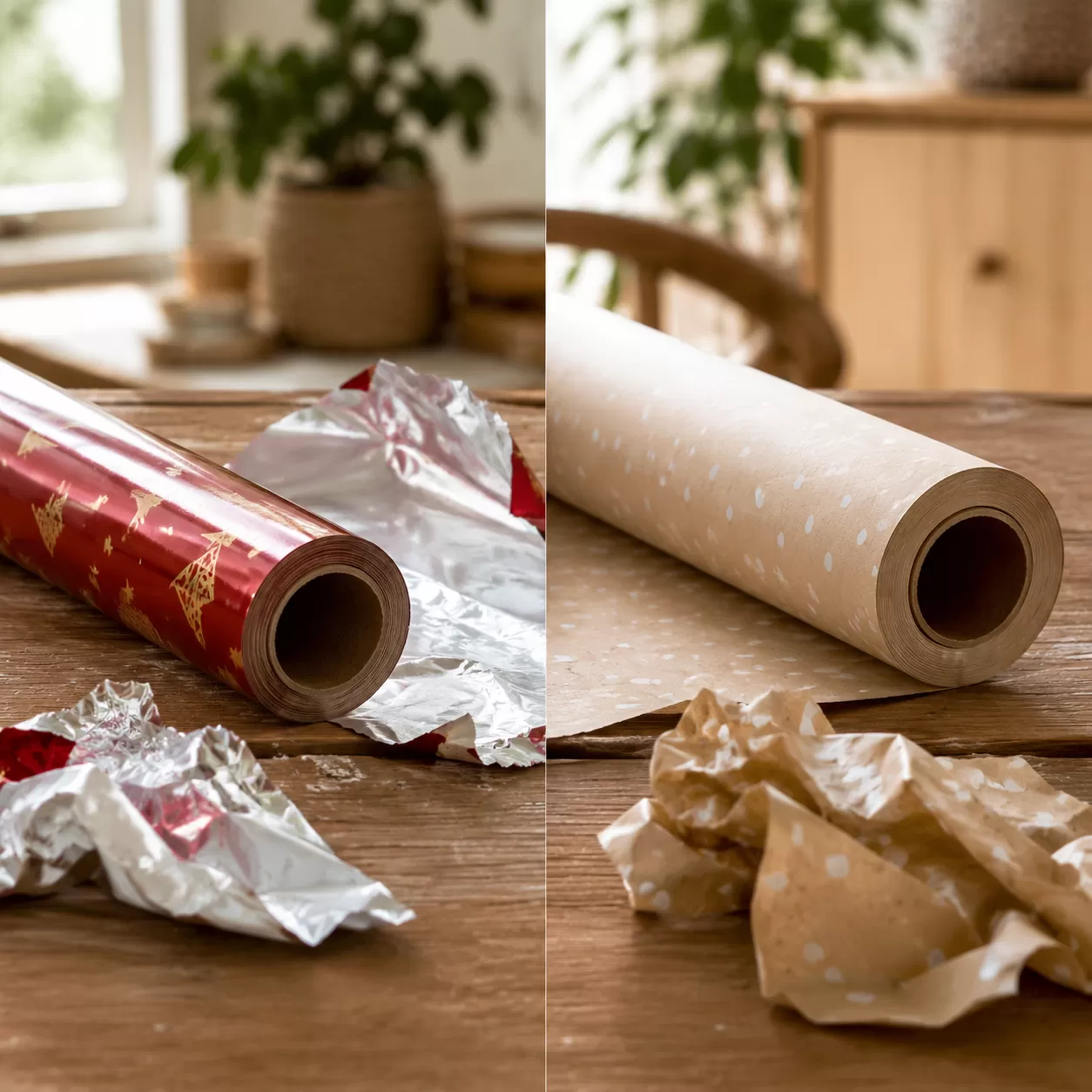
Environmental impact of coated wrapping paper
Coated wrapping paper looks great, but it's one of the least sustainable options on the shelf.
Most coatings are plastic-based or wax-based, which makes the paper:
- Hard or impossible to recycle (most MRFs reject glossy, plastic-coated wrap)
- More resource-intensive to produce due to added chemicals, energy, and multi-step processing
- Higher carbon footprint from manufacturing and end-of-life incineration
A big downside: coated wrapping paper often ends up in landfills after a single use, adding to holiday and seasonal waste spikes across the U.S.
Environmental impact of recycled paper
Recycled wrapping paper is built for eco-friendly packaging solutions:
- Uses post-consumer fibers, which reduces demand for virgin pulp and helps curb deforestation
- Cuts landfill waste by giving paper fibers a second (or third) life
- Generally needs less energy and water than producing virgin coated paper
Limits to know: each time paper is recycled, fibers get shorter and weaker. After 5–7 cycles, fibers can't be reused and need to be blended with some virgin pulp.
Key sustainability stats (global + U.S. context)
| Metric | Coated Wrapping Paper | Recycled Paper Wrap |
|---|---|---|
| Recyclability | Often non-recyclable | Widely recyclable (uncoated) |
| Typical end-of-life | Landfill or incineration | Recycling, composting (if unprinted) |
| Extra materials | Plastic/wax coatings, inks | Minimal coatings, simpler inks |
| Environmental impact focus | Higher footprint, more waste | Lower footprint, less waste |
In the U.S., holiday wrapping and packaging waste can climb into hundreds of thousands of tons every season, much of it from non-recyclable coated paper. Switching to recycled, uncoated wrapping or pairing it with reusable options like kraft gift bags with handles (for example, sturdy kraft gift bags with handles) is one of the simplest ways to cut that impact without giving up attractive presentation.
Performance Comparison: Coated Wrapping Paper vs Recycled Paper
Durability & Strength
When it comes to wrapping paper durability, coated paper is the clear workhorse.
Coated Wrapping Paper:
- Stronger and less likely to tear when pulled tight
- Better moisture resistance (coffee spills, wet hands, fridge/freezer use)
- Great for heavy or sharp-edged products and longer shipping routes
- Ideal for food and meat wraps when you use a dedicated freeze and butcher wrapping paper
Recycled Paper:
- Fine for light to medium gifts
- Fibers can be shorter and weaker, so it:
- Tears faster under pressure
- Wrinkles and creases more easily
- Not great for rough handling or humid environments
| Feature | Coated Wrapping Paper | Recycled Paper |
|---|---|---|
| Tear resistance | High | Medium to low |
| Moisture protection | Strong (coating barrier) | Low (absorbs water fast) |
| Heavy item support | Excellent | Limited |
Aesthetic & Branding Value
Coated Wrapping Paper:
- High gloss or satin finish
- Colors look richer, deeper, more "premium"
- Perfect for:
- Brand-focused retail packaging
- Holiday campaigns
- Luxury unboxing experiences
Recycled Paper:
- Matte, natural, rustic look
- Pairs well with:
- Twine, kraft bags, and simple ink stamps
- "Eco-friendly packaging solutions" messaging
- Great for brands that lead with sustainability and minimalism
| Aspect | Coated Paper (Premium) | Recycled Paper (Rustic) |
|---|---|---|
| Look | Glossy, vibrant, polished | Natural, earthy, simple |
| Branding style | Luxury, high-end retail | Eco, craft, small-batch feel |
Usability & Everyday Handling
For day-to-day use in U.S. homes and small businesses, both options are workable, but they feel different when you actually wrap.
Coated Wrapping Paper:
- Folds clean and sharp
- Slides smoothly when you cut with scissors
- Tape sticks well on most coatings, especially with quality tape
- Great for:
- Busy gift-wrapping stations
- High-volume retail and fulfillment lines
- Uniform, professional-looking packages
Recycled Paper:
- Slightly more friction when cutting
- Folds can be bulkier, but hold shape with strong creases
- Tape adhesion is usually strong because the surface is more porous
- Best for:
- Small shop owners who hand-wrap
- Craft-style sustainable gift wrapping ideas
- Short-distance shipping or in-store handovers
| Usability Factor | Coated Wrapping Paper | Recycled Paper |
|---|---|---|
| Ease of cutting | Very smooth | Slight drag, still easy |
| Folding & creasing | Clean, crisp lines | Thicker folds, more texture |
| Tape performance | Good with quality tape | Very good, grips surface well |
| Occasion fit | Holidays, luxury gifts | Eco gifts, rustic events |
If your top priority is performance and protection, coated paper wins. If your priority is eco-friendly packaging solutions with a natural look, recycled paper delivers, even if you sacrifice some strength.
Striking the Balance – Which Should You Choose?

When I choose between coated wrapping paper and recycled paper, I always start with the basics: purpose, budget, and eco goals.
Key Factors to Consider
| Factor | Coated Wrapping Paper | Recycled Paper |
|---|---|---|
| Main use | Premium gifts, retail display, branding | Everyday wrapping, eco gifts, business shipping |
| Look & feel | Glossy, sharp colors, "luxury" vibe | Natural, kraft, rustic, eco-friendly look |
| Durability | High tear & moisture resistance | Moderate, better for lighter items |
| Sustainability | Lower, harder to recycle | Higher, especially with post-consumer content |
| Cost | Usually higher per sheet/roll | Often more cost-effective at scale |
If you're running a U.S. e‑commerce brand that ships nationwide, you might lean on coated wrapping paper for VIP or limited-edition drops, and use recycled paper as your everyday sustainable wrapping paper for standard orders.
Hybrid & "In‑Between" Solutions
You don't have to choose all or nothing. I'm seeing a lot of success with hybrid wrapping paper options that balance sustainability and performance:
- Partially recycled base + ultra-thin coatings to cut plastic while keeping print quality.
- Matte or water-based coatings that reduce the coated paper environmental impact.
- Recycled kraft gift bags as an upgrade when you need a stronger, reusable presentation.
If you want to compare how different papers behave in real packaging, it's worth reviewing the performance characteristics of packaging paper to match the right grade to your product and shipping needs.
How I Customize for Balance
Here's how I design packaging that works in the real world:
-
Start with your priority
- Brand-first? Use coated wrapping paper for hero products, recycled paper for the rest.
- Eco-first? Use recycled paper as the default, with minimal or biodegradable coatings only when necessary.
-
Segment your use cases
- Retail shelves / gift sets: Higher print quality, possibly light coated paper.
- Online orders: Strong recycled paper or kraft with simple, single-color printing.
- Holiday peaks: Mix of sustainable gift wrapping ideas (kraft rolls, paper tape, simple twine).
-
Lock in a simple, scalable system
- One main recycled paper line for most orders.
- One "premium" coated or hybrid option for special campaigns.
- Standard sizes so you cut waste and control cost.
By thinking in tiers-everyday, premium, and special edition-you can build eco-friendly packaging solutions that still look sharp, protect your products, and stay aligned with U.S. customers' expectations for green packaging alternatives.
Future Trends in Sustainable Packaging
Sustainable packaging is moving fast, and coated wrapping paper vs recycled paper is only the starting point. In the U.S., I'm seeing three clear trends shaping where things go next.
Biodegradable Coatings & Smarter Materials
New coatings are being designed to break down naturally without sacrificing performance:
- Biodegradable coatings made from plant-based materials (like starch or PLA) that still give you shine, strength, and moisture resistance-without the long-term environmental impact of traditional plastic coatings.
- Water‑based coatings that reduce VOCs and make recycling and composting easier.
- Fiber‑based innovations, where mills upgrade pulp quality so recycled paper can be reused more times before fibers wear out.
For brands using gift bags, shredded fillers, and wraps together, pairing eco coatings with paper-based void fill like premium shredded paper packaging is becoming a go-to sustainable packaging solution.
Better Recycling & Closed-Loop Systems
Recycling tech is quietly getting smarter:
- Improved de-inking and separation so coated wrapping paper and printed packaging can be processed more efficiently.
- Closed-loop programs, where brands collect back their own packaging and turn it into new wrapping materials or paper-based bags and packaging.
- Local recycling partnerships, especially in larger U.S. cities, helping retailers and e-commerce brands move closer to zero-waste packaging.
This directly impacts the environmental footprint of both coated paper and recycled paper by keeping more fibers in circulation and less in landfills.
Consumer Shift to Green Packaging Alternatives
U.S. shoppers are voting with their wallets:
- More customers actively ask if wrapping paper is recyclable, compostable, or made from recycled content.
- Gift buyers are gravitating toward eco-friendly packaging solutions that still look premium-think minimalist prints, natural textures, and branded kraft wraps.
- Large and small brands are using sustainable wrapping paper and recycled packaging as part of their marketing story, not just a cost item.
Going forward, high-performance wrapping paper will need to combine strong branding, good durability, and clear sustainability claims-or it risks being left behind as eco-conscious packaging trends keep accelerating.