


Struggling to figure out how to choose the right wrapping paper manufacturer in China for your business?
You're not alone.
Picking the wrong supplier can lead to poor print quality, missed deadlines, and expensive shipping headaches. But the right partner can give you consistent quality, competitive prices, and scalable production that actually supports your brand's growth.
China is packed with wrapping paper manufacturers-from small workshops to large, fully automated factories. The challenge isn't finding one. It's knowing which manufacturer you can trust with your orders, your designs, and your delivery schedule.
As a professional wrapping paper producer, Dongguan Xianghe Paper Co., Ltd. has seen what separates reliable manufacturers from risky ones-on the factory floor, not just on paper.
In this guide, you'll learn exactly what to check, what to avoid, and how to evaluate a wrapping paper manufacturer in China step by step-so you can make a confident, profitable choice.
Understanding Your Wrapping Paper Needs
Before you pick a wrapping paper manufacturer in China, you need to be crystal clear about what you actually need. If you skip this step, every quote will look "okay," but none of them will truly fit your business.
Define Your Purpose
Start with where and how you'll use the paper:
- Retail gift wrap – Rolls or sheets for in‑store use and resale; strong colors, eye‑catching designs, consistent quality across many stores.
- E‑commerce packaging paper – Tissue or kraft for box inserts, branded unboxing experience, good print quality on lighter paper.
- Corporate gifting – Premium art paper, metallic or foil details, elegant prints that reflect your brand image.
- Personal or small business use – Lower wrapping paper MOQ, more flexible mixed designs, simple custom logo wrapping paper.
Your purpose will guide everything: paper type, printing method, and which China wrapping paper factory can actually support you.
Clarify Core Specs
Tell a Chinese wrapping paper supplier exactly what you want in numbers, not just "good quality":
- Paper type
- Kraft wrapping paper (strong, natural, eco‑friendly look)
- Tissue wrapping paper (lightweight, ideal for e‑commerce packaging)
- Art paper / coated paper (smooth, vivid prints, great for retail)
- Recycled paper (for eco friendly wrapping paper China sourcing)
- Thickness (GSM) – Typical gift wrap is ~60–80 GSM; tissue ~17–30 GSM; premium rolls can go higher.
- Finish – Matte, gloss, satin, metallic, glitter, or special textured finishes.
The more specific your specs, the easier it is for a paper printing factory in China to quote accurately and maintain stable quality.
Decide on Designs
You need to decide if you're going custom or stock:
- Custom printed wrapping paper China options:
- Custom logo wrapping paper
- Brand colors (Pantone), unique patterns, private label gift wrap
- Matching sets for bags, boxes, and packaging paper
- Stock patterns & seasonal designs:
- Holiday wrapping paper (Christmas, Chinese New Year, etc.)
- Everyday patterns (stripes, dots, florals)
- Faster lead times and lower cost than full custom
Custom = stronger brand, higher plate/setup costs. Stock = cheaper, faster, less unique. Decide where your brand sits.
Estimate Your Volumes
Chinese factories plan around volume. Be ready with:
- Test orders – Small trial run with a low MOQ gift wrap supplier (for print and quality validation).
- Recurring orders – Monthly/quarterly volumes for bulk wrapping paper wholesale China.
- Peak‑season demand – Holiday, Q4, or major campaigns where volume spikes.
If you can share realistic forecasts, a gift wrap manufacturer China can optimize pricing and production capacity for you.
Set a Working Budget
Think in terms of unit price and total project cost, not just "cheap or expensive":
- Unit price targets – What you can pay per sheet/roll while still hitting margin.
- Total budget – Including samples, plates, packaging, and inbound shipping to the US.
- Cost vs. value:
- Retail gift wrap: pay more for strong shelf appeal.
- E‑commerce tissue: balance cost with print quality and customer impression.
Be upfront with your budget range. A good OEM wrapping paper supplier will help you hit the right balance instead of simply cutting corners.
Plan for Sustainability
If you sell in the US market, customers are watching your packaging choices:
- Paper options:
- Recycled wrapping paper manufacturer (post‑consumer or mixed content)
- Uncoated kraft, compostable or plastic‑free paper
- Certifications:
- FSC certified wrapping paper or PEFC where available
- Clear recycled content claims
- Inks and coatings:
- Soy‑based ink printing or water based ink wrapping paper
- Low‑VOC processes and recyclable, non‑plastic coatings
Tell your sustainable packaging supplier China your sustainability targets upfront so they can propose the right material and cost options that work for your US customers.
Key Factors to Evaluate in a Chinese Wrapping Paper Manufacturer
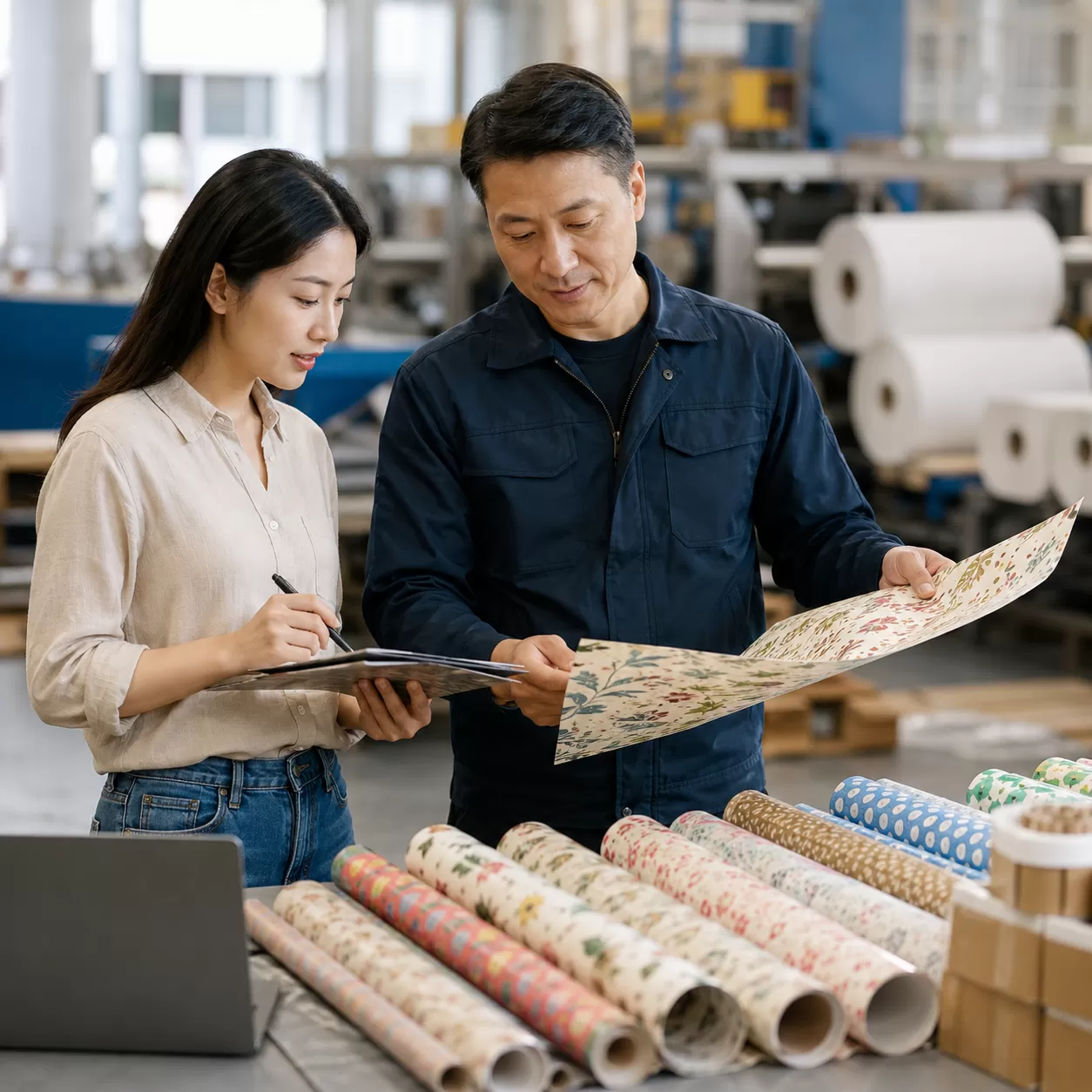
When I vet a China wrapping paper factory, I stick to a clear checklist. This keeps quality tight and avoids surprises once the shipment hits the U.S.
1. Quality systems (ISO, FSC, food-grade)
- Look for ISO 9001, FSC certified wrapping paper, and, if it touches food or candles, food‑grade or REACH-compliant materials.
- Ask for PDF copies of certificates and check if the names, dates, and addresses match their business license.
- For brands pushing sustainable packaging in the U.S., I prioritize eco friendly wrapping paper China suppliers with real FSC chain-of-custody.
2. Sample process and testing
- A serious Chinese wrapping paper supplier will offer:
- Printed gift wrapping paper samples (your design or theirs)
- Different GSMs (thickness) and finishes
- When samples arrive:
- Check color accuracy under daylight and store lighting
- Fold, crumple, and tear to test strength and crack resistance
- I usually combine wrapping paper samples with related packaging tests (for example, pairing with paper cushion pads or crinkle paper fill) to see how the full unboxing looks for U.S. retail and e‑commerce orders.
3. Production capacity and equipment
- Confirm their wrapping paper production capacity:
- How many tons or rolls per month?
- What's their peak‑season capability (Q4 / holidays)?
- Ask what printing tech they use:
- Flexo printing wrapping paper for large, cost‑effective runs
- Offset printed wrapping paper for high‑end retail designs
- For complex holiday programs, I prefer a holiday wrapping paper factory that can run multiple SKUs at once.
4. Customization and branding
- A good gift wrap manufacturer China should handle:
- Custom logo wrapping paper (CMYK + Pantone)
- Different sizes for retail rolls, flat sheets, and e‑commerce packs
- Special effects: foil stamped wrapping paper, glitter, spot UV
- Confirm they can align colors and style across branded packaging paper China, tissue, and other print items.
5. Pricing structure and what's included
- Ask them to break wrapping paper wholesale pricing into:
- Paper cost (type + GSM)
- Printing and finishing
- Plate/cylinder fees
- Inner/outer packaging and export cartons
- Clarify what's excluded: inland freight to port, pallets, export docs, and sample costs. This is where many U.S. buyers get hit with "surprise" line items.
6. MOQ and design flexibility
- Every bulk wrapping paper wholesale China supplier has a wrapping paper MOQ, often:
- By design (per pattern)
- By paper type (kraft vs. art paper vs. tissue)
- If you're testing the U.S. market, look for a low MOQ gift wrap supplier or one who allows mixed designs in one production run, even if the unit price is slightly higher.
7. Lead times and delivery record
- Typical wrapping paper lead time China:
- 5–10 days for samples
- 10–15 days for pre‑production
- 20–35 days for bulk
- Ask for their historic on‑time delivery rate and how they plan around Chinese New Year and Golden Week. Many U.S. brands get burned here if they don't lock in schedules early.
8. Reputation and export experience
- Check:
- Years in export business
- Main export markets (U.S., EU, UK, etc.)
- References from other foreign brands, if they'll share
- A seasoned OEM wrapping paper supplier or private label wrapping paper partner will already understand U.S. expectations on color control, barcodes, and retail‑ready finish.
9. Communication and responsiveness
- Strong B2B wrapping paper sourcing from China lives or dies on communication:
- Clear, simple English emails
- Fast responses (within 24 hours)
- Willingness to jump on calls or video tours of the factory
- I avoid suppliers that are slow, vague, or constantly change answers-those are usually the ones that cause issues later on quality or schedule.
By running every China wrapping paper factory through these checks, you'll quickly filter out risky suppliers and lock in a partner who can handle U.S. retail, wholesale, and e‑commerce demands with fewer headaches.
Sourcing Channels to Find Wrapping Paper Manufacturers in China
When I'm looking for a reliable China wrapping paper factory or Chinese wrapping paper supplier, I don't rely on just one channel. I combine a few sourcing methods so I can cross‑check information and filter out weak suppliers fast.
1. B2B Marketplaces: Alibaba, Made‑in‑China, Global Sources
For most US buyers, B2B platforms are the first stop for finding a gift wrap manufacturer in China.
Use them to find:
- Custom printed wrapping paper China suppliers (search terms like "custom logo wrapping paper," "foil stamped wrapping paper," "tissue wrapping paper manufacturer")
- Filter tools: verified suppliers, export focus, main markets (North America/Europe), ISO/FSC certifications
- Shortlisting: compare wrapping paper MOQ, wrapping paper wholesale pricing, lead time, and export experience
Always message multiple suppliers, ask for wrapping paper sample orders, and compare answers for consistency, speed, and clarity.
2. Trade Shows and Packaging Fairs
If you can travel, trade shows in China and Hong Kong are still one of the best ways to source:
- Look for gift packaging supplier China, China packaging manufacturer, and paper printing factory China booths
- Focus on exhibitors with holiday wrapping paper factory displays, eco friendly wrapping paper China lines, and strong branding
- Use the show app/catalog to build a list, then follow up by email/WeChat after the show
Even if you can't attend, many shows publish exhibitor lists, which are great for shortlisting export quality wrapping paper suppliers.
3. Sourcing Agents and Trading Companies
If you're new to buying bulk wrapping paper wholesale China or don't have a sourcing team, agents can help:
- They already know which OEM wrapping paper suppliers handle small US brands and which focus on big box retailers
- They can coordinate sampling, third‑party inspection China, and FOB China wrapping paper shipments
- Trading companies may give you lower MOQs and more flexible design mixes but slightly higher pricing
This route is helpful if you need private label wrapping paper quickly and don't want to manage every factory detail yourself.
4. Industry Directories and Local Chinese Platforms
Beyond global platforms, check:
- Chinese industry directories and packaging associations for Guangdong paper packaging suppliers, Dongguan wrapping paper factory listings, and other regional hubs
- Supplier websites and blogs that show real production capabilities and category depth; for example, some manufacturers publish guides like an ultimate guide to wrapping paper types on their packaging blog, which signals real in‑house expertise
Use Google, Baidu, and LinkedIn together: if a wrapping paper wholesale supplier is serious about export, you'll usually see a consistent presence across platforms.
5. Key Paper Hubs: Guangdong, Zhejiang, Jiangsu
Most strong gift wrap manufacturers in China are clustered around:
- Guangdong (e.g., Dongguan, Shenzhen): strong in branded packaging paper China, offset printing, and complex finishes like glitter wrapping paper
- Zhejiang (e.g., Yiwu): huge volume for holiday wrapping paper, wrapping paper MOQ flexibility, and low‑cost runs
- Jiangsu: more integrated paper mills and FSC certified wrapping paper options
Ask each supplier for their full factory address and photos/video; then cross‑check on maps and with local business directories.
6. Direct Factories vs. Intermediaries
Both models can work; you just need to pick what matches your stage and volume:
Direct factories (China wrapping paper factory):
- Better for large volumes, long‑term programs, and tight wrapping paper lead times China
- More control over wrapping paper quality control, materials (kraft, recycled, tissue), and custom finishes
- Often require higher MOQs per design or per material
Intermediaries (traders/agents):
- Good for low MOQ gift wrap supplier needs, seasonal tests, and wide design ranges
- Can bundle different products (wrapping paper, boxes, bags) under one gift packaging supplier China
- Less direct transparency, so you must push harder for factory info and certifications
Where possible, I like to know exactly which factory is behind my custom logo wrapping paper or eco friendly wrapping paper China line, even if I'm working through an agent. That's how you protect your brand and keep quality consistent for the US market.
Verifying a China Wrapping Paper Manufacturer's Legitimacy

When I source from a China wrapping paper factory, I treat verification as non‑negotiable. Before talking price, I confirm they're a real, stable Chinese wrapping paper supplier that can actually deliver.
Check Business Licenses and Registration
Ask for:
- A clear photo/scan of the business license (with company name in Chinese, registration number, legal representative, address, and business scope).
- Matching details on their website, Alibaba / Made‑in‑China / Global Sources profile, and on Google Maps / Baidu Maps.
- Tax number and bank account under the same company name that's on the license.
If anything doesn't match, I pause the deal.
Validate Certifications (ISO, FSC, BSCI, SEDEX)
For a serious gift wrap manufacturer in China, certifications matter:
- ISO 9001 – basic quality management system.
- FSC – required if you want FSC certified wrapping paper or other sustainable packaging.
- BSCI / SEDEX – helpful if you sell to major U.S. retailers with social compliance rules.
Always ask for full certificates (with certificate number, scope, and validity dates), then check them on the issuing body's website. For technical context on paper specs, I often point suppliers to detailed references like these technical parameters of packaging materials so we're aligned.
Request Factory Profile and Export History
For any OEM wrapping paper supplier I work with, I request:
- A factory profile deck (PDF is fine) with:
- Year established
- Factory size (sq. ft/m²)
- Number of workers
- Main machines (flexo, offset, foil stamping, etc.)
- Ownership details (who owns the factory, any group companies).
- Export markets and key clients (even if names are confidential, they can share regions and product types).
- Photos or videos of:
- Workshop and printing lines
- Warehouse and finished goods
- Sample room of custom printed wrapping paper and holiday wrapping paper
Use Third‑Party Verification
If the order is serious or the pricing is "too good," I bring in a third party:
- On‑site factory audit via local inspection companies in China.
- Basic verification reports (license check, litigation, blacklists, ownership).
- Video calls where they walk through the production area in real time.
For U.S. buyers, spending a few hundred dollars here can save thousands in bad stock or scams.
Red Flags to Avoid
I walk away fast if I see:
- Only a virtual office or vague address you can't locate on maps.
- Inconsistent company names across license, bank, website, and contract.
- Prices 30–50% below other bulk wrapping paper wholesale China quotes with similar specs.
- No willingness to show certificates, licenses, or factory photos.
- Refusal to use platform trade assurance, LC, or staged payments for first orders.
Evaluate Long‑Term Stability
A reliable printed gift wrapping paper supplier should look stable on paper:
- 5+ years in business in the same location is a good sign.
- 100+ workers for larger volume; smaller teams are fine for low MOQ gift wrap suppliers, but they must be transparent about capacity.
- Clear focus on export quality wrapping paper with main markets in the U.S., EU, UK, or Australia.
I treat this as a checklist: if a China packaging manufacturer can't tick these boxes, I don't let them handle my brand's custom logo wrapping paper or seasonal collections.
Assessing Product Quality and Consistency from a China Wrapping Paper Factory
When I source from a China wrapping paper factory, I'm obsessive about quality and consistency. If you're buying bulk wrapping paper wholesale from China for U.S. retail or ecommerce, these are the checks I'd never skip.
GSM, Thickness, and Strength
For wrapping paper, GSM (grams per square meter) and thickness determine how the paper looks, feels, and performs:
- Tissue wrapping paper: usually 17–22 GSM for apparel and gift packaging
- Standard gift wrap: 60–80 GSM for retail rolls and sheets
- Kraft wrapping paper: 70–120 GSM for sturdier, eco-leaning packaging
Ask the Chinese wrapping paper supplier for GSM specs, caliper (thickness), and a physical sample. Make sure it's strong enough to wrap without:
- Tearing at corners
- Showing the gift box through the sheet
- Feeling "cheap" compared to U.S. retail standards
If you're using branded tissue for ecommerce, compare factory samples with premium tissue wrapping paper already sold in the U.S. market so you know where you stand.
Print Quality: Color and Registration
With custom printed wrapping paper from China, print quality is what makes or breaks your brand:
- Color accuracy: Provide Pantone refs; ask for printed color swatches and signed samples
- Sharpness: Check thin lines, small logos, and fine patterns
- Registration: Make sure colors don't "shift" or misalign in multi-color designs
For offset printed gift wrap or flexo printed rolls, I always insist on pre-production samples and compare them under neutral light against approved proofs.
Surface Finish and Special Effects
Different markets in the U.S. expect different finishes from a gift wrap manufacturer in China:
- Matte: premium, modern, less glare
- Gloss: bright, traditional retail look
- Metallic / foil stamped: upscale, perfect for holiday wrapping paper
- Glitter wrapping paper: check shedding and mess
- Specialty effects: embossing, spot UV, soft touch
Ask the OEM wrapping paper supplier to send a finish swatch book so you can feel and see options before locking in a spec.
Durability: Tear, Fold, and Crack Resistance
Real-world usage matters more than lab specs. I run simple tests on every sample:
- Wrap a real box
Customization, Design, and Branding Options
When I choose a wrapping paper manufacturer in China, I treat design as core brand real estate, not an afterthought. That's where a good China wrapping paper factory can really stand out.
Custom Sizes and Cutting
I always lock in sizing first because it drives cost and usability.
Key options I insist on:
- Custom sheet sizes for retail folding, flat packs, and e‑commerce box lining
- Roll widths & lengths tailored to gift shops vs. warehouse packing lines
- Precision cutting & trimming to reduce waste and speed packing
| Use Case | Recommended Format |
|---|---|
| Retail gift wrap | Pre‑folded sheets, POS-friendly |
| E‑commerce packaging | Custom sheets to box footprint |
| Corporate gifting | Wider rolls, premium thickness |
Custom Printed Wrapping Paper (Logos, Colors, Patterns)
For US brands, custom print is usually non‑negotiable. A strong custom logo wrapping paper reinforces the brand with every unboxing.
I make sure the Chinese wrapping paper supplier can handle:
- Brand colors matched accurately across runs
- All‑over patterns (holiday wrapping paper, seasonal themes)
- Mixed designs in one order if I need variety at a lower MOQ
Handling Artwork: CMYK, Pantone, and Files
To get consistent printed gift wrapping paper, I send clean artwork and push the factory on pre‑press.
I typically require:
- CMYK files for full‑color designs
- Pantone matching for exact brand colors
- Editable formats (AI, PDF, EPS) with outlined fonts and embedded images
- Digital proof + printed pre‑production sample before mass run
Special Finishes and Premium Effects
If I'm targeting premium retail or corporate gifting, I look for a gift wrap manufacturer in China that can add elevated finishes:
- Foil stamping (gold, silver, holographic)
- Embossing/debossing for tactile logos
- Spot UV to highlight patterns or icons
- Lamination (matte or gloss) for more durability
These are also where I double‑check cost and lead time in the quote.
Matching Brand Style Across Lines
I want my branded packaging paper to look consistent next to my bags, boxes, and mailers.
I align with the factory on:
- Core color palette and logo usage rules
- Pattern systems that adapt from holiday wrapping paper to everyday designs
- Paper choices that match other packaging (e.g., kraft, FSC certified, recycled)
If I'm already using sustainable substrates like kraft or glassine in other SKUs, I'll often extend that look into wrapping paper and even tie it to products like our kraft glassine bags for a unified shelf presence.
Co‑Developing Designs With the Factory
A strong OEM wrapping paper supplier in China usually has an in‑house design or pre‑press team. I use them.
How I work with them:
- Share a clear brand guide (logos, colors, do's/don'ts)
- Start from their existing pattern library to cut design time and cost
- Ask for mockups for different markets (retail, e‑commerce, corporate)
- Use small test orders to see how designs perform before scaling
When I'm ready to move forward on a new custom concept or collection, I typically start with a structured brief and then reach out through a direct inquiry form like the one on our own site at XH Packing's inquiry page to lock in specs, pricing, and samples fast.
Pricing, MOQ, and Cost Optimization with a China Wrapping Paper Factory
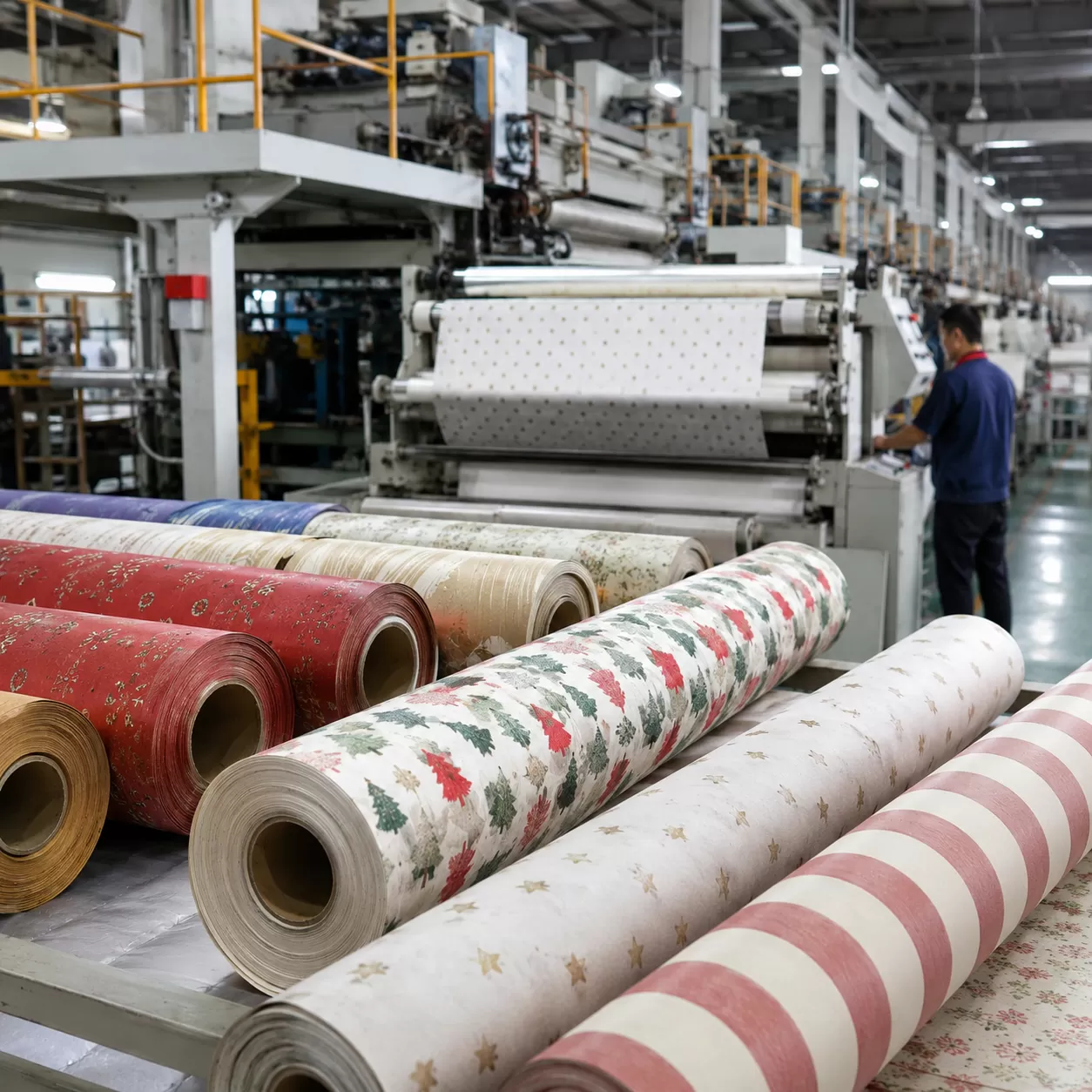
When I'm choosing a wrapping paper manufacturer in China, I always strip the pricing down to the basics so I know exactly what I'm paying for and where I can optimize.
Break down the quote
Ask your Chinese wrapping paper supplier to itemize every cost:
- Materials: paper type (kraft, tissue, art paper, eco friendly wrapping paper), GSM, recycled or FSC certified.
- Printing: number of colors, flexo vs. offset, full-bleed coverage, special colors (Pantone).
- Plates & setup: one-time plate charges or cylinder fees per design.
- Finishing: foil stamping, glitter, embossing, spot UV, lamination.
- Packaging: retail packs vs. bulk rolls, branded labels, master cartons.
- Logistics: inland freight to port, export handling, palletizing.
For custom branding, I'll often compare simple logo patterns vs. full-coverage designs using options like this custom logo wrapping paper to see where the best value is.
How MOQs actually work
With most China wrapping paper factories, MOQ (minimum order quantity) isn't just "one number":
- By paper type: premium art paper or specialty metallic paper often has higher MOQs than basic kraft.
- By design: each design/colorway usually has its own MOQ because of separate plates and setups.
- By format: sheets vs. rolls vs. tissue inserts all have different minimums.
If you're testing the US market, look for a low MOQ gift wrap supplier or a factory that lets you split one larger MOQ across mixed designs in the same size and paper type.
Custom vs. stock pricing
You'll always pay more for custom printed wrapping paper from China than for stock designs:
- Stock/ready designs: lowest price, fastest lead time, ideal for low-risk tests and discount retail programs.
- Custom logo wrapping paper / private label: higher upfront costs (plates, design prep), but better long-term unit cost once volumes grow.
- Seasonal holiday wrapping paper: mid-range pricing; many factories already have Christmas or holiday patterns you can tweak without full custom.
For US brands, I usually start with a mix: some branded packaging paper for core products and stock designs for seasonal or promotional runs.
Hidden costs to watch
I never sign off on a quote until I've checked:
- Sample fees: often refundable with the first order, but ask upfront.
- Plate charges: one-time, but can be high if you have many SKUs.
- Packaging upgrades: header cards, barcodes, retail wraps can add up.
- Inland freight: factory to port (especially from Guangdong or Zhejiang) is often excluded in early quotes.
- Bank fees & currency: wire fees and FX swings can hit your landed cost.
If you're ordering complementary items like tissue paper for boxes from the same China packaging manufacturer, negotiate combined packing and inland freight to cut waste.
Negotiating better terms
Chinese wrapping paper suppliers respond well when you're clear and consistent:
- Show your roadmap: share realistic volume forecasts by quarter.
- Bundle SKUs: same size/paper, multiple designs in one run to lower average cost.
- Lock in repeat orders: commit to 2–3 runs a year to get better pricing or lower MOQs.
- Ask for breakpoints: price tiers at 5k / 10k / 20k sheets or rolls so you see how scale affects cost.
I always negotiate around total annual volume, not just a one-off order.
Balance cost with quality and brand
For the US market, cheap but flimsy paper or bad print is a brand killer. I balance:
- Core lines: higher-quality export quality wrapping paper to protect brand perception.
- Promo lines: slightly lighter GSM or fewer colors to hit lower price points.
- Eco lines: FSC certified or recycled wrapping paper manufacturer options, even if unit cost is slightly higher, because customers will pay for sustainable packaging.
My rule: never chase the rock-bottom quote. Work with an OEM wrapping paper supplier who can hit your wrapping paper wholesale pricing targets without cutting corners on print quality, color accuracy, and durability.
Lead Times, Logistics, and Shipping from China
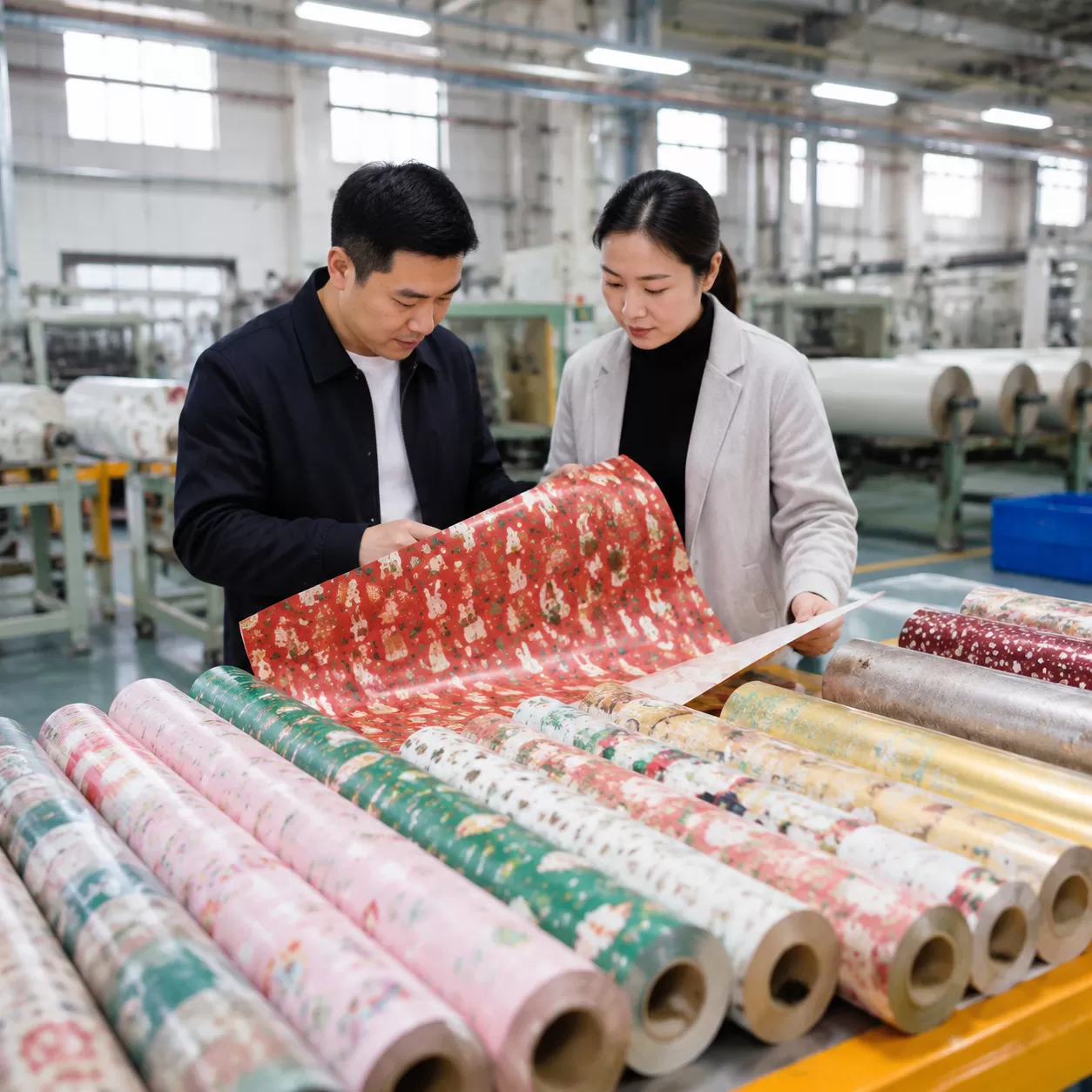
When you're choosing the right wrapping paper manufacturer in China, you need to treat lead times and logistics like part of your product, not an afterthought. For U.S. brands, timing and landed cost can make or break a season.
Typical Lead Times from a China Wrapping Paper Factory
For most Chinese wrapping paper suppliers, here's a realistic timeline:
- Samples: 5–10 days for digital or physical samples of custom printed wrapping paper
- Pre‑production (PP) sample: 7–14 days after artwork and payment are confirmed
- Mass production: 20–35 days depending on design complexity, paper type (kraft, tissue, art paper), and order volume
- Total from artwork to shipment: Expect 5–8 weeks in most cases
I always lock these dates into the purchase order and ask for a detailed production schedule so we can track each step.
Plan Around Chinese Holidays and Peak Seasons
If you're buying holiday wrapping paper wholesale from China, you cannot ignore local holidays:
- Chinese New Year (late Jan–Feb): Factories can shut down for 2–4 weeks; capacity is tight 4–6 weeks before and after
- Golden Week (Oct 1–7): Many suppliers and logistics services pause or slow down
- Peak season: Back‑to‑school through Q4 is busy for every gift wrap manufacturer in China
For U.S. retail and e‑commerce, I usually:
- Place Christmas wrapping paper and Q4 gift wrap orders by May–July
- Confirm designs and PP samples at least one month before any major Chinese holiday
- Add a buffer of 2–3 weeks to every schedule during peak seasons
Shipping Options: Sea, Air, and Courier
For bulk wrapping paper wholesale from China, you'll balance speed vs. cost:
- Sea freight (ocean):
- Best for large orders and heavy kraft wrapping paper
- Cheapest per unit, but transit to the U.S. is typically 25–40 days port to port
- Good for seasonal and forecasted demand
- Air freight:
- 3–10 days transit, much faster than sea
- Higher cost, but worth it for urgent launches or smaller high‑margin lines like branded packaging paper
- Courier/Express (DHL/UPS/FedEx):
- Ideal for wrapping paper sample orders and urgent reprints
- Most expensive, but simple and fast (3–7 days door‑to‑door)
For ongoing programs, I often mix modes: sea for base volume, air for top‑ups or late design changes.
FOB, CIF, and EXW: What Works for U.S. Buyers
When working with a China packaging manufacturer, be clear on Incoterms:
- EXW (Ex Works):
- You handle everything from factory door onward
- Lowest quote on paper, highest workload and risk on your side
- FOB China (e.g., FOB Shenzhen, FOB Ningbo):
- Factory delivers to the export port, clears export customs
- You handle ocean/air freight, insurance, and import
- Most common and practical for U.S. importers buying OEM wrapping paper
- CIF (Cost, Insurance, Freight):
- Supplier books and pays for freight and basic insurance to your port
- You still handle customs clearance and local charges
I prefer FOB for control and transparency on freight costs, especially once volumes grow.
Work With a Solid Freight Forwarder
Don't rely blindly on the factory's shipper. For U.S. buyers:
- Use a freight forwarder that understands packaging and can handle cartons, pallets, and occasionally food gift wrap if you're wrapping food‑related items
- Ask for all‑in quotes (origin + freight + destination charges) so you know your true landed cost per roll or sheet
- Make sure the factory can coordinate directly with your forwarder on booking, pickup, and export docs
Export Packaging That Survives the Trip
Wrapping paper is heavy and can be moisture‑sensitive, especially uncoated kraft and tissue. I specify export packaging up front:
- Double‑wall cartons for heavy rolls or big sheet packs
- Palletization with corner protectors and stretch wrap for full container loads
- Moisture protection:
- Plastic liners, desiccant packs, or shrink wrap inside cartons
- This is crucial for humid months and sea freight
If you're pairing wrapping paper with other gift packaging like large kraft gift bags, make sure both are packed to the same export standard so you don't get uneven damage rates.
By locking down lead times, shipping method, Incoterms, and export packaging with your Chinese wrapping paper supplier, you avoid the usual headaches: missed holidays, crushed cartons, and surprise logistics costs.
Sustainability and Eco‑Friendly Wrapping Paper
When you're choosing a wrapping paper manufacturer in China, eco options aren't a "nice to have" anymore-they're table stakes for the U.S. market.
Types of eco‑friendly wrapping paper
Ask each China wrapping paper factory clearly what they can offer:
- Recycled wrapping paper (often 30–100% post‑consumer waste)
- Kraft wrapping paper (brown, unbleached, strong, highly recyclable)
- Uncoated paper (no plastic film, easier to recycle and often compostable)
- Compostable paper (no foil, no glitter, no plastic lamination, plant‑based inks)
For brands that also use paper bags or filler, it's smart to align materials across items like brown paper filler and other paper-based packaging so your whole packaging system is eco-consistent.
Certifications that actually matter
For U.S. buyers, don't just take "eco-friendly" at face value. Look for:
- FSC certified wrapping paper (FSC Mix / FSC Recycled)
- PEFC (less common but still valid)
- Verified recycled content claims in spec sheets or test reports
Always ask for certificate numbers and recent copies, and make sure they match the factory name.
Inks, coatings, and low‑VOC processes
To keep your wrapping paper truly eco:
- Request soy-based ink printing or water-based ink wrapping paper
- Avoid heavy plastic lamination; ask for water-based coatings instead
- Ask about low‑VOC processes and whether they've passed EU REACH or similar tests
If you need metallic looks, consider foil stamping on uncoated or kraft instead of full plastic film lamination.
Plastic‑free and recyclable packaging
Push your Chinese wrapping paper supplier to keep the whole package green, not just the sheet:
- Avoid shrink‑wrap where possible; ask for paper belly bands or cardboard wraps
- Use recyclable cartons and, if you palletize, ask for minimal plastic film
- Confirm your wrapping paper (no glitter, no plastic, no foil all over) is curbside recyclable in most U.S. cities
How to communicate eco‑features to customers
Eco features only add value if shoppers understand them. Make it easy:
- Print clear icons like "100% Recycled Paper", "FSC Certified", "Plastic‑Free", "Recyclable"
- Add short callouts on packs:
- "Printed with soy‑based inks"
- "No foil. No glitter. Easily recyclable."
- Include sustainability points in your product pages and Amazon bullets
Balancing eco goals with budget and performance
Eco paper will usually cost more than the cheapest coated stock from a bulk wrapping paper wholesale China supplier, but you can keep it under control:
- Start with FSC kraft wrapping paper or partially recycled content to balance price and sustainability
- Prioritize high‑impact SKUs (holiday wrapping paper, best‑selling prints) for your green upgrades
- Compare unit cost vs. brand value-eco features often support higher price points and stronger reviews
The right Chinese wrapping paper supplier will be upfront on costs, help you choose the best mix of eco materials, and keep your sustainability goals aligned with real‑world performance and margins.
Communication, Culture, and Working Style with Chinese Wrapping Paper Suppliers
When you're choosing a wrapping paper manufacturer in China, how you communicate will make or break the partnership. Here's how I handle it so projects stay on track and drama‑free.
Set Clear Specs From Day One
For any China wrapping paper factory you work with, don't leave details "open."
Send a simple but complete spec pack:
- Paper type & GSM: e.g., 80gsm kraft, 17gsm tissue, 100gsm art paper
- Size & format: sheet size, rolls, perforation, core size
- Printing: CMYK or Pantone, number of colors, sides printed
- Finish: matte, gloss, foil, glitter, special effects
- Packaging: retail rolls, bulk cartons, labels, barcodes, palletizing
- Target market & channel: retail gift wrap, ecommerce packing paper, corporate gifting, etc.
Always include print‑ready files (AI, PDF, EPS) and a simple spec sheet PDF so there's no confusion.
Use Simple, Direct Language + Visuals
Most Chinese wrapping paper suppliers understand written English better than spoken.
- Keep emails short, numbered, and direct
- Use photos, screenshots, and marked‑up PDFs to show what you want
- For color, always reference Pantone codes, not "a bit more blue"
- When explaining designs for custom printed wrapping paper China orders, send:
- Layered artwork
- A low-res mockup of the final look
- Clear bleed and margin instructions
If you're discussing anything technical (like GSM or food‑contact paper similar to this butcher and food wrapping paper), show real examples or photos whenever possible.
Align on Quality Standards and Approvals
Before mass production, align on what "good" looks like:
- Define tolerances: size variance, color variance (ΔE), print registration
- Decide which standards matter: FSC certified wrapping paper, REACH, food‑grade where needed
- Lock in an approval process:
- Digital proof → physical pre‑production sample → mass production
- You sign off in writing at each step
This is critical for branded packaging paper China projects where color and logo accuracy matter.
Manage Time Zones and Response Time
China is usually 12–15 hours ahead of U.S. time depending on your coast.
- Agree on response time expectations (e.g., within 24 hours on weekdays)
- Batch your questions in one structured email instead of sending 10 small ones
- Use shared tools when needed:
- Email for records
- WeChat / WhatsApp for faster clarifications
- Occasional Zoom/Teams calls for big decisions
For urgent changes on wrapping paper lead time China orders, always follow chat with a email.
Build Trust With Regular Contact
Solid long‑term pricing and priority production slots come from trust.
- Schedule regular calls (monthly or per project phase)
- Ask for factory video tours if you can't visit - see machines, storage, QC area
- Share your seasonal plans and forecasts so the OEM wrapping paper supplier can plan capacity
For larger volumes of bulk wrapping paper wholesale China orders, a short visit to Guangdong, Zhejiang, or Jiangsu can speed everything up and get you better support.
Handling Issues, Complaints, and Corrective Actions
Problems will happen - what matters is how you handle them.
When there's a problem (color off, paper too thin, damaged cartons, late shipment):
- Document everything
- Photos, videos, batch numbers, order number
- Clear description: what's wrong, how many units, how it impacts you
- Stay specific, not emotional
- "Color does not match approved Pantone 186C; see side‑by‑side photo"
- "Paper tests at approx. 65gsm, spec was 80gsm"
- Ask for a corrective action plan
- Reprint? Discount? Credit on next PO?
- What they'll change in wrapping paper quality control (more inspections, new checks, etc.)
- Update your PO and contracts
- Add clear quality clauses, inspection rights, and penalties for serious delays
- Require pre‑shipment inspection for big or critical runs
Handled right, even a bad shipment can turn into a stronger relationship with your Chinese wrapping paper supplier.
Compliance, Regulations, and Safety Requirements with a China Wrapping Paper Factory
When I choose a wrapping paper manufacturer in China, I treat compliance like a non‑negotiable. If it can't clear US and EU rules, it doesn't go near my brand.
Understand Import Rules for Paper Products
For US buyers, you need to think beyond "it's just paper":
- HTS codes & duties – Make sure your Chinese wrapping paper supplier knows the HS/HTS code they're using and aligns with your customs broker.
- Country of origin – "Made in China" marking must be clear and permanent where required.
- Wood/paper origin rules – If you push FSC certified wrapping paper or recycled content, get documentation ready for customs or brand audits.
Chemical & Safety Standards (REACH, CPSIA, Food Contact)
Even for gift wrap, retailers and marketplaces are pushing harder on chemical compliance:
- REACH (EU) – Important if you also sell into Europe: limits on heavy metals, VOCs, plasticizers, etc.
- CPSIA (US) – If your paper could be considered for kids' products (holiday wrapping paper, birthday themes), confirm:
- Lead and phthalate limits
- Relevant test reports from an accredited lab
- Food contact – If you use food-safe cellophane or food wrapping paper, demand food-grade certificates and migration test reports. For example, I always require food-contact reports when using anything like food-safe cellophane wrap.
Labeling, Barcodes, and Retail Compliance
If you sell to US retail chains or on Amazon, your Chinese wrapping paper supplier must follow strict label rules:
- UPC/EAN barcodes – Correct symbology, size, and placement
- Retail stickers – MSRP, SKU, brand name, product description
- Warning labels – Where needed (e.g., "Keep away from fire", suffocation warnings for packaging bags)
- Carton markings – Item number, quantity, gross/net weight, carton size, made-in label
Document Support You Should Demand
I never confirm a bulk order without a clear document package. At minimum:
| Document Type | Why It Matters for US Importers |
|---|---|
| Commercial Invoice | Customs valuation, duties, payment reference |
| Packing List | Carton breakdown, weights, dimensions for freight & customs |
| Bill of Lading / AWB | Proof of shipment, needed for customs clearance |
| Certificates (FSC, etc.) | Proves eco claims like FSC certified or recycled content |
| Lab Test Reports | Shows compliance with REACH, CPSIA, heavy metal, etc. |
Risk Management and Common Pitfalls to Avoid
When you source from a China wrapping paper factory, risk management isn't optional-it's how you protect your brand and margins.
Typical Problems with Chinese Wrapping Paper Suppliers
The most common issues I see with a Chinese wrapping paper supplier or gift wrap manufacturer in China are:
- Color mismatch: Final colors don't match your Pantone or brand guide.
- Paper too thin or weak: GSM is lower than agreed, paper tears easily, or feels "cheap."
- Late delivery: Missed ship dates, especially around Chinese New Year and Golden Week.
- Finishing defects: Scratches on foil stamped wrapping paper, glitter falling off, uneven coating.
For high-value launches, I always recommend a small wrapping paper sample order first so you can catch these problems early. You can also review broader packaging checks in this short buying guide on what to check before purchasing paper packaging.
Use Clear Contracts and Purchase Orders
Treat every bulk wrapping paper wholesale China order like a project with a contract:
- Lock in specs: GSM, paper type (kraft, tissue, art paper), size, print method (flexo/offset), and finishes in the purchase order.
- Fix pricing and terms: Unit price, plate/film charges, payment terms, and wrapping paper MOQ per design.
- Quality clauses: Reference approved samples, color tolerance (ΔE), and defect thresholds.
- Delivery terms: FOB China wrapping paper or CIF, port of loading, and ship date with penalties or discounts for late shipment if you have leverage.
A tight PO makes it much easier to challenge a supplier if something goes off the rails.
Pre‑Production Samples and Approvals
Never let a Chinese wrapping paper supplier go straight to mass production for a new design:
- Digital proof: First check layout, spelling, and logo position.
- Pre‑production sample (PPS): Printed on the exact machine, ink, and paper-your control sample.
- Written approval: Confirm "mass production must match PPS" in writing.
For custom logo wrapping paper or complex holiday wrapping paper, I'll sometimes approve:
- 1 sample for color only
- 1 sample for structure and finish
That gives you a clear benchmark for both print and feel.
Third‑Party Inspection in China
For larger or critical orders, I strongly suggest using third party inspection in China:
- During production (DUPRO): Catch gsm, color, and finish issues before the line finishes.
- Pre‑shipment inspection (PSI): Inspect random cartons before they leave the factory.
Inspectors can check:
- GSM and thickness of your eco friendly wrapping paper China products
- Print alignment and registration on offset printed wrapping paper
- Count and packaging quality for export cartons
It costs a few hundred dollars and can save a full container from becoming unusable stock.
Diversify Suppliers When Possible
Relying on one OEM wrapping paper supplier or one Dongguan wrapping paper factory is risky:
- Have at least one backup: Source a second FSC certified wrapping paper factory that can handle your key SKUs.
- Split orders by season: For example, use one holiday wrapping paper factory for Q4 and another for everyday designs.
- Use test orders: Keep a backup supplier warm with smaller custom printed wrapping paper China orders.
This way, if one factory has capacity or quality issues, you're not dead in the water for peak season.
When an Order Goes Wrong
If a wrapping paper order goes sideways, stay structured:
- Document everything: Photos, videos, GSM checks, defect rate, and any customer complaints.
- Compare to contract: Reference the PO and approved pre‑production sample.
- Propose a solution:
- Re‑production of the defective part of the order
- Partial refund or credit against the next order
- Discounted re‑order with upgraded quality
- Use leverage: Hold the final payment or future orders until a solution is agreed.
- Adjust your process: Tighter specs, more inspections, or shifting volume to another bulk wrapping paper wholesale China partner.
The goal is simple: learn from each issue so that your next export quality wrapping paper order is tighter, cheaper to manage, and more reliable.
Building a Long‑Term Partnership with Your China Wrapping Paper Manufacturer
When I work with a China wrapping paper factory, my goal is always to turn them from a simple Chinese wrapping paper supplier into a true strategic partner for my brand.
Start Small, Then Scale Up
I almost always start with:
- Trial orders to validate print quality, color accuracy, GSM, and packing.
- A clear plan to scale gradually once they prove they can handle bulk wrapping paper wholesale from China without issues.
This lowers risk while I test their real production capacity, communication, and on‑time delivery.
Share Forecasts and Launch Plans
For the U.S. market, demand spikes around:
- Q4 holidays (Christmas, Black Friday, Cyber Monday)
- Mother's Day, Valentine's Day, graduations, weddings
I share:
- 3–6 month forecasts
- Launch calendars for new gift wrap collections
- Expected peak volumes and re‑order windows
This helps the OEM wrapping paper supplier reserve paper stock, schedule printing, and avoid last‑minute surprises.
Co‑Develop Collections and Seasonal Designs
Once the basics are solid, I like to co‑create:
- Holiday wrapping paper and special gift wrap for big gifts
- Custom logo wrapping paper and branded packaging paper for ecommerce
- U.S.‑specific themes (Thanksgiving, 4th of July, graduation)
Good factories often have an in‑house design team that can help fine‑tune repeat patterns, colors, and layout for retail shelves or online unboxing. For oversized items, I'll look at options like their wrapping paper for big gifts to build out a full product line.
Reward Good Performance
If a Chinese gift wrap manufacturer hits:
- Quality targets
- On‑time shipping
- Consistent communication
I reward that with:
- Larger and more frequent orders
- Longer-term contracts or exclusivity on key designs
- Early involvement in new product briefs
This gives them confidence to invest in better plates, newer presses, and more sustainable substrates for my projects.
Run Regular Performance Reviews
I treat my wrapping paper manufacturer in China like a core vendor, not a one‑off supplier. Every quarter I review:
- Quality: defects, color variation, paper strength
- Cost: updated pricing, material changes, freight impact
- Delivery: lead times, on‑time rate, issue resolution speed
If something slips, we agree on a clear corrective action plan. That's how a basic printed gift wrapping paper supplier becomes a long‑term strategic packaging partner that supports my brand in the U.S. market year after year.