


If you're planning to import wrapping paper and want to build your own custom brand, choosing the right OEM wrapping paper factory can make or break your business.
You're not just buying pretty paper. You're dealing with MOQs, lead times, quality control, certifications, shipping, and IP protection-often in a different language and time zone. One wrong move, and you're stuck with slow deliveries, damaged reputation, or thousands of rolls you can't sell.
That's exactly why I put together this OEM Wrapping Paper Factory Guide: Everything Importers Need to Know.
You'll see how to pick a reliable OEM wrapping paper manufacturer, what to watch out for in contracts, samples, and production, how to manage logistics from China, and how partners like Dongguan Xianghe Paper Co., Ltd. help importers scale with custom printed, sustainable, and branded wrapping paper-without costly surprises.
If you want a clear, practical roadmap to sourcing from an OEM wrapping paper factory and turning it into a profitable, scalable supply chain, keep reading.
What Is an OEM Wrapping Paper Factory?
If you're importing gift wrap into the US, you'll see terms like OEM wrapping paper factory, ODM, and private label everywhere. Here's what they actually mean and why I work OEM for most serious projects.
OEM Wrapping Paper Definition
OEM (Original Equipment Manufacturer) in wrapping paper means:
- The factory produces custom wrapping paper based on your designs and specs
- You own the brand and usually the artwork
- The factory focuses on manufacturing, quality control, and cost efficiency
In short: your brand, your design, their machines.
OEM vs ODM vs Private Label
| Model | Who owns design? | Who creates design? | Best for |
|---|---|---|---|
| OEM | You | You (or your designer) | Established brands, custom projects, retailers |
| ODM | Factory (usually) | Factory's in-house design team | Importers who want ready-made designs fast |
| Private Label | You (brand), design may be shared | You pick from factory catalog | Small brands, test runs, low design investment |
- OEM wrapping paper manufacturer = Maximum control and uniqueness
- ODM = Faster launch, less unique
- Private label = Easiest, but often shared designs and lower differentiation
Benefits of OEM Wrapping Paper for Importers
Working with an OEM wrapping paper factory gives you real leverage:
- Brand differentiation
- Exclusive custom printed wrapping paper
- Unique patterns for retail, e‑commerce, and seasonal campaigns
- Full specification control
- Paper weight, texture, coating, roll or sheet format
- Eco options: recycled, FSC, biodegradable materials
- OEM-level quality control
- Stable bulk wrapping paper import quality
- Standardized OEM factory quality control and testing
- Better long-term margins
- Lower unit cost than domestic printing
- Scalable for wholesale wrapping paper and repeat orders
If you want a real brand in the US market-not just another generic gift wrap-OEM wrapping paper production is the model that actually supports that.
Why Choose an OEM Wrapping Paper Factory for Importing
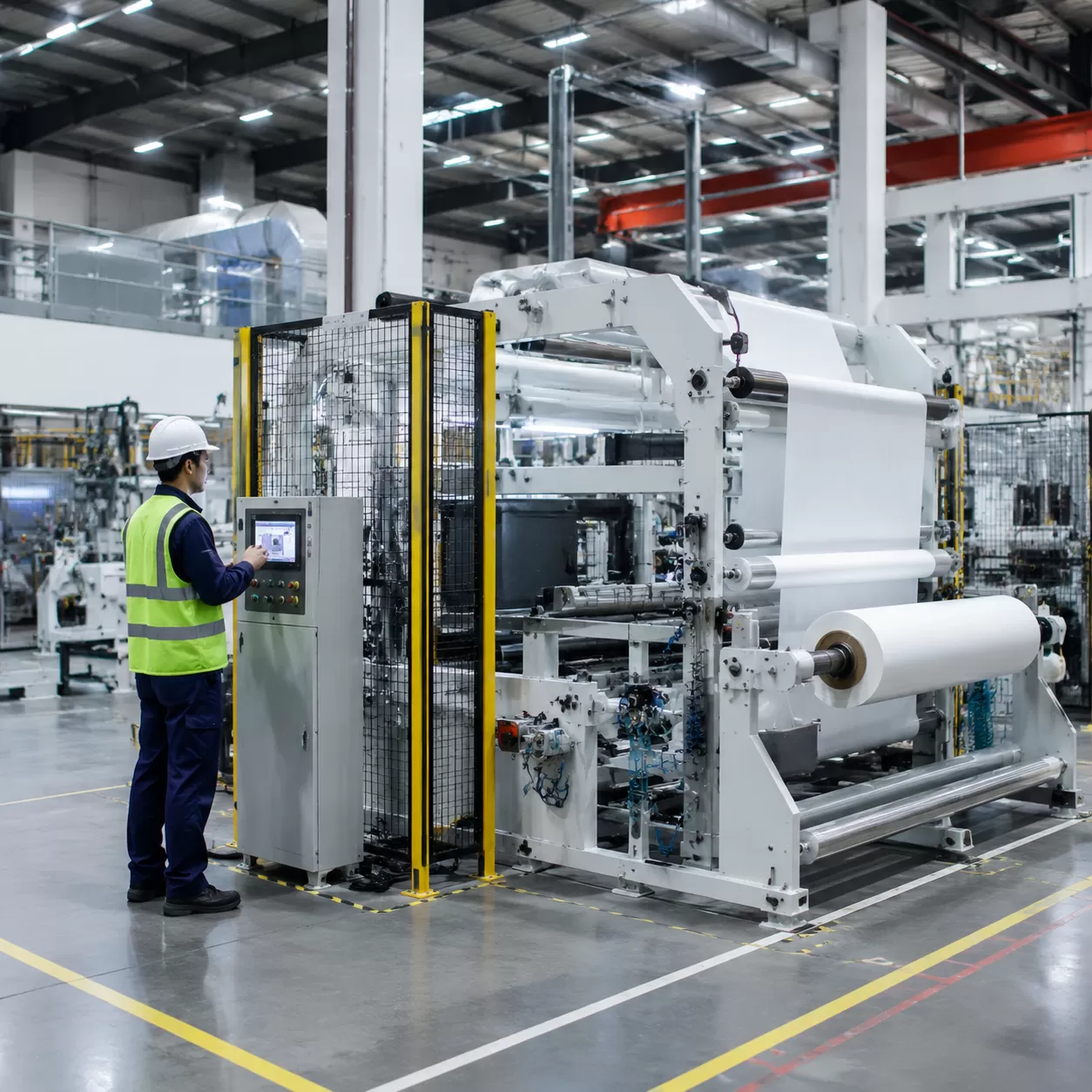
Partnering with an OEM wrapping paper manufacturer is one of the fastest ways to scale a gifting or packaging business in the U.S. without bloating your costs.
Cost Advantages vs. Domestic Production
When I work with an OEM wrapping paper factory in China, my cost per roll or sheet usually drops 20–50% compared to producing locally, especially on bulk wrapping paper import orders.
Typical cost benefits:
| Factor | OEM Factory (China) | Domestic Production (U.S.) |
|---|---|---|
| Unit price (bulk) | Lower, especially at scale | Higher labor & overhead |
| Setup costs | Often spread over big volumes | Higher per project |
| Labor & energy | More competitive | Significantly higher |
| Add-ons (foil, emboss) | Affordable upgrades | Premium-priced options |
Those savings let me:
- Offer better wholesale prices.
- Add margin for marketing and logistics.
- Invest in upgraded designs or eco-friendly materials.
Access to Advanced Manufacturing & Expertise
OEM wrapping paper factories in regions like Dongguan, Shenzhen, and other hubs in China invest heavily in:
- High-speed flexo and offset printing presses
- Digital printing for short runs and multi-version designs
- Special finishes like hot stamping, spot UV, glitter, and embossing
- Sustainable materials aligned with global packaging standards (similar to how we approach our industry-compliant packaging paper solutions)
For U.S. importers, you're basically "plugging into" an existing OEM packaging solutions ecosystem without needing your own plant.
Flexibility in Design, Materials, and Volume
A good custom wrapping paper factory gives me way more flexibility than most local printers:
Design flexibility
- Custom printed wrapping paper with PMS color matching
- Seasonal collections (Christmas, birthdays, weddings)
- Brand-specific patterns, logos, and typography
Material options
- White coated paper, kraft, recycled paper
- Premium art paper for high-end gift wrapping
- Options that pair well with paper gift bags with logo or other coordinated packaging sets
Volume flexibility
- Different wrapping paper MOQ requirements by design or season
- Ability to test smaller batches via digital printing before committing to big runs
- Scale up quickly once a design starts selling well online or in retail
With the right OEM wrapping paper factory, I control the look, feel, and cost-while they handle the heavy lifting of the wrapping paper production process.
Key Factors When Choosing an OEM Wrapping Paper Factory
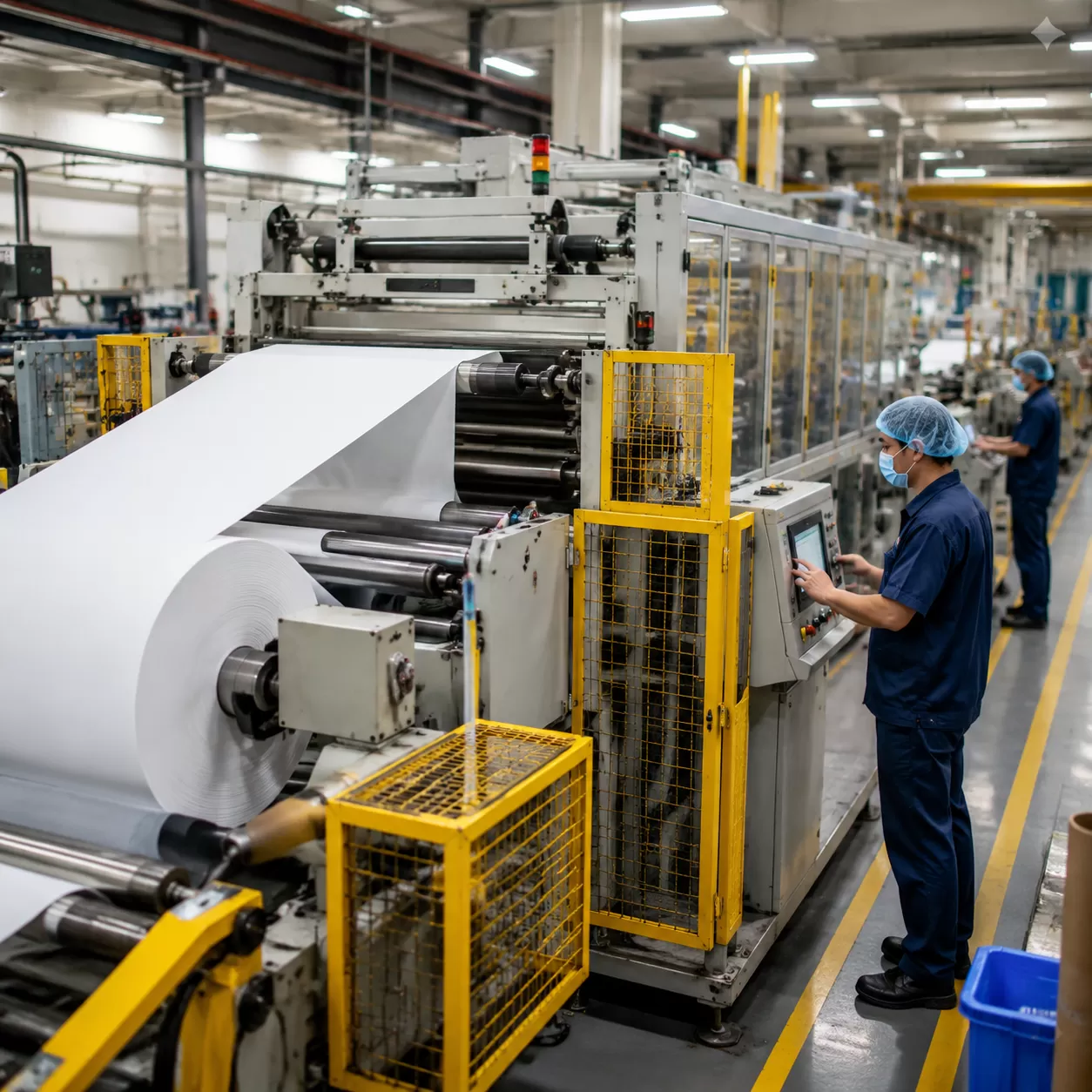
When I'm choosing an OEM wrapping paper manufacturer for U.S. buyers, I focus on six things: quality, capacity, customization, MOQs, communication, and logistics. Here's the short list you actually need.
Quality Assurance Comes First
If quality slips, your brand takes the hit. So I always ask for:
- Certifications: ISO, FSC, food-contact where needed
- Material standards: gsm, fiber type, coatings, ink specs
- Testing: color fastness, rub resistance, moisture, strength
For eco or protective options, I look at advanced solutions like honeycomb kraft paper, which combine cushioning with lower material waste.
Quick quality checklist
| Item | What I Ask For |
|---|---|
| Paper consistency | Same gsm, same shade, no streaks |
| Print quality | Sharp lines, aligned patterns |
| Eco proof | FSC or similar certification |
| Test reports | From factory or third party |
Production Capacity & Lead Times
For bulk wrapping paper import, I want proof they can scale without delays.
- Monthly output in tons or rolls
- Peak season capacity (Q4 for holiday designs)
- Standard lead time vs. rush orders
- Backup machines / production lines
Rule of thumb: Your order should be ≤ 30–40% of their monthly capacity, so you're never the "problem order."
Customization Options Matter
A good custom wrapping paper factory should let you tweak almost everything:
- Paper types: kraft, coated, recycled, specialty, honeycomb packaging paper for moving
- Printing: flexo, gravure, digital, full-color, spot color
- Finishes: matte, gloss, foil, embossing, spot UV, perforations
- Formats: sheets, rolls, counter rolls, retail packs
Sample customization menu
| Option | Typical Choices |
|---|---|
| Paper color | White, brown, custom Pantone |
| Thickness | 40–80gsm (retail), 80–120gsm (heavy) |
| Print style | Edge-to-edge, repeat pattern, logo |
| Add-ons | Tear-lines, labels, barcodes |
Minimum Order Quantity (MOQ) & Flexibility
MOQs can kill a good idea if you're testing new designs or seasons. I push for:
- Lower MOQ per design or per SKU
- Tiered pricing: small pilot runs vs. full containers
- Shared plates or grouped production to cut cost
Example MOQ structure
| Order Size | Typical Use Case |
|---|---|
| 3,000–5,000 pcs | New design / test run |
| 10,000+ pcs | Retail program |
| 1x20ft container | Big-box / national roll |
Communication & Support
You'll avoid 90% of headaches by picking an OEM factory with clear, simple communication.
- Sales team comfortable in English
- Same contact person from quote to shipment
- Fast replies (within 24 hours on weekdays)
- Detailed order confirmations and artwork proofs
I always insist on:
- Everything in writing (email + PO)
- Clear artwork approval before production
- Photo / video updates during production
Location & Logistics
Factory location directly affects shipping cost and speed.
- Proximity to major ports (Shenzhen, Guangzhou, Shanghai, Ningbo)
- Experience with U.S. importers and documentation
- Coordination with your freight forwarder
- Ability to consolidate with other products (e.g., cushioning or cushioning paper pads in the same shipment)
Logistics snapshot
| Factor | Why It Matters |
|---|---|
| Port distance | Lower inland trucking cost |
| FOB vs. CIF | Control vs. convenience for U.S. buyers |
| Carton design | Max pallet / container efficiency |
| Lead time | Plan around U.S. seasonal demand |
Locking in an OEM wrapping paper factory that checks these boxes means fewer surprises, cleaner deliveries, and better margins for your U.S. business.
Step-by-Step Guide to Importing from an OEM Wrapping Paper Factory
Step 1: Research and shortlist OEM wrapping paper factories
Start wide, then narrow down:
- Look for OEM wrapping paper manufacturers in China that specialize in custom printed wrapping paper and OEM packaging solutions.
- Check their product range (gift wrap rolls, sheets, tissue, holiday designs, etc.) and whether they offer sustainable wrapping paper options.
- Shortlist 3–5 factories that match your target price range, quality level, and wrapping paper MOQ requirements.
Step 2: Request quotes and samples
Once you have a shortlist:
- Send clear RFQs with size, GSM, paper type (kraft, coated, tissue), printing colors, finishes, and target quantity.
- Ask for both EXW/FOB pricing and estimated shipping costs so you understand landed cost to the U.S.
- Order physical samples-especially if you want custom logo tissue paper similar to this branded tissue wrapping paper-so you can check print clarity, color accuracy, and paper strength.
Step 3: Verify credentials and reviews
Before you move forward:
- Confirm business licenses, export experience, and certifications (FSC, ISO, etc.).
- Ask for photos/videos of their production lines and quality control steps.
- Request references from U.S. or EU clients, and check any third-party reviews or audit reports.
Step 4: Negotiate pricing, MOQ, and lead time
This is where you lock in the business terms:
- Negotiate unit price by volume and try to get tiered pricing for future higher quantities.
- Discuss MOQ flexibility-many OEM factories will adjust if you're testing a new design or season.
- Confirm lead times for sampling and mass production, plus what happens if the factory delivers late.
Step 5: Finalize design and place your order
Once you're confident in the factory:
- Finalize artwork files (AI/PDF), Pantone colors, paper specs, and packaging method.
- Get a detailed PI (Proforma Invoice) that lists everything: size, material, printing, finish, quantity, unit price, total price, Incoterm, and delivery time.
- Pay the agreed deposit (usually 30%) only after all specs are formally confirmed in writing.
Step 6: Monitor production and quality control
Don't "set it and forget it":
- Ask for production photos and videos at key stages: printing, cutting, packing.
- For larger or first orders, book a third-party QC inspection before shipment to check color, dimensions, and packing quality.
- Make sure any issues found in pre-shipment inspection are fixed before final payment.
Step 7: Arrange shipping and customs clearance
Finish the process smoothly:
- Decide whether you're using your own freight forwarder or the factory's. For U.S. importers, a reliable forwarder can handle ocean LCL/FCL, air freight, and customs.
- Prepare all documents: commercial invoice, packing list, bill of lading/air waybill, and any certificates needed for paper products.
- Confirm import duties and HS codes ahead of time so you know your total landed cost per roll or sheet of wrapping paper.
Common Challenges for Importing from an OEM Wrapping Paper Factory

Importing from an OEM wrapping paper manufacturer is profitable, but there are a few common pain points you need to manage from day one.
1. Language Barriers & Cultural Differences
Most OEM wrapping paper factories in China are used to working with U.S. buyers, but miscommunication still happens.
How I handle it:
- Keep specs visual:
- Print-ready files (AI/PDF)
- Pantone color codes
- Mockups and photos of similar products
- Use simple, clear English. Short sentences. No slang.
- Confirm everything in writing (email/WhatsApp/WeChat) and recap calls in bullet points.
- Ask for a "spec sheet" from the factory that lists: paper type, thickness (gsm), size, printing method, packaging, and deadlines.
2. Quality Inconsistencies
Biggest risk in OEM paper products for importers is that mass production doesn't match the approved sample.
How to reduce that risk:
- Lock in a golden sample and make it the reference for all production.
- Add quality standards to your PO:
- Color tolerance
- Print clarity
- Paper weight and opacity
- Packaging requirements
- Use pre-shipment inspections or a third-party audit company to check: print, cuts, rolls, packing, carton labels.
- For ongoing bulk wrapping paper import orders, do random inspections per batch, not just the first time.
3. Shipping Delays & Freight Costs
Wrapping paper is light but bulky, so shipping costs and delays can hurt your margins.
What works best for us:
- Book production and shipping early for peak seasons (Halloween, Christmas, Mother's Day).
- Use a reliable freight forwarder that understands retail and e-commerce timelines in the U.S.
- Compare sea vs. air vs. rail for different SKUs:
- Sea freight for bulk wrapping paper import (cheapest per unit)
- Air only for urgent top-up orders
- Optimize carton and pallet sizes to fit containers efficiently and reduce dead space.
If you're new to this, looking at lists of established suppliers, like this overview of leading wrapping paper factories in China on our site (top wrapping paper factories in China), can help you pick factories that already ship smoothly to the U.S. market.
4. Intellectual Property & Design Protection
Custom printed wrapping paper and OEM packaging solutions depend on your designs staying yours.
How I protect IP with OEM suppliers:
- Sign an NDA and NCA (Non-Compete Agreement) before sharing artwork.
- Make it clear in the contract that:
- All designs and plates/cylinders belong to you.
- Factory cannot sell your designs to other clients or on local platforms.
- Send low-res or watermarked previews until contracts are signed.
- For high-value brands, register your trademarks in China and the U.S., and keep all contracts and emails on file.
Handled correctly, these challenges are manageable and predictable-and once the process is dialed in, importing wrapping paper from China becomes a stable, repeatable part of your business.
Benefits of Partnering with Dongguan Xianghe Paper Co., Ltd.
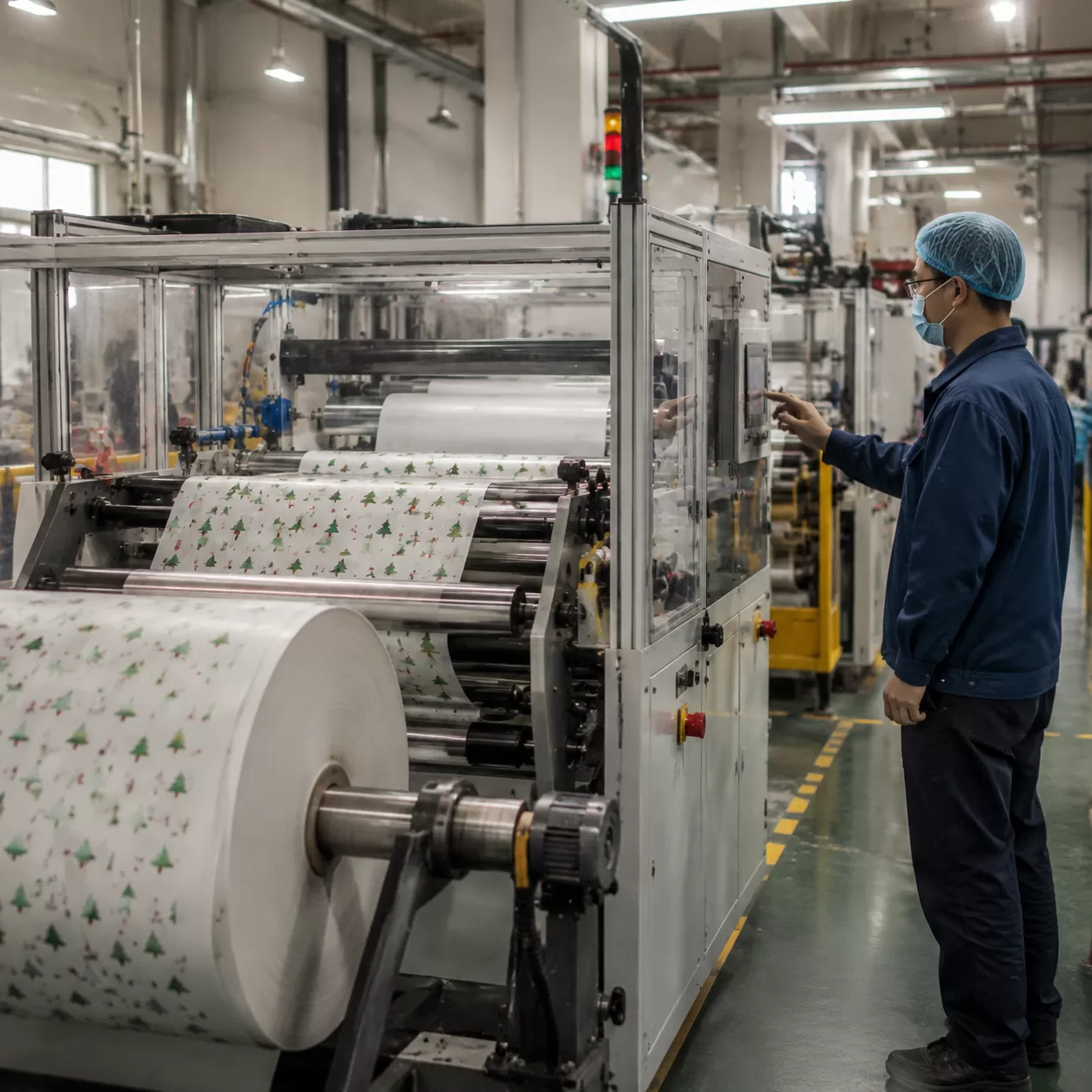
Our OEM Wrapping Paper Expertise
I run Dongguan Xianghe Paper Co., Ltd. as a focused OEM wrapping paper factory, built around exporter needs:
| What We Do Best | Why It Matters for U.S. Importers |
|---|---|
| OEM wrapping paper production at scale | Consistent quality for big-box, e‑commerce, and wholesale |
| Custom printed wrapping paper solutions | Fits your brand, retailer requirements, and seasons |
| Fast sampling + flexible production runs | Quicker time to market, lower risk on new designs |
| Strict OEM factory quality control | Fewer claims, fewer returns, better reviews |
We produce everything from glossy gift wrapping paper to soft tissue paper for packaging, with mature workflows for multi-SKU programs and holiday peaks.
Eco-Friendly & Sustainable Wrapping Paper Factory
Sustainability is a core part of our OEM packaging solutions:
- Recycled & FSC-style paper options
- Water-based, low-VOC inks
- Reduced plastic content in packaging
- Support for retailers' ESG and "green" packaging goals
You can easily build eco-led collections (e.g., kraft, recycled, uncoated) that speak to U.S. consumers looking for greener choices.
Custom OEM Solutions: From Design to Delivery
We treat every project like a full-service OEM program, not a one-off order:
| Service Area | What You Get |
|---|---|
| Design & artwork support | Pattern tuning, repeat optimization, color matching |
| Wrapping paper design options | Custom sizes, basis weights, finishes, and print effects |
| Product range | Retail rolls, flat sheets, jumbo rolls, and branded tissue |
| Logistics support | Carton optimization, pallet planning, export docs, labeling |
For example, if you need coordinated gift wrapping paper and color-matched tissue paper for a retail program, we build them as one tight OEM package, with consistent color and branding across SKUs. You can see typical formats in our gift wrapping paper range and tissue paper solutions.
International Client Success Stories
We've helped overseas customers boost sales and simplify sourcing:
- U.S. online gift store
Switched from multiple small suppliers to our OEM wrapping paper manufacturer setup. Result: lower landed cost per unit, better color consistency, and smoother Q4 replenishment. - European chain retailer
Launched private-label holiday wrapping paper with us (kraft, metallics, and kids' designs). Result: strong sell-through, extended the line into everyday and birthday ranges with the same core patterns.
When you partner with Dongguan Xianghe Paper Co., Ltd., you're working with a wholesale wrapping paper supplier that understands U.S. retail expectations, Amazon-ready packaging, and the realities of bulk wrapping paper import.
Future Trends in OEM Wrapping Paper Manufacturing
1. Sustainable & Biodegradable OEM Wrapping Paper
U.S. buyers are moving hard toward eco-friendly gifting, and OEM wrapping paper manufacturers have to keep up.
Expect to see:
- Recycled and FSC-certified paper as a baseline, not a bonus
- Biodegradable inks (soy- or water-based) instead of solvent-heavy options
- Plastic-free finishes replacing laminations that can't be recycled
If you're importing wrapping paper from China, look for an OEM wrapping paper factory that offers sustainable wrapping paper as standard and can explain how their materials affect recyclability and compostability. Also ask about eco finishes like uncoated, matte, or kraft textures; this guide on different wrapping paper finishes like glossy and matte will help you choose options that still look premium while staying greener.
2. Personalized & Seasonal Designs for E‑commerce
With online gifting and subscription boxes booming in the U.S., custom printed wrapping paper is becoming a branding tool, not just packaging.
Trends you should plan for:
- Short seasonal drops (Christmas, Valentine's, Mother's Day, graduation, etc.)
- Brand-centric patterns with logos, taglines, and QR codes
- Micro-customization (different designs for regions, campaigns, or influencers)
A strong OEM wrapping paper manufacturer should handle fast design changes, offer low to mid MOQs for seasonal SKUs, and support consistent colors across repeat orders so your brand looks the same every time.
3. Automation, Digital Printing & Faster Turnarounds
Automation is quietly changing the wrapping paper production process:
- Digital printing makes it easier to test new artworks, run small batches, and update designs quickly
- Automated slitting, cutting, and packing improves consistency and keeps labor costs competitive
- Inline quality control reduces misprints and waste
For U.S. importers, this means:
- Shorter lead times on new designs
- More flexibility on bulk wrapping paper import without committing to huge runs
- Better cost control on OEM packaging solutions for growing brands
Ask factories what printing technologies they use (flexo, gravure, digital) and how automation helps them maintain stable quality at scale.
4. Staying Competitive by Partnering With Innovative OEM Factories
To stay ahead in the U.S. market, you'll want OEM partners who act more like collaborators than just suppliers.
Look for wrapping paper factories that:
- Proactively recommend new materials, eco options, and finishes
- Offer design support, mockups, and sample runs before you commit
- Understand shipping logistics and can pack for Amazon FBA, 3PLs, or retail distribution
- Can support matching products (for example, coordinating kraft gift bags with handles with your wrapping paper designs)
If you pick an OEM wrapping paper factory that's already investing in sustainability, automation, and digital workflows, you'll be able to launch faster, pivot quicker, and keep your packaging fresh without killing your margins.