


Why Shredded Paper Is Hard to Recycle
Shredded paper looks simple to recycle, but it often causes problems in a curbside recycling bin and in single-stream recycling systems. I see the issue come down to size, sorting, and fiber quality. Once paper is cut into tiny strips, it is harder for recycling facility machinery to catch and process it correctly.
Loose Shreds Slip Through Screens
Small paper shreds can fall through sorting screens before they are captured. That means they may be lost in the process or mixed with materials that are not meant for paper recovery.
Single-Stream Systems Reject It
In single-stream recycling, paper, plastic, and metal are collected together. Shredded paper is light and scattered, so it is harder to separate cleanly. That is why many programs limit or reject it under local waste management guidelines.
It Can Contaminate Other Recyclables
When loose shreds mix with bottles, cans, or cartons, they can stick to surfaces and make sorting less efficient. If the shredded paper is wet, dirty, or bagged the wrong way, it can create contamination issues for the whole load.
Short Fibers Lower Quality
Paper fibers get shorter each time they are recycled. Shredded paper starts with shorter fibers already, so it can reduce the quality of the recovered material and make the final paper less useful for recycling.
In short: shredded paper is recyclable in some cases, but its size and condition make it harder to process than intact paper.
How to Recycle Shredded Paper the Right Way
I start with local waste management guidelines, because shredded paper is not handled the same way everywhere. In many areas, loose shreds can slip through sorting equipment, so the safest move is to follow the rules for your curbside recycling bin first.
| What I do | Why it matters |
|---|---|
| Check local curbside recycling rules first | Single-stream recycling systems may reject loose shreds. |
| Use the bag-and-seal method when required | Keeps the shreds together during collection and sorting. |
| Choose paper bags or clear bags only if allowed | Some programs accept a paper bag disposal method; others do not. |
| Separate shredded paper from mixed household waste | Clean fiber is easier to recycle than contaminated material. |
| Keep shredded paper clean and dry | Wet or dirty paper lowers recycling quality. |
A few rules I follow every time:
-
- Do not mix shredded paper with food waste, plastics, or trash.
- Keep it dry so the fibers stay usable at the recycling facility.
- Use approved bags only if your city allows bagged shreds.
- Stay with paper fiber if you want the best chance of recycling success.
For businesses that want cleaner, more reliable eco-friendly shipping materials, I also look at FSC-certified paper options and other kraft paper bags that support simpler sorting and handling.
Where to Take Shredded Paper
I always start with local waste management guidelines because shredded paper is handled differently from normal office paper. In many US areas, the best drop-off choice depends on volume, cleanliness, and whether the paper is loose or bagged.
| Drop-Off Option | Best For | What I Check |
|---|---|---|
| Municipal drop-off recycling centers | Small to medium loads | Accepted paper grades and bag rules |
| Community shredding events | Secure disposal of sensitive files | Event limits and ID requirements |
| Mixed-paper bins at schools and public sites | Light household amounts | Whether shredded paper is allowed |
| Office supply and shipping stores | Business overflow | Material limits and drop-off hours |
Fast Rules I Follow
-
- I use a municipal drop-off recycling center when curbside recycling bin rules are unclear.
- I choose document shredding events for sensitive papers that need secure disposal.
- I check if mixed-paper bins accept shredded paper only in a sealed bag.
- I ask office supply and shipping stores about paper drop-off options before I haul a large load.
- I follow local rules for bulk shredded paper so I do not send the wrong material into the recycling stream.
Loose shreds can slip through single-stream recycling systems, so I never assume curbside pickup will take them. For cleaner handling and less waste, I also keep recycled shredded paper for packaging in mind as a plastic-free void fill option for businesses that want to reduce disposal volume.
Reduce Shredding Waste at the Source
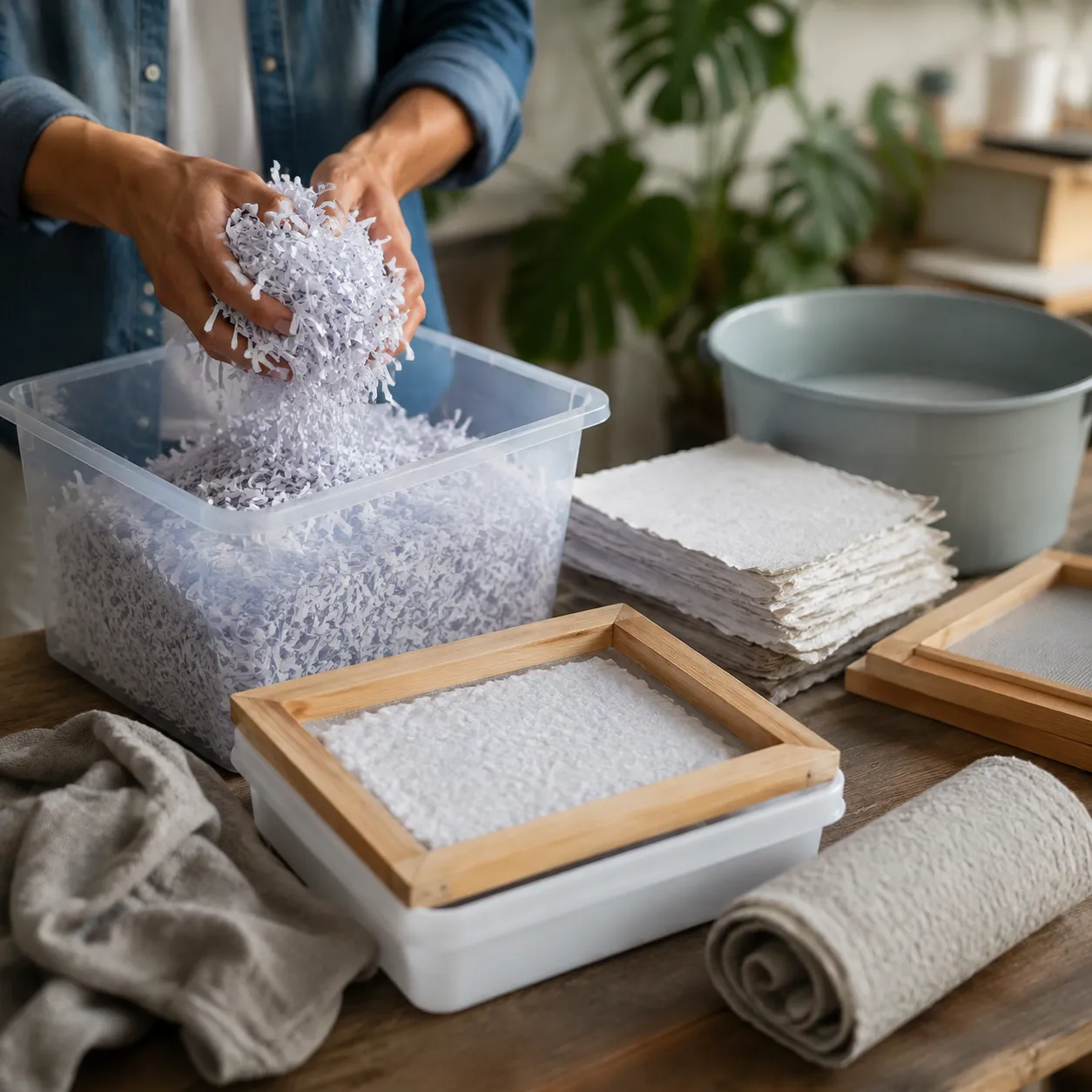
I cut shredded paper waste by being selective before the shredder ever starts.
-
- Shred only sensitive information like account numbers, tax records, and personal IDs.
- Keep non-confidential pages intact so they stay in the normal paper stream.
- Go paperless when you can by using digital bills, statements, and file storage.
- Store documents safely before shredding in a locked folder, drawer, or file box.
- Shred less to save time and reduce waste in the curbside recycling bin and at home.
A simple habit like this makes how to recycle shredded paper much easier, because there is less loose material to sort, manage, or throw away.
Can Shredded Paper Be Composted?
Yes, shredded paper can go in compost, but only when it is plain, clean, and paper-only. I use it as a dry carbon layer in a home compost system when it helps balance food scraps and keeps the pile from getting too wet.
When It Works
-
- Best for: uncoated office paper, plain brown paper, and clean paper shreds
- Works well when: the pile has lots of kitchen scraps and needs more dry material
- Good fit for: home compost systems that need better airflow and less moisture
Paper Types I Trust
-
- Plain white paper with no glossy finish
- Brown kraft-style paper
- Clean, unprinted paper filler like shredded paper filler when it has no plastic, tape, or coating
What I Avoid
-
- Glossy or heavily printed paper
- Paper with stickers, tape, or plastic film
- Shreds that are dirty, oily, or food-stained
- Anything that looks like mixed waste instead of compostable paper
How I Add It
-
- I add small handfuls at a time, not big clumps
- I mix shredded paper with wet kitchen scraps to keep the pile balanced
- I keep the shreds loose so they do not mat down and block airflow
- I stop adding more if the pile starts to look dry and dusty
Quick Rule
-
- Use a little, keep it clean, and mix it well. That is the safest way to compost shredded paper without slowing the pile down.
Creative Ways to Reuse Shredded Paper
I like to treat how to recycle shredded paper as more than a disposal question. When the shreds are clean and dry, they can still do useful work around the house and for shipping.
-
- Garden mulch: Spread clean paper shreds lightly around plants to help cover bare soil and reduce waste.
- Small-pet bedding: Use plain, uncoated shreds for small animals when you need a soft paper-based option.
- DIY void fill: Use shredded paper as plastic-free void fill in mailers and cartons; I keep white shredded paper filler on hand for this job.
- Fragile-item packing: Wrap mugs, jars, and other breakables with paper shreds to help keep items from shifting.
- Around the home: Reuse clean shreds for drawer stuffing, gift packing, or quick cleanup fillers before they go back into the recycling stream.
For the best results, I only reuse shredded paper that is clean, dry, and free of mixed waste.
Sustainable Packaging Alternatives for Businesses
I treat packaging waste as a supply chain issue, not just a cleanup problem. If the filler is hard to recycle, it creates more work for customers and more pressure on local waste management guidelines. That is why I prefer FSC-certified paper and other zero-waste packaging solutions that fit cleanly into the paper stream.
Paper Filler vs. Bubble Wrap
-
- Paper filler is easier to sort when it stays clean, dry, and free of mixed materials.
- Plastic bubble wrap adds disposal friction and can slow down recycling at the curbside recycling bin.
- For businesses that want eco-friendly shipping materials, paper-based void fill is the simpler choice.
- Certified paper packaging also supports a more reliable reducing carbon footprint strategy.
Honeycomb Paper Wrap for Protection
When I need stronger shipment protection, I use honeycomb wrapping paper because it helps protect items without relying on plastic. It is a practical biodegradable packaging filler and a cleaner fit for sustainable logistics packing. Compared with EPS foam, honeycomb paper is designed to do the job with a much lower carbon impact.
Why Biodegradable Packaging Works
-
- It keeps packaging materials in a recyclable format.
- It supports plastic-free void fill goals.
- It helps businesses reduce waste at the source.
- It fits brands that want packaging to be both protective and easier to dispose of.
For heavier or moving-related packing, honeycomb packaging paper for moving gives me another recyclable option that stays aligned with green shipping goals. In my view, the best packaging is the kind that protects the product, supports recycling, and keeps the whole system simpler for everyone.
FAQ About How to Recycle Shredded Paper
Is shredded paper accepted in curbside recycling?
Usually not in loose form. In many areas, shredded paper slips through single-stream recycling equipment and can get flagged by recycling facility machinery. I always tell people to check local waste management guidelines before putting it in the curbside recycling bin.
Can shredded paper go in a paper bag for recycling?
Sometimes, yes. Some cities allow the paper bag disposal method if the bag is sealed and clearly labeled, but others do not. If your local program accepts it, a paper bag is usually safer than loose shreds. Clear bags may be allowed in some places, but only if local rules say so.
Is colored or glossy shredded paper recyclable?
It depends on the paper type and your local program. Clean paper shreds are more likely to be accepted than glossy, coated, or heavily printed material. When in doubt, keep glossy shreds out of recycling and follow local sorting rules.
Can I compost shredded paper at home?
Yes, in small amounts, if the paper is plain and free of tape, plastic, or heavy ink. Compost shredded paper works best as a brown material mixed with kitchen scraps. I would avoid glossy paper, thermal paper, and anything with unknown coatings.
What should businesses do with bulk shredded paper?
For bulk disposal, I recommend checking drop-off rules, document shredding events, and local mixed-paper options first. Businesses that want cleaner handling can also switch to FSC-certified paper and biodegradable packaging filler for zero-waste packaging solutions, including plastic-free void fill and other eco-friendly shipping materials like shredded paper fillers and honeycomb paper wrap.
Related Sources
- https://www.wastenotcompost.com/blogs/what-to-know-about-composting-paper
- https://cuyahogarecycles.org/recyclables/shredded_paper
- https://sanjoserecycles.org/_rcylst_dyk/why-shredded-paper-can-be-so-hard-to-recycle/
- https://documentsecuritysolutions.net/is-shredded-paper-good-for-compost/
- https://www.recycleannarbor.org/index.php/a-z-recycling-guide/437-shredded-paper