

The Truth About Traditional Wrapping Paper: Myths vs. Realities
Most people think, "It's just wrapping paper, how bad can it be?" or "If it says eco-friendly, it must be fine." That's where a lot of gift packaging goes wrong. When we compare wrapping paper vs reusable fabric packaging, we first need to be honest about what traditional wrapping paper really is doing to the planet.
The "Recycling Myth" Exposed
A big myth in eco-friendly gift wrapping is that all wrapping paper is recyclable. It's not. A lot of what's sold as gift wrap is:
-
- Coated with plastic film or glitter
- Laminated with metallic foil
- Printed with heavy inks and adhesives
Once those layers are on, it stops being a simple paper product and becomes non-recyclable mixed material. It ends up in landfills, even if you put it in the recycling bin. That "green" design or holiday pattern doesn't change the fact that many conventional gift wraps are not true recyclable gift wrap alternatives.
The "Scrunch Test"
A simple way people talk about checking recyclability is the "scrunch test":
-
- If you scrunch the wrapping paper into a ball and it stays crumpled, it's more likely to be plain paper.
- If it springs back, feels plasticky, or has foil, glitter, or a waxy coating, it's usually not recyclable.
It's not a perfect science, but it's a quick reality check for plastic-free holiday packaging. The problem is, most consumers never do this test, and most brands never explain it.
The Environmental Burden
Here's the hard truth: traditional, non-recyclable wrapping paper is a major part of the breakdown of holiday waste and everyday retail waste:
-
- Short use time: seconds to open, decades to break down if it's plastic-coated
- High volume: gift seasons generate massive tons of discarded wrap, tape, and ribbons
- Hidden plastic: coatings, glues, and finishes increase the carbon footprint and block recycling
When wrapping paper is designed without recyclability in mind, it becomes the opposite of biodegradable packaging solutions. That's why we focus on FSC certified wrapping paper, 100% recyclable, degradable paper, and plastic-free designs that actually support sustainable packaging for retail instead of just looking good for a moment.
Deep Dive: Reusable Fabric Packaging
The Appeal of Fabric
When people talk about eco-friendly gift wrapping, reusable fabric gift bags and furoshiki wrapping techniques usually come up first. On the surface, fabric sounds perfect:
-
- It looks premium and "giftable"
- You can reuse it many times
- It feels like a zero‑waste presentation idea
From a branding angle, I get why US buyers love it:
- It stands out next to traditional wrapping paper
- It fits into a "low waste lifestyle" narrative
- It photographs well for social media and influencer campaigns
But good looks and reuse don't automatically equal low impact.
The Practical Benefits
Reusable fabric packaging does offer some real, practical upsides:
-
-
Reusability
A single fabric bag can wrap multiple gifts over time if customers actually keep and reuse it. -
Perceived value
Fabric feels "premium," which can support higher price points for certain product lines or limited editions. -
Durability
Thick fabric protects items from light scuffs, and handles are useful for carrying small retail purchases.
-
For niche launches or special campaigns, fabric can be a strong storytelling tool. Still, that doesn't make it the default choice for scalable, cost-effective business packaging.
The Hidden Footprint (The Lifecycle Catch)
The lifecycle is where the carbon footprint of textile wraps becomes a problem, especially when you scale.
Most fabric gift bags and wraps involve:
- High‑impact fibers (cotton, synthetics, blends)
- Dyeing, finishing, and printing steps
- Complex supply chains and logistics
- Limited recyclability at end-of-life
A few hard truths:
-
- If customers don't reuse the fabric many times, the upfront impact is hard to justify.
- Sorting and recycling textile blends is far more complex than recycling FSC certified wrapping paper.
- Fabric packaging rarely enters a clean circular stream; it often ends up as household clutter or landfill.
So the "reusable" label doesn't automatically mean "low impact." Lifecycle is the real catch.
The True Metric of Fabric Sustainability
In my view, the only honest way to judge reusable fabric packaging is by actual reuse and total lifecycle, not just the material.
Key metrics brands should look at:
| Metric | Fabric Packaging | Paper Packaging (High-Level) |
|---|---|---|
| Reuse count per unit | Depends on consumer behavior | Single use, but widely recyclable |
| End-of-life options | Limited recycling, often landfill | Recyclable, degradable |
| Production footprint | Higher energy and resource intensity | Lower initial impact, certified fiber |
| Scalability for retail | Costly at volume, complex logistics | Cost-effective, easier to scale |
Fabric makes sense only when:
- You can reasonably expect high reuse per item
- The product and price point justify the added cost and footprint
- You accept that not every customer will treat a fabric bag as a long-term asset
Otherwise, for most day-to-day, cost-effective business packaging, reusable fabric is more of a niche tool than a scalable solution.
The Sustainable Paper Alternative: Circular Packaging Redefined
When I weigh wrapping paper vs reusable fabric packaging for my own business, I look for one thing first: does it actually fit into a real circular system? That's where advanced paper-based solutions stand out. With certified, plastic-free materials and proven recycling performance, I can close the loop instead of just shifting the problem.
The Rise of 100% Recyclable and Degradable Paper
For eco-friendly gift wrapping and plastic-free holiday packaging, I now lean on paper that is designed from day one to go back into the system:
-
- 100% recyclable and naturally degradable paper stocks, including kraft rolls and custom wrapping paper
- Plastic-free construction, so customers can drop it straight into curbside paper recycling where accepted
- Biodegradable packaging solutions that don't need special equipment or industrial conditions to break down
For retail brands in the US, this is a big deal. You get recyclable gift wrap alternatives that feel premium in hand, yet help cut waste from seasonal peaks and year-round e-commerce. When we roll this out at scale, we're not asking customers to store or return packaging. They simply use it, recycle it, and move on-no extra friction.
Advanced Paper Engineering
Traditional gift wrap is just flat paper; advanced paper engineering goes a lot further. With the right OEM/ODM partner, I can pick structures that hit both sustainability and protection:
-
- Honeycomb packaging paper with a 3D expandable structure that replaces foam and bubble, while cutting carbon emissions to about 1/5 of traditional EPS foam
- Cushion paper pads that absorb shocks and reduce shipping damage by over 40% compared to conventional fillers
- Strong kraft paper rolls that double as both shipping wrap and in-store eco-friendly gift wrapping
Because these materials are optimized for strength and cushioning, I can reduce breakage in transit and still keep packaging plastic-free. For many of my clients, shifting to these engineered papers has also helped bring total packaging costs down by around 15%, especially at volume.
If I'm dealing with retail bags and in-store presentation, I pair wrap with kraft gift bags with handles that align with the same recyclable, minimalist aesthetic and make zero-waste presentation ideas easier to pull off.
Compliance and Food Safety
When food is involved, reusable fabric packaging quickly runs into limits. Grease, moisture, and hygiene regulations are tough to manage with textiles, especially at scale. This is where certified paper solutions are simply more practical and compliant.
In my own projects, I rely on:
-
- Food-grade gift wrap and butcher-style papers that are greaseproof and suitable for direct food contact
- Small glassine envelopes for chocolate, cookies, and small snacks that need a clean, non-reactive barrier
- Paper lines backed by FSC, SGS, FDA, QS, ISO9001, and ISO22000 certifications, so there's a clear paper trail on safety and quality
These certifications aren't just badges. They give me confidence that the material has passed recognized industry standards for packaging paper, which matters when dealing with auditors, retail buyers, or global food brands.
For US brands trying to balance sustainable packaging for retail with strict compliance, that combination-certified, recyclable, food-safe paper-delivers the kind of circular, low-risk solution that reusable textiles can't always match.
Head-to-Head Comparison: Business & Consumer Value Matrix
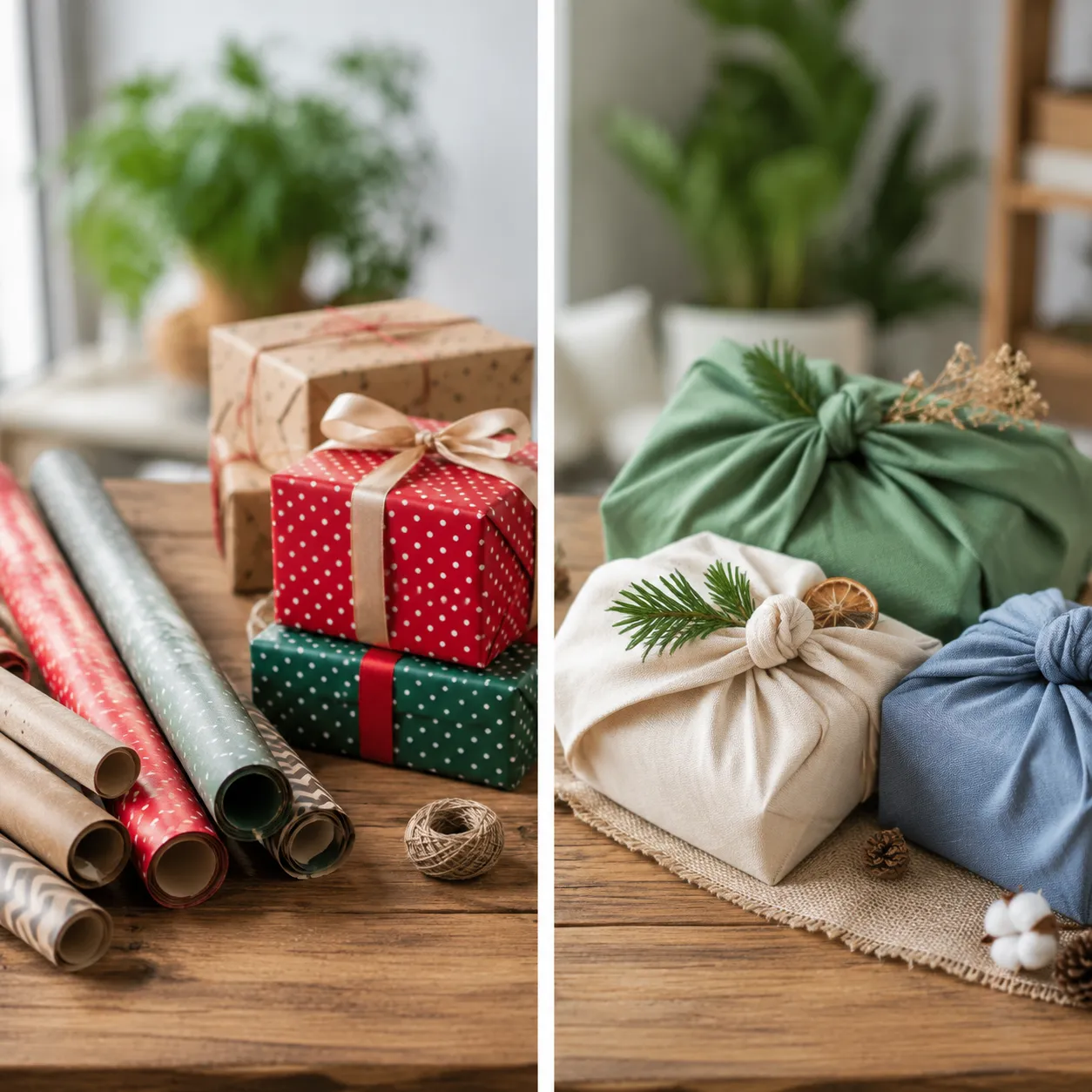
When I look at wrapping paper vs reusable fabric packaging for real-world business use, I break it down into three hard metrics: cost, scalability, branding, and proof of compliance. Here's how certified paper packaging stacks up for US brands and retailers.
Cost and Scalability
For most businesses, cost per package and the ability to scale during peak seasons (holidays, promo events) decide everything.
Why certified paper wins on cost:
-
- Lower unit cost than most fabric wraps and gift bags
- No washing, storage, or reverse logistics – paper flows through your operation once, then into recycling
- Proven packaging cost cuts of around 15% when switching to optimized honeycomb and kraft solutions
- Lightweight = lower shipping fees and better carton yield
| Metric | Certified Paper Packaging | Reusable Fabric Packaging |
|---|---|---|
| Unit cost | Low, predictable | Higher, varies by material |
| Peak-season scalability | Easy to ramp up, fast production | Slower, often limited supply |
| Handling & operations | Simple, single-use stream | Needs collection, cleaning, storage |
| Shipping impact | Lightweight, space-efficient | Bulkier, can increase shipping volume |
For retail and e-commerce, especially in the US holiday rush, paper-based eco-friendly gift wrapping is simply more scalable and predictable on the P&L.
Branding and Customization (OEM/ODM)
This is where I rely heavily on Xianghe's OEM/ODM capabilities. With advanced production lines, I can tailor wrapping paper, honeycomb packaging paper, and kraft rolls exactly to my brand.
Paper customization advantages:
-
- Full-surface printing for logos, campaigns, and seasonal designs
- Custom sizes, structures, and paper types for different product lines
- Matching tissue, honeycomb rolls, shredded filler, and cushion pads for a unified brand look
- Plastic-free, recyclable gift wrap alternatives that still feel premium
| Branding Factor | Certified Paper Packaging | Reusable Fabric Packaging |
|---|---|---|
| Print quality | High, detailed, full coverage | Limited, often costlier |
| Design flexibility | Easy to switch designs per season or campaign | Harder to change frequently |
| Product fit | Custom sheet/roll sizes for each SKU | Fixed bag/wrap sizes |
| Brand story (eco angle) | Plastic-free, recyclable, degradable | Reusable but often unregulated |
For packaging protection that matches the brand, the definition and features of cushioning materials used in paper systems matter. Xianghe's cushion pads and honeycomb structures are engineered specifically for this purpose, as outlined in their detailed guide on the product definition and features of cushioning packaging.
Certifications Matter
In the US market, I can't just say "eco-friendly" – I need proof. This is where certified paper packaging has a clear edge over most fabric options.
Key certifications behind Xianghe paper solutions:
-
- FSC – responsible forestry and fiber sourcing
- SGS – verified material performance and safety
- FDA & QS – food-contact safety for food-grade gift wrap, chocolate wraps, butcher paper
- ISO9001 & ISO22000 – quality and food safety management systems
Most reusable fabric gift bags and textile wraps don't come with this level of regulated traceability, especially for food or cosmetics.
| Trust & Compliance | Certified Paper Packaging | Reusable Fabric Packaging |
|---|---|---|
| Environmental standards | Backed by FSC, SGS and other authorities | Often undocumented |
| Food-contact approval | FDA, QS, ISO22000 for specific products | Rare and less standardized |
| Quality consistency | ISO9001-controlled production | Varies widely by supplier |
| Claim credibility | Audited, certifiable | Frequently marketing-only claims |
For any brand serious about sustainable packaging for retail and food-safe applications, certified, plastic-free paper packaging from a trusted OEM/ODM partner like Xianghe delivers a clearer, safer path than unregulated fabric solutions.
How to Choose the Best Route for Your Brand
If you run a brand in the US right now, you're probably stuck between two choices for eco-friendly gift wrapping:
-
- Reusable fabric packaging (fabric gift bags, furoshiki wraps, textile sleeves)
- Certified paper packaging (wrapping paper, honeycomb paper, kraft rolls, tissue for shipping)
Both sound "green." The trick is to match the material to how your products are actually used and shipped.
Below is a simple, no-fluff guide I use when advising brands.
When Fabric Makes Sense
Reusable fabric packaging can be the right move when:
| Scenario | Why Fabric Works |
|---|---|
| High-end, low-volume gifts | Fabric wraps feel premium and are often kept and reused. |
| In-person gifting or boutique retail | You can explain how to reuse the bag or wrap on the spot. |
| Strong "keepsake" brand story | Your audience values longevity and will likely keep the packaging. |
| Minimal logistics risk | Products aren't very fragile and don't need heavy-duty cushioning. |
Fabric makes sense when:
-
- You sell luxury, artisanal, or small-batch goods.
- Your customers already care about zero-waste and reuse.
- You're using fabric as part of the "gift experience," not your main shipping protection.
If your packaging needs to move through national parcel networks, handle returns, or ship in bulk, fabric alone usually falls short on cost and protection.
When Certified Paper Wins
For most US businesses that ship regularly, certified paper packaging is the practical workhorse.
Here's when paper clearly wins:
| Scenario | Why Certified Paper Packaging Wins |
|---|---|
| E-commerce and omni-channel retail | Paper is light, compact, and cost-effective to ship in volume. |
| Frequent shipments and high order counts | Easy to store, dispense, and scale across warehouses and stores. |
| Need real cushioning | Honeycomb packaging paper and cushion pads protect fragile goods with less damage. |
| Need recyclability at curbside | 100% recyclable, degradable paper fits existing municipal recycling systems. |
| Food and cosmetics | Food-grade, greaseproof, and certified papers are safe and compliant. |
Key advantages of certified paper:
-
-
Cost-effective business packaging
Transitioning to specialized wrapping paper and honeycomb solutions has proven to help brands cut packaging costs by around 15%, especially at scale. -
Real-world sustainability
Xianghe's honeycomb packaging paper emits only about 1/5 of the carbon of traditional foam and is fully recyclable and degradable. No plastic, no mixed materials. -
Protection without tape
3D honeycomb structures lock items in place, reduce shipping damage by more than 40%, and avoid extra plastic tape or bubble wrap. -
Food-safe options
With food-grade gift wrap, butcher paper, and small glassine envelopes, certified paper can safely touch food, chocolate, and skincare - something unregulated fabric can't reliably do.
-
If your brand needs scalable, certified, plastic-free packaging that works from warehouse to doorstep, paper is usually the better route.
Brand Spotlight: Xianghe Paper
At Dongguan Xianghe Paper Co., Ltd., I focus on helping brands replace mixed, plastic-heavy gift wrapping with custom, eco-friendly paper solutions that actually work in real operations.
What makes Xianghe's wrapping paper and honeycomb packaging different:
| Xianghe Strength | What It Means for Your Brand |
|---|---|
| 16+ years of paper packaging expertise | Stable quality and mature production processes. |
| 100% recyclable, degradable, plastic-free materials | Aligns with eco-friendly gift wrapping and plastic-free holiday packaging goals. |
| Advanced honeycomb and cushion paper tech | Less breakage, fewer returns, better unboxing experience. |
| OEM/ODM customization | Your size, your print, your structure, your branding. |
| Global certifications (FSC, SGS, FDA, ISO9001, ISO22000) | Trusted compliance for retail, food, and international markets. |
We support brands with:
-
- Custom OEM/ODM wrapping paper for retail, e-commerce, and gifting.
- Honeycomb packaging paper and cushion pads for fragile goods.
- Food-grade gift wrap and paper for chocolates, meat, and bakery items.
- Tissue paper for shipping clothes and fashion products, with tailored sizing and printing for apparel brands.
If you're comparing fabric vs. paper for your next season or product line:
-
- Use fabric for special, small-volume, "keep forever" gifting moments.
- Use certified paper from partners like Xianghe for everyday orders, food contact, and scalable, plastic-free shipping.
This mix keeps your brand experience premium while anchoring your operations in cost-effective, sustainable paper packaging that's built for real business.
FAQs About Gift Packaging
Is reusable fabric packaging always better than wrapping paper?
Not always. Reusable fabric gift bags and furoshiki-style wraps can be great for personal, long-term use, but they come with a bigger production footprint and often lack certifications or clear end-of-life solutions.
Certified, eco-friendly gift wrapping made from 100% recyclable and degradable paper gives brands and retailers a more scalable, low-carbon option. With advanced paper solutions like honeycomb packaging paper and kraft rolls, you get:
-
- Instant recyclability in most curbside systems
- Lower shipping weight and carbon emissions compared to many textile wraps
- Tight cost control and consistent supply for business packaging
So fabric can make sense for niche, premium, or personal zero-waste presentations, while certified paper gift wrap is usually the better fit for high-volume, sustainable packaging for retail.
Can you recycle wrapping paper with tape on it?
Most U.S. recycling programs ask you to remove as much tape as you reasonably can before recycling gift wrap. The paper itself-when it's plastic-free, non-metallic, and not laminated-is typically recyclable.
As a packaging manufacturer, I focus on FSC certified wrapping paper and plastic-free tissue to make recycling easier. For example, using plain white tissue paper for packaging instead of laminated or glitter paper reduces confusion and improves actual recycling rates.
Quick rules of thumb:
- If it's metallic, glittery, or feels like plastic, it probably isn't recyclable
- If it's simple paper with minimal tape, it typically is recyclable
What is the most cost-effective eco-friendly packaging for businesses?
For most brands I work with, the sweet spot is engineered paper packaging instead of fabric:
-
- Honeycomb packaging paper for moving and shipping protects products while cutting material use and damage rates
- Kraft and tissue wraps are lightweight, stackable, and easy to automate, which lowers labor and freight costs
- Our clients commonly see up to 15% packaging cost reduction when switching from mixed materials or foam to specialized paper solutions
Reusable fabric packaging tends to be more expensive per unit and harder to standardize at scale. If you're looking for cost-effective business packaging that still hits sustainability goals, certified, plastic-free, recyclable paper-especially advanced options like honeycomb wrap-is usually the strongest route.