


What "wholesale" really means
In the US, wholesale wrapping paper usually comes from distributors such as Paper Mart, Nashville Wraps, or Faire. They:
- Buy from manufacturers, then resell to you with a markup.
- Offer ready-to-ship stock: popular designs, standard sizes, seasonal themes.
- Often have lower minimums and faster lead times for small and mid-size orders.
- Make it easy to mix items: ribbons, bags, tissue, and gift wrap in one shipment.
If you're a florist, online gift shop, or party planner testing designs or ordering modest volumes, a gift wrap distributor vs manufacturer route can feel simpler and safer.
What "factory direct supply" means
Factory direct wrapping paper comes straight from the manufacturer, with no middleman. That's the model we run at Dongguan Xianghe Paper Co., Ltd., where we supply wrapping paper rolls in bulk directly to US buyers. In practice, this means:
- You buy direct from factory wrapping paper at near-production cost.
- You can order large, continuous rolls or custom sizes designed for your exact machines or packing lines.
- You get consistent batches, traceability, and direct communication with the production team.
- You can build private label wrapping paper programs tailored to your brand, not just generic "stock" prints.
This model works best when you have predictable volume and want tighter control over quality, cost, and design.
Quick glossary: key buying terms
Here's the plain-language glossary I use with US buyers comparing bulk wrapping paper pricing:
- MOQ (Minimum Order Quantity)
The smallest order a supplier will accept.- Wholesale: often a few cases or a mixed-carton value.
- Factory direct: higher MOQs (e.g., thousands of rolls or several tons), but with lower gift wrapping paper wholesale cost per unit.
- Lead Time
The time from order confirmation to when goods are ready to ship.- Domestic wholesale: often 2–10 business days if in stock.
- Factory direct (overseas): typically 25–60 days, including production and international transit, depending on specs and shipping mode.
- Private Label
Your brand, your logo, your patterns-printed on the paper, cores, and packaging.- Wholesale: sometimes available, but with limited customization and higher prices.
- Factory direct: full custom printed wrapping paper and packaging, often with design support and color matching.
- Eco-Certifications
Proof that your eco friendly wrapping paper meets modern standards.
Common signals US buyers look for:- FSC® or PEFC (responsibly sourced paper)
- Recycled content (e.g., 30–100% post-consumer)
- Low-VOC inks or water-based inks
- Supplier-level carbon reporting or offset programs
Whether you choose wholesale wrapping paper suppliers or factory direct gift wrap, understanding these basics upfront makes every quote, sample, and contract easier-and keeps your margins, not your mistakes, in focus.
Price Comparison – The Real Numbers
When you strip out the buzzwords, it all comes down to price per roll and total landed cost. Here's how wholesale wrapping paper suppliers stack up against factory direct gift wrap from manufacturers like Dongguan Xianghe Paper Co., Ltd.
Per-Unit Cost: Wholesale vs. Factory Direct
Typical wholesale gift wrap distributor:
- Buys from factories, adds a markup (15–40%+)
- Better for small orders and mixed designs
- You pay for convenience and local stock
Typical factory direct wrapping paper manufacturer (like us):
- Sells direct from factory wrapping paper with no middleman
- Lower bulk wrapping paper pricing, especially as volume grows
- Best when you can hit a higher minimum order quantity (MOQ)
Example: 30″ x 100′ roll pricing (illustrative only)
| Model | Order Size | Approx. Unit Cost |
|---|---|---|
| Wholesale wrapping paper suppliers | 50 rolls | $4.20 / roll |
| Factory direct gift wrap | 50 rolls | $3.80 / roll |
| Wholesale | 500 rolls | $3.60 / roll |
| Factory direct | 500 rolls | $2.70 / roll |
| Wholesale | 2,000 rolls | $3.20 / roll |
| Factory direct | 2,000 rolls | $2.10 / roll |
You can see the gap widen as order size goes up.
Total Landed Cost: Not Just the Paper
To compare gift wrapping paper wholesale cost accurately, you need to look at total landed cost, not just price per roll:
- Product cost (rolls or sheets)
- Domestic or international shipping
- Import duties & fees (if buying factory direct overseas)
- Palletizing / packaging
- Any brokerage or forwarding fees
Simple total landed cost formula:
Total Landed Cost per Roll
= (Total Paper Cost + Total Freight + Duties & Fees) ÷ Number of Rolls
Quick example (factory direct):
- Paper: 1,000 rolls × $2.20 = $2,200
- Ocean freight & fees: $600
- Duties & clearance: $200
Total landed = ($2,200 + $600 + $200) ÷ 1,000 = $3.00 / roll
Compare that to a wholesaler offering $3.50–$3.80 per roll-factory direct often wins once you get past wrapping paper minimum order quantity and freight.
If you also sell coordinated packaging (like boxes with top cushion pads for chocolate boxes or wax sheets for food packaging), it's usually even cheaper to ship everything together factory direct.
Seasonal vs. Year-Round Pricing
For U.S. buyers, pricing swings a lot around Christmas and peak Q4.
Wholesale wrapping paper suppliers:
- Often run seasonal sales after holidays
- May raise prices before Q4 when demand spikes
- Better for last-minute, short-run seasonal designs
Factory direct gift wrap:
- Pricing is usually more stable year-round
- Best costs if you book production early (3–6 months before peak season)
- You avoid some seasonal markups, but you must plan inventory and cash flow
Cost Savings by Order Size (When Factory Direct Wins)
Use this as a quick rule-of-thumb for gift wrap distributor vs manufacturer decisions:
| Monthly Usage (Rolls) | Better Option | Why |
|---|---|---|
| 20–100 | Wholesale | Lower MOQs, less cash tied up |
| 100–300 | Depends | Run the landed cost math both ways |
| 300–500 | Leaning factory direct | Savings start to offset freight & duties |
| 500+ | Factory direct | Clear per-unit savings + better private label options |
If you're a florist buying florist wrapping paper bulk or a growing gift retailer moving 500+ rolls/month, factory direct usually delivers real, repeatable savings once you factor in total landed cost.
Quality, Consistency & Supply Reliability
When you're choosing between wrapping paper wholesale and factory direct gift wrap, quality and reliability are where the real gaps show up.
Factory-direct: tighter control, fewer surprises
Going direct to a manufacturer (like a Dongguan-based factory) gives you:
- Direct quality control – You set specs for paper weight, coating, gloss, and color, and the factory runs to your standards every time.
- Consistent batches – Same ink systems, same machines, same base paper = fewer color shifts between orders. That matters when you're matching brand colors on private label wrapping paper.
- Faster communication – Issues go straight to production, not through a middleman. If a roll core is too tight, or a finish looks off, we fix it at the source.
For brands running volume-florist wrapping paper in bulk, ecommerce order packing, or retailers doing 4th quarter peaks-this consistency is usually worth more than a slightly cheaper "deal" from a random distributor.
Wholesale: convenience and flexibility
Good wholesale wrapping paper suppliers still bring real advantages:
- Huge variety – Seasonal, birthday, kids, luxury foils, solid colors, plus matching tissue and fillers. For example, pairing your gift wrap with color-matched tissue for gift wrapping can create a full, ready-to-sell packaging set.
- Local stocking – US-based distributors often ship in 1–3 days, which is ideal if you misjudge holiday demand.
- Easier returns – Damaged rolls or misprints are usually swapped quickly without dealing with customs or international freight.
If you're a small boutique, party planner, or online gift store testing designs, that flexibility is a big win.
Real-world risks to watch
- Cheap distributors: You'll see this in the US market a lot-super low gift wrapping paper wholesale cost, but colors fade, ink rubs off on hands, or rolls are wound unevenly so they telescope on the shelf.
- Low-end factories: On the flip side, not all "direct from factory wrapping paper" is equal. Poor QA means inconsistent roll lengths, bad cutting, and weak cores that collapse in transit.
I always push buyers to sample first: ask for real production samples, not "similar" designs, and test them with your actual packing process.
Simple rule of thumb
Use this as a quick framework:
- If your business sells under 500 rolls/month
Go with wholesale wrapping paper suppliers. You'll get variety, low MOQs, and fast replenishment with less risk. - If your business sells 500+ rolls/month
Shift to factory direct gift wrap. At that scale, the gains in quality control, consistency, and cost per roll almost always outweigh the extra work on logistics.
That 500-roll mark is where most US retailers and florists I work with start seeing factory-direct as not just cheaper-but more reliable for long-term growth.
Customization & Design Control in Wrapping Paper Wholesale vs Factory Direct
When it comes to your brand image, customization and design control are where factory direct gift wrap usually pulls ahead of standard wholesale wrapping paper suppliers.
Factory-direct strengths: full control over your look
Going direct from factory wrapping paper gives you:
- True private label wrapping paper
- Your logo, brand colors, QR codes, and custom patterns
- Pantone color matching and consistent print runs
- Branded cores, labels, and retail-ready packaging
- Design collaboration
- You work directly with the print and coating teams
- Fast feedback on mockups, samples, and finishes (gloss, matte, foil, kraft, etc.)
- Easier to match sets: bags, boxes, tissue, and even matching food-safe wraps like our cellophane wrap for food packaging
- Shorter approval cycles
- No "telephone game" between you, a distributor, and a factory
- Faster artwork approval and press checks
- Better control over updates for each season or campaign
For U.S. buyers, especially gift retailers, florists, and online shops that care about branding, this level of control is a big deal. You're not just buying bulk wrapping paper; you're building a recognizable shelf presence.
Wholesale limitations: plug-and-play, but less flexible
Most gift wrap distributors like typical wholesale wrapping paper suppliers keep:
- Limited design libraries
- You choose from their catalog of Christmas, birthday, or all-occasion prints
- Colors and styles are shared by many retailers, so your look isn't unique
- Less control over customization
- Any "custom" order often still goes through an overseas manufacturer
- Extra fees, higher minimum order quantities (MOQ), and longer waits
- Extra approvals, since the wholesaler sits between you and the factory
If you're a smaller shop that just needs decent-looking, ready-to-ship gift wrapping paper wholesale, this can still be fine. But if you want that "wow, this brand feels premium" effect, the limitations show up fast.
How Dongguan Xianghe Paper Co., Ltd. supports both models
Because we run the production side, we can serve:
- Factory-direct buyers
- Full custom printed wrapping paper with private label branding
- Custom roll widths, sheet sizes, core diameters, and thickness
- Eco options like recycled kraft and lighter-weight papers to cut shipping and material costs
- Wholesale and distributor programs
- Standard all-occasion and seasonal designs in bulk wrapping paper for U.S. distributors
- Stable, repeatable patterns and colors so wholesalers can promise consistency to their retailer base
- Coordination with other paper products like protective honeycomb sleeves and cushioning paper pads for sellers who ship fragile gifts
That way, a U.S. wholesaler can stock our standard lines, while higher-volume retailers can come factory direct for unique branding.
Case study teaser: florists vs. retailers
Here's how this plays out in real life:
- Florist using florist wrapping paper bulk
- A regional florist chain wanted custom floral wraps with their brand colors and a soft-touch finish.
- Going factory direct gift wrap with us, they got:
- A custom floral pattern plus logo
- Moisture-resistant paper for bouquet wrapping
- Matching tissue and bag prints for a cohesive in-store look
- Retailer using standard all-occasion prints
- A smaller online gift store in the U.S. needed variety more than branding.
- They worked with a wholesale gift wrap supplier, stocking standard birthday, holiday, and neutral designs with low MOQs.
- Their priority was fast lead times and mix-and-match designs, not custom printing-so wholesale made more sense.
If your volume is growing and your brand matters more than ever, factory-direct customization will usually be the smarter move. If you're still testing what sells and need flexibility and variety, wholesale wrapping paper is often enough-for now.
Inventory, Storage & Cash-Flow Impact
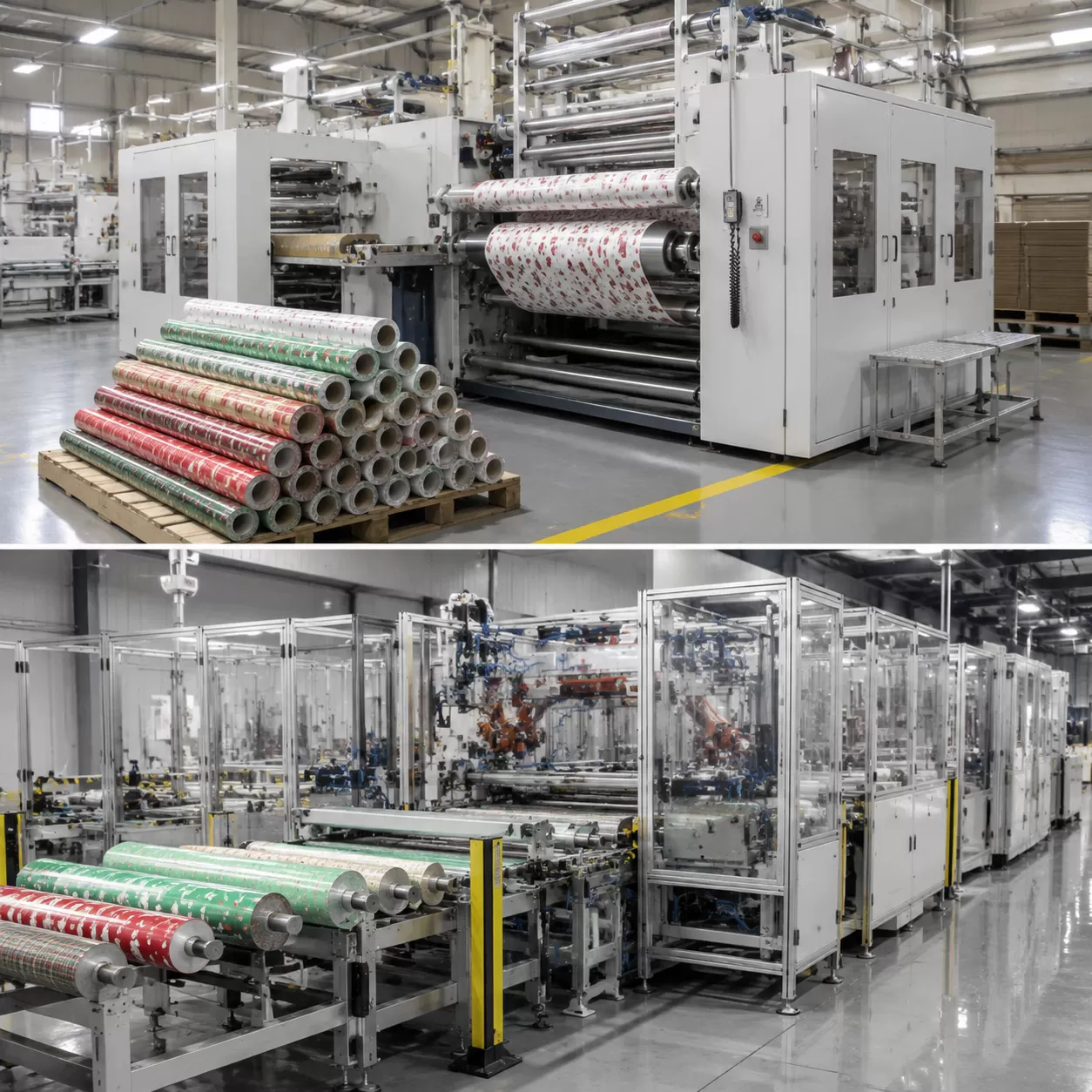
When I compare Wrapping Paper Wholesale vs Factory Direct Supply, I think about space and cash first:
- Direct from factory: Lower per-roll cost, but I'm buying higher MOQs, so I need more warehouse space and racks. The upside? Lower holding risk because I control the batch and don't chase stockouts.
- Wholesale wrapping paper suppliers: Great for just-in-time replenishment. I can order smaller drops, keep cash liquid, and avoid overstock-perfect if I'm testing styles or seasonal prints.
- Cash-flow reality: Small shops do better with lean, wholesale orders to protect cash. Growing retailers hitting 500+ rolls/month can lock in factory-direct pricing, accept higher storage costs, and boost margins on bulk wrapping paper pricing.
Keep a simple stock plan: align order size with sell-through, know your MOQs, and balance space costs against savings from factory direct gift wrap.
Shipping, Lead Times & Logistics: Wholesale vs. Factory Direct
When you're comparing wrapping paper wholesale vs factory direct gift wrap, shipping and lead times can make or break your margins.
Factory-direct vs distributor transit times
- Factory-direct (international)
- Typical lead time: 25–45 days door-to-door (production + ocean/air).
- Best for: pallets and container loads of bulk wrapping paper.
- Ocean freight is cheaper per unit, but you need to plan ahead and lock in your wrapping paper lead times.
- Air freight is faster (7–10 days) but only makes sense for high-margin or urgent orders.
- Domestic wholesale distributors
- Typical lead time: 2–7 days within the U.S.
- Great for top-up orders, seasonal spikes, and small-batch wholesale wrapping paper.
- Shipping cost per roll is higher, but you avoid long waits and customs.
For many U.S. buyers, we'll ship factory-direct bulk rolls for their core assortment, and they'll keep a local gift wrap distributor in their back pocket for emergencies.
Tools buyers use in 2026
Smart buyers lean on tools instead of guessing:
- Freight forwarders for factory-direct:
- Handle customs, duties, and consolidation.
- Negotiate better container rates than most small and mid-size brands can get on their own.
- Tracking apps & portals
- Real-time GPS tracking on ocean containers and domestic parcels.
- Automated alerts for port delays, weather issues, or warehouse congestion.
- Landed cost calculators
- Combine product cost, freight, duties, and local delivery so you can compare bulk wrapping paper pricing from a manufacturer vs. a U.S. distributor on a true apples-to-apples basis.
If you also buy related packaging, like food-safe wrapping paper for bakeries or delis, consolidating those SKUs into one factory-direct shipment can save a lot on freight; we break this down when customers ask about our food wrapping paper options.
How location and order size affect the winner
Here's the blunt truth:
- Small orders (under 30–50 rolls)
- Domestic wholesale gift wrap suppliers usually win.
- Faster delivery, simpler logistics, no customs headaches.
- Medium orders (1–3 pallets)
- It's a toss-up.
- If you're closer to a port (West Coast, Gulf, East Coast cities), factory-direct often wins on gift wrapping paper wholesale cost because drayage is cheaper and transit is predictable.
- Large orders (containers, recurring buys)
- Direct from factory wrapping paper is almost always the better play.
- Lower per-unit cost more than offsets international freight, especially if you lock into a replenishment schedule.
Rule of thumb I use with U.S. clients:
- If you're ordering small and often, stick with a reliable distributor.
- If you're ordering big and planned, factory-direct gives you a price and control advantage that wholesalers can't match.
Who Should Choose Wholesale vs Factory Direct?
Not every buyer needs factory direct gift wrap. Here's a quick way to decide if wholesale wrapping paper suppliers or a direct-from-factory setup fits you better.
Quick Decision Flow: Wholesale vs Factory-Direct
Ask yourself these questions:
- How much wrapping paper do you buy per month?
- Under 100 rolls → Wholesale
- 100–500 rolls → Depends (see table below)
- 500+ rolls → Factory-direct
- Do you need custom printed wrapping paper or private label?
- Yes, full control over design/branding → Factory-direct
- No, happy with ready-made designs → Wholesale
- How many designs do you need on hand?
- Lots of seasonal/novelty prints → Wholesale
- Fewer SKUs, but deep inventory per design → Factory-direct
- Can you handle higher MOQs and longer lead times?
- Yes, you can plan 60–90 days out → Factory-direct
- No, you reorder last minute → Wholesale
Decision Table: Which Model Fits You?
| Situation / Priority | Best Fit |
|---|---|
| Small orders, testing new styles | Wholesale wrapping paper |
| High volume, repeat designs | Factory direct gift wrap |
| Need lots of variety, low stock per SKU | Gift wrap distributor |
| Need strict color control & Pantone match | Manufacturer / factory |
| Tight cash flow, small storage space | Wholesale suppliers |
| Long-term brand building (private label) | Direct from factory |
Buyer Personas: Who Fits Where?
1. Florist (local shop or small chain)
- Typical needs: florist wrapping paper bulk, quick refill, seasonal colors.
- If you use standard floral wraps, wholesale is easier.
- If you want custom floral logo wraps and buy in volume, factory-direct wins.
2. Online Gift Store (Etsy/shopify brand)
- Low to mid volume, high design variety.
- Start with gift wrapping paper wholesale to test what sells.
- Move to factory direct once a few designs consistently sell out and you're ready for private label wrapping paper.
3. Party Planner / Event Company
- Project-based, often last-minute, varied themes.
- Wholesale wrapping paper suppliers are usually safer due to faster lead times and smaller MOQs.
- Use factory-direct only for big, recurring corporate clients with predictable events.
4. Luxury Retailer / Boutique Brand
- High brand expectations, need premium paper and consistent colors.
- Factory direct gift wrap is usually the best fit for custom printed tissue and signature gift wrap.
- For example, pairing your branded rolls with matching logo tissue paper gives a fully ownable unboxing experience.
My Straight Take
- If you're doing 500+ rolls per month or you're serious about building a recognizable brand look, go factory-direct.
- If you're testing, seasonal, or low volume, stick with the best wholesale gift wrap suppliers until your numbers justify larger orders.
Real Buyer Stories & Case Studies
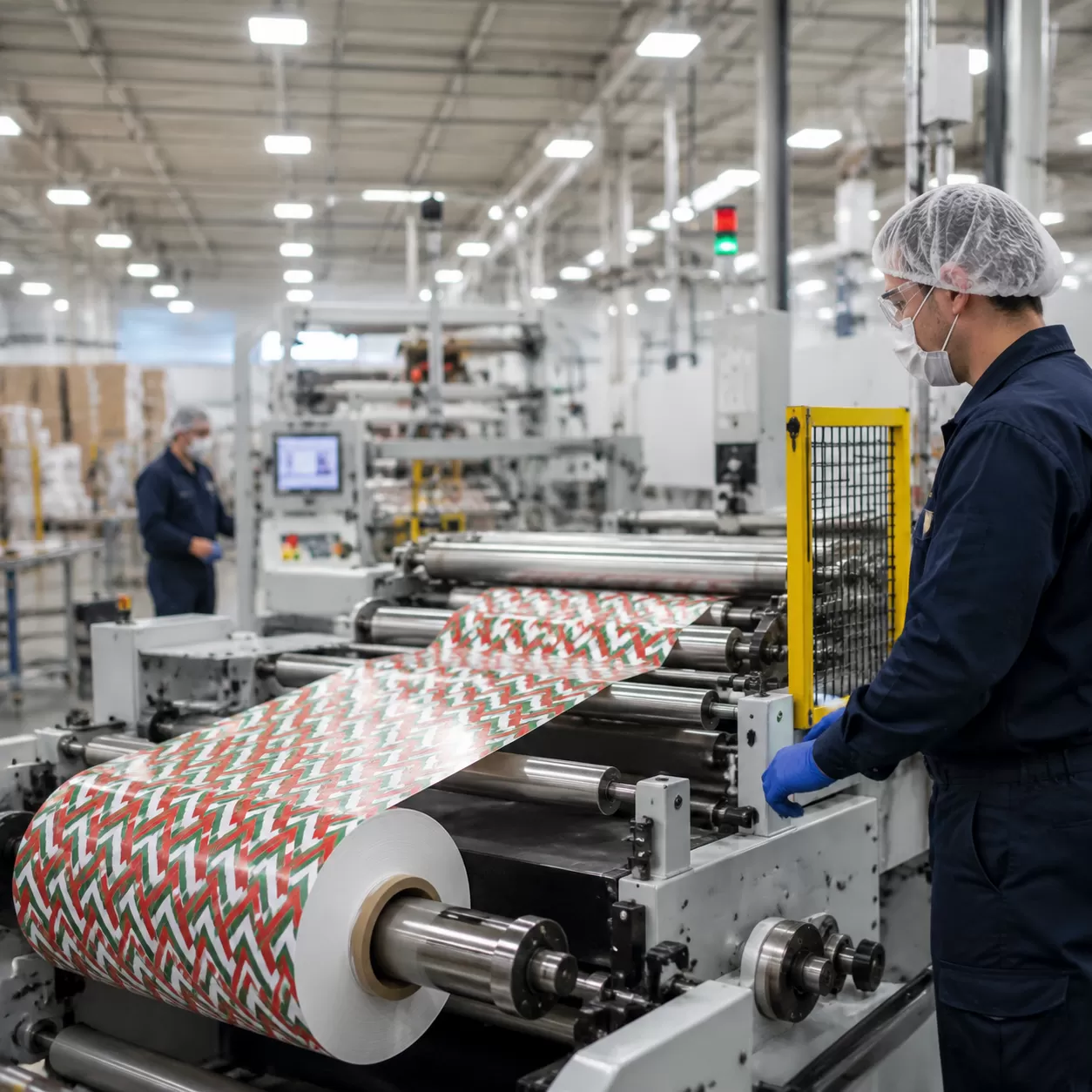
Case Study 1: Florist Scaling with Factory Direct Gift Wrap
A mid-size florist in Texas was buying from wholesale wrapping paper suppliers at about $4.80 per roll, mixed designs, low MOQs, and fast shipping. Once they hit 600+ rolls a month, the numbers stopped making sense.
They switched to factory direct gift wrap with a custom floral design:
- Factory-direct price: around $2.60 per roll (after freight and duties)
- MOQ: 2,000 rolls per design
- Lead time: 35–40 days door-to-door
Results in 6 months:
- Saved ~45% on gift wrapping paper wholesale cost
- Used the new custom printed wrapping paper as a brand asset (customers shared it on social media)
- Reported more consistent color and thickness vs. mixed batches from previous distributors
Lesson learned: once your florist wrapping paper bulk usage passes a few hundred rolls a month and your designs don't change every week, direct from factory wrapping paper wins on both cost and branding.
Case Study 2: Online Gift Store Struggles with MOQs
A small online gift retailer in California jumped too early into buying factory direct wrapping paper. They loved the savings on paper but underestimated:
- Wrapping paper minimum order quantity (MOQ) of 5,000 rolls
- Extra storage costs for pallets
- Cash tied up for 90+ days (deposit + production + shipping)
They ended up discounting designs just to clear space and couldn't react quickly to seasonal changes. After a year, they moved back to a gift wrap distributor vs manufacturer model with:
- Smaller, flexible orders
- More seasonal variety
- Less cash-flow pressure
Lesson learned: if you're still testing your product line or changing styles often, wholesale wrapping paper suppliers are safer than committing to huge factory MOQs.
Case Study 3: Boutique Brand Blends Both Models
A luxury gift shop in New York now runs a hybrid strategy:
- Uses wholesale gift wrap suppliers for trend-driven and holiday designs
- Uses private label wrapping paper from a factory for their core year-round look
Core line is produced as a custom printed wrapping paper with premium finishes, while everyday stock comes from high-quality wholesale partners. They also tested eco friendly wrapping paper factory options, adding a recycled kraft line that aligns with their brand story and U.S. customer expectations.
If you want to see what a factory-grade line looks like, check out our own gift wrapping paper ranges that are built for both wholesale and private-label programs.
Lesson learned: you don't have to choose just one sourcing model. For many U.S. buyers, the best wrapping paper supply chain in 2026 is factory-direct for your core brand SKUs and wholesale for variety and trends.
Sustainability & Eco-Friendly Wrapping Paper Buying Trends
When it comes to wrapping paper wholesale vs factory direct supply, both models can absolutely hit today's eco standards-you just need to know what to ask for and how to verify it.
How Wholesale & Factory Direct Both Go Green
Whether you're buying from wholesale wrapping paper suppliers or a factory direct gift wrap manufacturer, look for:
- Recycled kraft paper
- 70–100% post-consumer recycled content
- Uncoated, easily recyclable, minimal ink coverage
- FSC-certified paper
- Ask for FSC Mix or FSC Recycled on spec sheets
- Request the certificate number and check it against FSC's database
- Eco inks & coatings
- Water-based or soy-based inks instead of solvent-based
- Avoid plastic film lamination and heavy glitter (those usually kill recyclability)
- Carbon-conscious options
- Factories that use renewable energy or offer carbon-neutral shipping
- Consolidated pallet shipments for bulk wrapping paper to cut freight emissions
If you're already buying kraft gift bags with logos, it's smart to align your gift wrap with similar recycled kraft and FSC standards so your whole packaging line tells one clean sustainability story.
Buyer Expectations in 2026
In the U.S. market, customers now expect "eco-friendly" to mean more than a green leaf printed on the label. By 2026, most serious gift retailers, florists, and e‑commerce brands are asking for:
- Clear recyclability – "Can this go in the curbside recycling bin?"
- No plastic shine – Matte finishes, kraft textures, and simple prints win.
- Transparency – Basic data on fiber source, certifications, and inks.
- Consistency – Same shade, same feel, across rolls and seasons so branding stays tight.
Wholesale distributors win on ready-to-ship eco lines (e.g., recycled kraft holiday styles), while direct from factory wrapping paper often wins on deeper customization-like fully branded, recycled roll programs for subscription boxes or retailers.
How to Choose Truly Sustainable Wrapping Paper Suppliers
Whether you're vetting a gift wrap distributor vs manufacturer, use this quick checklist before you commit:
- Ask for documentation, not promises
- FSC certificates, recycled-content claims, and test reports in writing.
- Check minimums for eco lines
- Many wrapping paper minimum order quantity (MOQ) levels are higher for special eco stocks-run the math on storage and cash flow first.
- Request real samples
- Test print quality, paper strength, and how it cuts and folds.
- Make sure "eco" doesn't mean flimsy or dull-especially for florist wrapping paper bulk.
- Align gift wrap with your other packaging
- If you already use custom paper gift bags with logos, match the paper color, finish, and eco claims so the unboxing experience feels intentional and premium.
If you treat sustainability like a hard requirement-just like price and lead time-you'll quickly see which wholesale wrapping paper suppliers and factory-direct manufacturers actually walk the talk and which ones are just printing green buzzwords on the label.
Common Mistakes to Avoid When Choosing Wholesale vs. Factory Direct Wrapping Paper
When you're weighing wrapping paper wholesale vs factory direct supply, a few common mistakes can quietly kill your margins. Here's what I always watch for:
1. Ignoring MOQs (Minimum Order Quantities)
Whether you're talking to a wholesale wrapping paper supplier or a factory direct gift wrap manufacturer, MOQ is non‑negotiable.
- Wholesale: MOQs are usually lower (1–5 cartons per design), but some gift wrap distributors require higher minimums for private label wrapping paper or seasonal prints.
- Factory direct: Expect higher MOQs, especially for custom printed wrapping paper or specialty finishes. If you don't move volume, you'll sit on inventory and cash.
Always ask:
- What's the MOQ per design, per color, and per finish?
- Is the MOQ different for eco friendly wrapping paper or specialty items like butcher paper or food-safe meat wrapping paper?
If the MOQ doesn't match your real sales volume, the deal is wrong for you-no matter how good the unit price looks.
2. Missing Hidden Fees and Extras
A low gift wrapping paper wholesale cost on paper is useless if hidden fees stack up. I always break down:
- Plate fees & setup charges for private label wrapping paper
- Upcharges for finishes (metallic, laminated, or special textures)
- Packaging fees (individual rolls vs. bulk rolls)
- Domestic freight from distributor vs. international freight from the factory
- Duties, customs, and broker fees on direct imports
Get a full quote in writing and compare total landed cost per roll, not just "price per roll." That's where wholesale vs factory direct gift wrap really shows a winner.
3. Skipping Quality Sampling
One of the most expensive mistakes in wrapping paper sourcing: trusting photos instead of samples.
Before you commit:
- Request printed samples from both wholesale and direct-from-factory wrapping paper sources.
- Check color consistency, ink rub-off, and paper thickness against what you actually need (luxury retail, florist wrapping paper bulk, e‑com shipping, etc.).
- For eco lines, confirm the feel and look matches what your customers expect from premium recycled kraft or FSC-style materials (similar to the finish breakdown you see in guides on wrapping paper finishes like glossy vs matte).
If a supplier won't send samples or wants you to commit before testing quality, that's a red flag.
4. Not Calculating Total Cost of Ownership
Most buyers compare bulk wrapping paper pricing and stop there. You should be comparing total cost of ownership:
- Unit cost (including all fees)
- Storage costs (warehouse, off-site storage, or self‑storage if you buy factory direct bulk)
- Shrink & damage (crushed rolls, outdated seasonal designs)
- Cash-flow impact (upfront payment terms vs. extended terms from a domestic wholesale supplier)
- Operational time (complex imports vs. quick reorders from a local distributor)
Sometimes a slightly higher gift wrap distributor price wins because you save on storage, risk, and time. Other times, a factory direct wrapping paper deal wins because your volume and forecast are strong enough to absorb the inventory.
If you're not adding all of these into your math, you're not really comparing wholesale wrapping paper suppliers vs factory direct manufacturers-you're just comparing price tags.