

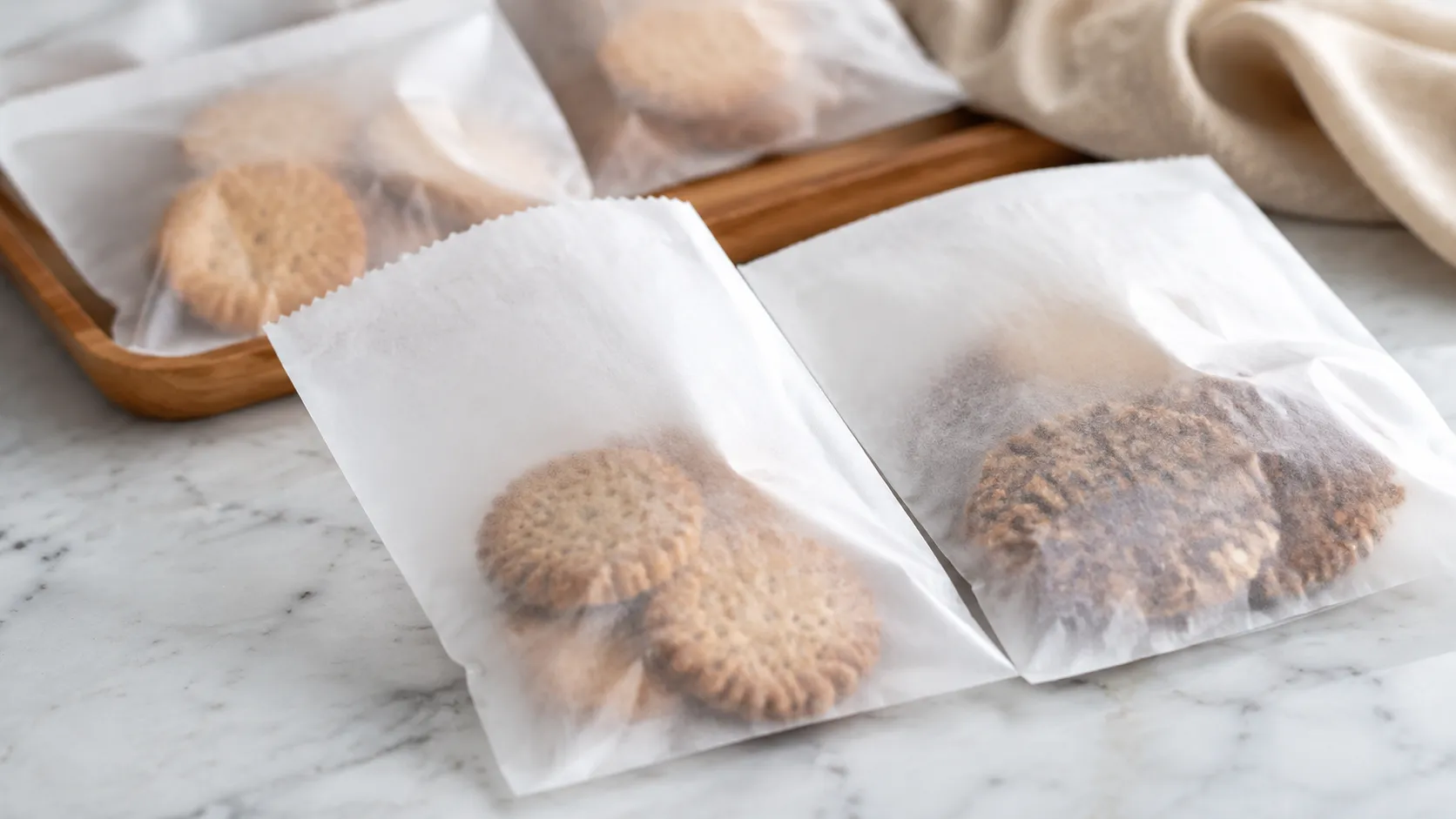
Are glassine bags biodegradable? The short answer is yes, but there's a little more to it than that.
If you're choosing packaging for a brand, shop, or small business, you probably want something that looks clean, feels premium, and still supports your sustainability goals. That's exactly why glassine bags have become such a popular alternative to plastic poly bags.
In this quick guide, I'll break down what glassine is, how it breaks down, and what to look for before you buy.
Let's dive in.
What Are Glassine Bags?
Glassine bags are paper-based packaging made from refined paper fiber, not plastic. I see them as a practical choice for brands that want a cleaner look, a plastic-free feel, and sustainable packaging solutions that still protect the product.
Made From Paper
They start with paper, which is why glassine fits into eco-friendly packaging instead of synthetic film. In our view, that paper base is the core of its appeal.
Glossy Finish
The smooth, glossy finish comes from a finishing process that compresses the fibers tightly. That is what gives glassine its sleek surface without turning it into plastic.
Looks Like Plastic
Glassine can resemble a thin poly bag at first glance, but it stays paper-based at its core. That makes it a strong plastic poly bag alternative for brands that want a more responsible presentation.
Are Glassine Bags Biodegradable?
Yes. When glassine is made from pure wood pulp, it is a biodegradable, paper-based packaging option, not a plastic bag. I treat it as a strong fit for sustainable packaging solutions when the goal is to reduce plastic use without losing the clean, translucent inner packaging look.
Why it breaks down
-
- Pure wood pulp can decompose naturally because it is a plant-based fiber, not a plastic poly bag alternative.
- There is no fixed biodegradation timeline in real-world conditions; heat, moisture, oxygen, and local waste handling all affect the speed.
- Clean, untreated glassine breaks down more easily than paper that is covered in residue or mixed with non-paper materials.
- Decomposition can slow down or stop when bags are sealed in low-oxygen landfill conditions, or when they carry tape, labels, heavy food stains, or other contamination.
Bottom line
Glassine bags are best understood as biodegradable packaging materials with a paper first profile. For businesses that want a greener, food-safe, greaseproof option, they offer a practical path away from plastic.
Are Glassine Bags Compostable?
We treat clean, paper-based glassine as compostable packaging when it stays free from plastic coatings and heavy contamination. If you want the material breakdown, the materials used to make kraft glassine bags show why this format stays in the paper family.
Home Compost vs Managed Compost
-
- In a home compost pile, clean glassine can break down, but the speed depends on heat, moisture, and airflow.
- In a managed industrial composting system, the process is usually more consistent because the conditions are controlled.
- Either way, the bag needs to stay simple: paper-based, clean, and free from mixed materials.
What Makes It Compost-Safe
-
- Pure wood pulp glassine with no plastic lamination
- Food-safe and greaseproof paper that stays dry and clean
- Minimal printing and no tape, labels, or adhesive residue
- A single-material build that fits sustainable packaging solutions better than mixed-material wraps
When Not to Compost
-
- If the bag has food stains, oil, or heavy residue
- If it includes plastic parts, coatings, or mixed layers
- If local compost rules do not accept printed or treated paper
For brands that want biodegradable packaging materials without plastic, glassine is a strong fit for clean, premium paper packaging.
Are Glassine Bags Recyclable?
I treat are glassine bags recyclable as a "sometimes, but check first" question. Clean glassine can be accepted in curbside paper recycling in some locations, but local rules decide the final answer.
For me, the recyclability comes down to condition:
-
- Clean and dry glassine has the best chance of being accepted.
- Food residue can contaminate the paper stream and get the bag rejected.
- Tape, stickers, and labels can also lower recyclability because they add non-paper material.
- Local recycling rules still matter most, since acceptance varies by city and hauler.
If I am using small glassine envelopes for translucent inner packaging or eco-friendly unboxing, I keep them free of grease and extra materials so they stay as close to curbside recyclable paper as possible.
How to Dispose of Glassine Bags the Right Way
If you are asking, are glassine bags biodegradable, I start with one simple rule: dispose by condition, not by habit. Clean, dry, paper-based glassine is the easiest to handle. Once a bag is dirty, taped up, or mixed with other materials, it becomes a contamination risk.
Best disposal by condition
| Bag condition | Best choice |
|---|---|
| Clean and dry | Recycle if your local paper stream accepts it, or compost if your program allows home compostable packaging |
| Lightly used, still clean | Same as clean bags |
| Food-stained, greasy, or wet | Trash if residue cannot be removed |
| With tape, labels, or mixed materials | Remove what you can; trash the rest if contamination remains |
Keep it clean
-
- Empty the bag fully before disposal
- Peel off tape, stickers, and labels
- Do not recycle bags with food residue
- Keep glassine separate from plastic poly bag waste
- Follow local recycling and composting rules, since acceptance can vary
When I source packaging, I prefer options that stay simple to sort at end of life, like glassine wax paper bags, because clean paper-based packaging is easier to manage than mixed-material waste.
Glassine Bags vs Plastic Poly Bags
Why I Choose Glassine
I use glassine when I want a plastic bag alternative that still looks clean and professional. It is paper-based, plastic-free, degradable, and made for eco-friendly packaging. That makes it a better fit for brands that want to reduce plastic use and improve their sustainable packaging solutions.
| Point | Glassine bags | Plastic poly bags |
|---|---|---|
| Material | Wood pulp paper fiber | Plastic |
| Look | Smooth, translucent inner packaging | Clear, glossy plastic look |
| Waste impact | Supports waste reduction | Adds more plastic waste |
| Strength | Good for light protective packaging | Often stronger for heavier sealing needs |
| Moisture resistance | Greaseproof and resistant to light moisture | Better barrier against moisture |
For me, the trade-off is clear: glassine gives a premium paper feel and a more eco-friendly presentation, while plastic poly bags usually win on moisture protection. For small glassine envelopes and other business packaging, glassine is the cleaner choice when the goal is plastic reduction and a better unboxing experience.
Glassine Bags vs Wax Paper and Parchment Paper
When I compare glassine bags vs wax paper and parchment paper, the main difference is simple: coated papers are usually harder to recover in paper recycling, while glassine stays paper-based.
Why Coatings Matter
Wax paper and parchment paper are often treated or coated, so they do not always fit cleanly into standard paper streams. If you want the quick version, that coating is what makes recycling less predictable.
-
- Coated papers can be harder to sort and process
- Food residue makes recovery even less reliable
- Local recycling rules still decide what is accepted
Why Glassine Stays More Circular
Untreated glassine is made from paper fiber and keeps a cleaner end-of-life path when it is dry and uncontaminated. That is why I treat it as the better plastic poly bag alternative for translucent inner packaging and food-safe glassine envelopes.
For a closer look at packaging paper materials, the key issue is whether the paper is coated, treated, or left plain.
Best Fit by Use
-
- Glassine bags: Better for clean packaging, greaseproof paper bags, and eco-friendly unboxing experience
- Wax paper / parchment paper: Better for certain food uses, but less predictable for recycling
- Untreated paper options: Best when you want a more circular packaging choice
For brands that want sustainable packaging solutions, glassine is usually the cleaner option when the goal is paper-based protection without adding plastic.
What Glassine Bags Are Used For

Glassine bags are a practical pick when I need paper-based packaging that stays clean, light, and professional. For a closer look at the base material, I often point buyers to packaging paper raw materials.
Business Packaging
-
- Small glassine envelopes work well in bulk for brands that want a neat, simple package.
- Peel-and-seal and open-flap options make it easy to match different packing workflows.
Food and Gift Packaging
-
- Because the material is food-safe, compostable, and greaseproof, it fits food gift wrap and light food presentation.
- It supports a cleaner, plastic-free unboxing experience for retail sets and gifts.
Protective Inserts
-
- Glassine can serve as a thin protective layer for items that need a paper-based wrap instead of plastic.
- It is a strong option when the goal is a plastic poly bag alternative with a more sustainable profile.
How I Choose Better Glassine Packaging
I keep my filter simple: the paper has to be traceable, the compliance checks have to be real, and the print finish has to fit a clean, sustainable brand image. For are glassine bags biodegradable searches, the best options stay paper-based, plastic-free, and suited to food-safe or retail use.
| What I check | Why it matters |
|---|---|
| FSC-certified paper | Supports responsible sourcing and stronger sustainability claims |
| Clean paper fiber | Helps keep the bag in the paper stream and supports biodegradable packaging materials |
| FDA, SGS, and ISO checks | Adds trust for supply chain control and product safety |
| Custom printed glassine bags | Improves brand presentation without moving away from paper-based packaging |
| Eco-friendly soy-based inks | Keeps printing aligned with a lower-impact packaging choice |
What I look for first
-
- Certified material: FSC-backed paper is a strong baseline for sustainable packaging solutions.
- Clear compliance: I prefer suppliers that can support FDA, SGS, and ISO-related quality checks.
- Print that stays responsible: Custom printed glassine bags should use eco-friendly soy-based inks to keep the package consistent with a plastic-free message.
My practical rule
If the bag is meant for premium packaging, food-safe glassine envelopes, or translucent inner packaging, I want it to stay simple: certified paper, clean production, and no unnecessary coatings that weaken recyclability.
Glassine Bags FAQs
Are glassine bags waterproof or just water-resistant?
Glassine is best described as water-resistant, not fully waterproof. It is a smooth, greaseproof paper material that can handle light moisture, but it is not made for soaking or long exposure to liquids.
Do glassine bags contain plastic?
No. Glassine is a paper-based, plastic-free material made from wood pulp. That is why many brands use it as a plastic poly bag alternative for lighter packaging needs.
Can I recycle glassine bags with food stains?
Clean glassine can often go into curbside paper recycling, but food residue, tape, and labels can reduce recyclability. I keep it simple: if the bag is clean, it has a better chance of being accepted; if it is contaminated, check local rules first.
Are glassine bags better than plastic for shipping?
For dry, lightweight items, glassine is usually the better choice when the goal is sustainable packaging solutions and less plastic waste. It supports a cleaner unboxing experience, but it is not a replacement for heavy-duty plastic in high-moisture shipping.
Is glassine safe for food packaging?
Yes. Food-safe glassine envelopes and greaseproof paper bags are commonly used for bakery items, confectionery, and food gift packaging. For branded business use, I also pair it with custom printed glassine bags for business when the goal is a cleaner, more professional presentation.
Bottom line: clean, plain glassine is the easiest to recycle; food-soiled or mixed-material bags need a closer check before disposal.