


Where to Buy Packing Paper
If I am buying packing paper for moving, shipping, or business use, I start by looking at volume and consistency. The best source depends on whether I need a quick one-time purchase or a steady supply of commercial-grade paper.
| Buying channel | Best for | What it is good at |
|---|---|---|
| Local stores | Small moving jobs and urgent needs | Fast pickup and simple orders |
| Online sellers | Quick comparison shopping | Easy access to standard pack sizes |
| Direct-from-manufacturer sourcing | Bulk packing paper wholesale and repeat business orders | Lower unit cost, custom options, and steady supply |
For everyday moving, local stores are convenient. For general browsing, online sellers are easy. But for high-volume packaging materials, direct-from-manufacturer packaging is usually the strongest choice because it supports bulk orders, custom sizing, and eco-friendly options like honeycomb packaging paper, recyclable newsprint sheets, and FSC-certified packing paper.
For business buyers, I look at the source that can support recurring shipping needs, free samples, and 1-on-1 consulting. That is the most practical route when I need protective wrapping for fragile items, warehouse void fill, or custom food-grade packaging at scale.
Packing Paper Types
I keep packing paper simple: pick the format that fits the item, the box, and the shipping job.
| Type | Best for |
|---|---|
| Kraft paper rolls | Industrial moving paper sheets, wrapping, and general shipping protection |
| Recyclable wrapping paper | Everyday wrapping, retail packing, and lightweight protection |
| Honeycomb packaging paper | Bubble wrap alternative paper for shock absorption and plastic-free filling |
| Cushion pads and shredded paper | Heavy-duty cushioning pads and biodegradable void fill |
| Protective wrapping | Fragile items, glassware, and cartons that need a clean, paper-based layer |
-
- Kraft paper rolls work well when I need a strong, flexible option for bulk packing and moving.
- Recyclable wrapping paper is a practical choice for everyday use when I want a cleaner, simpler paper-based wrap.
- Honeycomb packaging paper is my go-to bubble wrap alternative paper when I want better cushioning without plastic fillers.
- Heavy-duty cushioning pads and biodegradable void fill help keep items steady inside the box and reduce shifting.
- For more on quality and compliance, I keep an eye on industry standards for packaging paper so the material matches the job.
Where to Buy Packing Paper for Bulk Orders
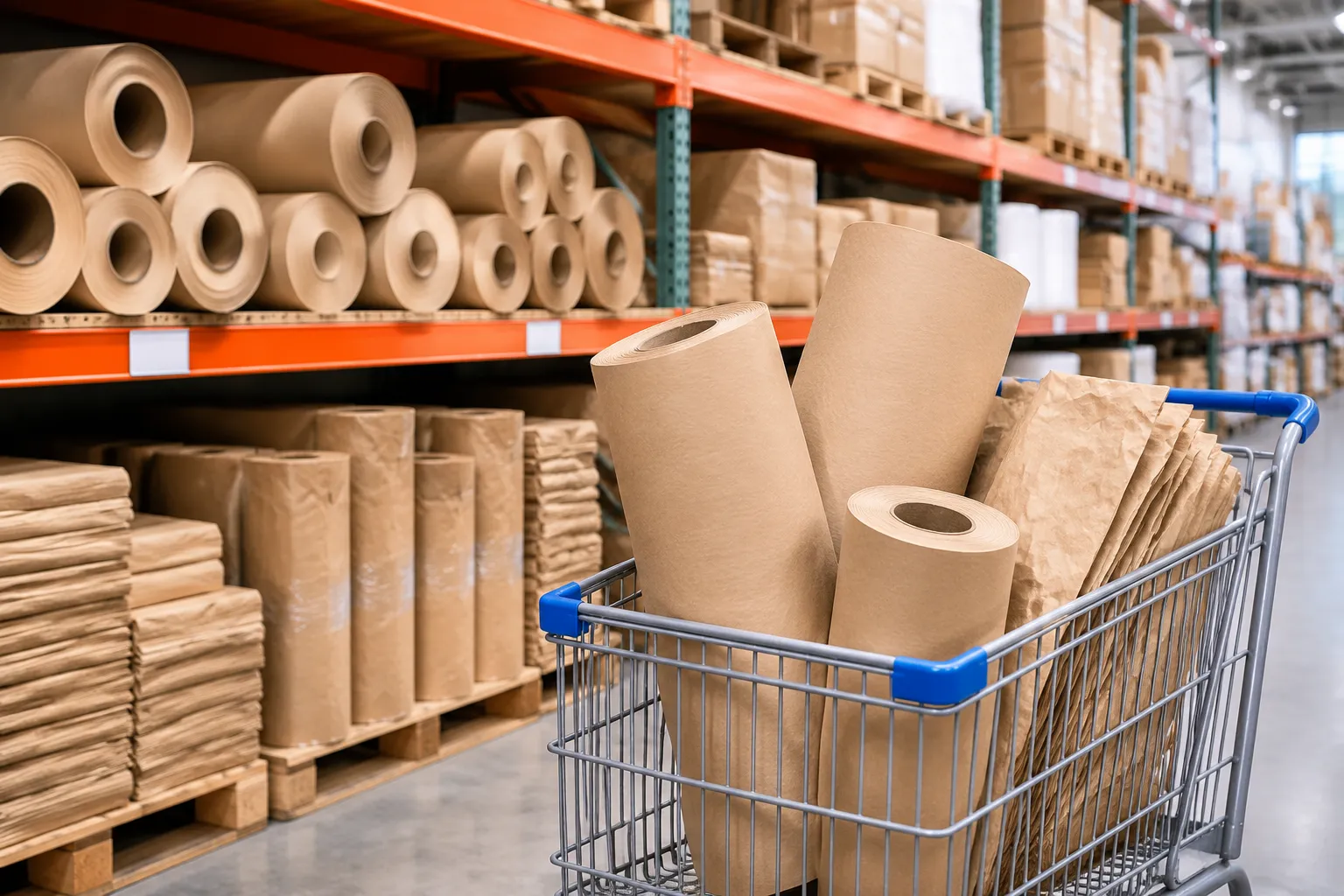
If I am buying packing paper for e-commerce, warehouses, or repeat shipping, I go straight to bulk packing paper wholesale and skip small retail packs. That is usually the cleaner move when I need steady supply, simple reordering, and a lower unit cost.
For larger shipping programs, direct-from-manufacturer packaging is often the strongest option because it fits recurring volume, quote-based buying, and business packaging needs better than off-the-shelf packs. I also check the material details first, including the raw materials used in packaging paper, so I know what I am putting into my supply chain.
Best fit for bulk buying
-
- E-commerce and warehouses: high-volume packaging materials for daily outbound orders
- Recurring shipping needs: consistent supply without constant reordering
- Business packaging programs: quote-driven buying that supports larger runs
- Cost control: lower unit cost than small retail packs in most bulk setups
When bulk makes more sense
-
- I ship often and need packing paper on a regular schedule
- I want a manufacturer relationship, not just a one-time purchase
- I need free samples before placing a larger order
- I want room for OEM/ODM support and tailored packing paper options
How to Choose the Right Packing Paper
I choose packing paper based on the item first, not the box. Weight, fragility, and box size all change what works best, and the wrong match usually means wasted material or weak protection.
Quick pick guide
| What I need to pack | What I choose | Why it works |
|---|---|---|
| Light, simple items | Recyclable newsprint sheets or everyday wrapping paper | Easy to wrap and fill space |
| Fragile products | Honeycomb packaging paper or heavy-duty cushioning pads | Better shock absorption for protective wrapping for fragile items |
| Bulk shipping | Kraft paper rolls | Good for high-volume packaging materials and daily use |
| Clean, branded packing | Eco-friendly wrapping paper rolls | Better fit for sustainability goals |
| Compliance-focused orders | FSC-certified packing paper | Helps support brand value and paper sourcing standards |
I look at three specs
-
- GSM: I match the paper weight to the item. Lighter goods need less protection, while heavier or sharper items need stronger paper.
- Roll width: I use a width that fits the product and packing line, so I do not waste paper.
- Sheet size: I pick a size that wraps the item in fewer steps and keeps packing clean.
What I choose for sustainability
For global buyers, I keep the focus on paper that is 100% recyclable and degradable. That makes it easier to support greener shipping goals without changing the whole packing process. When I need a more premium option, I use FSC-certified packing paper to support compliance and brand trust.
For supplier comparison and material selection, I also use a wrapping paper manufacturer guide to check product fit before placing a bulk order.
My rule of thumb
-
- Fragile goods: choose stronger cushioning paper
- Everyday shipping: choose kraft or wrapping paper rolls
- Brand-led packaging: choose FSC-certified, eco-friendly options
- High-volume orders: choose direct-from-manufacturer packaging for better consistency
Best Packing Paper for Different Uses
I match the paper to the job, not the other way around. For global buyers, the best packing paper depends on what you ship, how fragile it is, and how much protection you need in transit.
| Use case | Best fit | Why it works |
|---|---|---|
| Moving household goods | Packing tissue paper for moving | Light, flexible, and easy to wrap around mixed items |
| Shipping fragile products | Honeycomb packaging paper | Shock-absorbing and better for breakage control |
| Warehouse void fill | Cushion pads or shredded paper | Fills gaps and helps stop items from shifting |
| Retail and subscription boxes | Tissue paper for boxes | Clean presentation with simple protective wrap |
What I use each type for
-
- Packing paper for moving household goods: good for plates, mugs, decor, and general home packing.
- Packing paper for shipping fragile products: honeycomb packaging paper is a strong bubble wrap alternative paper when I want better cushioning with less plastic.
- Packing paper for warehouse void fill: heavy-duty cushioning pads and biodegradable void fill help keep cartons stable during shipping.
- Packing paper for retail, subscription boxes, and fulfillment centers: tissue-style wrapping paper gives a neat unboxing feel while still protecting products.
Quick pick
-
- Best for flexibility: industrial moving paper sheets
- Best for fragile items: honeycomb packaging paper
- Best for clean box presentation: wrapping paper and tissue paper
- Best for gap filling: shredded paper or cushioning pads
For businesses that want recyclable, degradable, and 100% paper-based protection, I keep the focus on packaging that supports both shipping performance and brand image.
Packing Paper vs Bubble Wrap
When I compare packing paper vs bubble wrap, the decision usually comes down to three things: how well it protects, how much space it takes, and how easy it is to recycle. For businesses that want cleaner shipping and stronger eco-claims, bubble wrap alternative paper is often the better fit.
| Factor | Packing paper | Bubble wrap |
|---|---|---|
| Protection | Good for wrapping, cushioning, and void fill | Good for padded cushioning |
| Storage | Rolls and sheets are easy to stock in bulk | Can take up more space |
| Sustainability | Recyclable and degradable options available | Plastic-based, less aligned with paper-led sustainability goals |
| Brand fit | Better for eco-friendly packaging claims | Useful when plastic cushioning is still needed |
For a side-by-side look at paper cushioning, I also use my guide on honeycomb packing paper vs bubble wrap.
Why I switch to paper-based protection
I prefer honeycomb packaging paper and kraft paper roll options when I need a cleaner supply chain and less plastic in the box. In real shipping use, honeycomb paper is designed to absorb shock well and can reduce fragile product damage by over 40%. It also supports a lower-carbon packing setup, with paper-based cushioning designed to use far less carbon than EPS foam.
When honeycomb or kraft paper works better
-
- Honeycomb paper: best for protective wrapping for fragile items, glassware, and cartons
- Kraft paper rolls: useful for industrial moving paper sheets, wrapping, and general void fill
- Heavy-duty cushioning pads: a strong fit for recurring shipping needs
- Biodegradable void fill: good when I want paper-based packaging that supports sustainability targets
These paper formats are a smart match for bulk packing paper wholesale and direct-from-manufacturer packaging because they are easy to scale, simple to store, and fit commercial shipping workflows.
When bubble wrap still has a place
Bubble wrap still makes sense when a team wants a familiar cushion material for certain packing setups. But for brands that care about recyclable packaging, stronger eco messaging, and cleaner sourcing, I see packing paper winning more often.
For most business shipments, I choose:
- Paper for eco-friendly wrapping paper rolls and recyclable protection
- Honeycomb paper for fragile goods
- Kraft paper for general-purpose packing and fill
- Bubble wrap only when plastic cushioning is still part of the workflow
How to Buy Packing Paper from a Supplier
When I buy packing paper from a supplier, I keep the quote request simple and specific. That helps me compare bulk packing paper wholesale options without guessing later.
What I ask first
| What I check | Why it matters |
|---|---|
| Paper type | Matches the job, from industrial moving paper sheets to honeycomb packaging paper |
| Use case | Helps separate general wrapping from protective wrapping for fragile items |
| Size and format | Keeps the order right for rolls, sheets, pads, or custom formats |
| Certifications | Supports compliance and brand trust with FSC-certified packing paper, SGS, FDA, ISO9001, QS, or ISO22000 |
| MOQ | Shows whether the order fits my volume and storage space |
| Lead time | Tells me how fast I can replenish recurring shipping supplies |
How I compare quotes
I do not look at unit price alone. I compare the full package:
-
- Sample quality: texture, strength, and how well the paper holds up in real use
- Pricing structure: unit cost, sample cost, and any custom setup charges
- Lead times: sample time, production time, and shipment timing
- MOQ: the minimum order size that still makes sense for my operation
- Service level: OEM/ODM support, 1-on-1 consulting, free samples, and after-sales help
Why direct sourcing helps margins
Direct-from-manufacturer packaging usually gives me more control over cost and specs. I avoid extra middle steps, which helps keep pricing tighter for high-volume packaging materials and repeat orders. It also makes it easier to source the exact paper grade I need, instead of settling for a generic retail pack.
Custom options I look for
If I want packaging that fits my brand, I ask about:
-
- Custom sizes for rolls, sheets, or inserts
- Food-grade or greaseproof paper for sensitive products
- Recyclable and compostable materials for sustainability goals
- Printed or branded wrapping paper for a cleaner customer experience
For branded paper packaging, I also review how to customize wrapping paper with your logo so the quote matches the final design and production needs.
Best supplier fit
For me, the best supplier is the one that can handle commercial shipping supplies, provide free samples, and keep the order process clear from quote to delivery. That matters even more when I need eco-friendly wrapping paper rolls, heavy-duty cushioning pads, or custom food-grade packaging for recurring business use.
Eco-Friendly Packing Paper Options
I keep my eco-friendly packing paper choices focused on what buyers actually need: recyclable materials, biodegradable paper packaging, and lower plastic use in shipping.
For the material breakdown, I use the same core paper options covered in our packaging paper materials guide, including wrapping paper, honeycomb packaging paper, kraft paper rolls, cushion pads, shredded paper, and glassine.
What works best
| Option | Best use | Why it fits green packaging |
|---|---|---|
| Honeycomb packaging paper | Fragile items, shipping protection | Helps replace plastic fillers and supports lower-carbon packaging; it is designed as a strong bubble wrap alternative paper |
| Kraft paper rolls | Wrapping, void fill, general shipping | Simple, recyclable, and easy to use across bulk packing lines |
| Cushion pads / inserts | Extra protection in cartons | Adds impact protection without relying on plastic-based fillers |
| Glassine paper | Greaseproof wrapping, sensitive items | A cleaner fit for food-safe and moisture-aware packaging needs |
| Shredded paper | Void fill, gift packing | A lightweight way to protect items while keeping packaging paper based |
What I check before I buy
-
- Recyclable or degradable materials for clean disposal
- FSC, SGS, FDA, ISO9001, QS, and ISO22000 certifications where compliance matters
- Food-grade, greaseproof, or compostable options for sensitive products
- Performance first so the paper protects shipments and still supports sustainability claims
When I need to verify quality and consistency, I also look at packaging paper testing standards so the eco-friendly claim is backed by the right checks.
Why it matters
-
- Less plastic in shipping operations
- Better fit for sustainability targets
- Stronger brand value for green packaging claims
- Practical protection for e-commerce, retail, and food packaging
For global buyers, the best choice is the one that balances protection, compliance, and recyclable packaging without adding unnecessary material waste.
Packing Paper for Food and Specialty Products
When I choose packing paper for food and specialty items, I look for clean handling, food-grade materials, and the right level of grease resistance. For sensitive products, that usually means custom food-grade packaging that keeps the surface neat and helps protect the item during storage or shipping. I also compare options in our food wrapping paper guide and the food wrap showroom when I need a simple fit for bakery goods, chocolate, or frozen meat packaging.
For the right match, I usually break it down like this:
- Butcher paper works well for frozen meat and other food items that need sturdy wrapping.
- Glassine paper makes sense when I need a smoother, grease-resistant option for cleaner presentation.
- Food-safe paper bags are useful for direct packaging and takeaway-style use.
- Food gift wrap fits retail products where appearance matters as much as protection.
Before I buy, I always check the basics:
- FDA and ISO22000 for food safety confidence
- QS, SGS, and FSC for compliance and brand trust
- Greaseproof and food-grade specs for the actual product use
- Moisture control and cleanliness if the pack will touch sensitive items
For me, the best packing paper for food is the one that protects the product, stays clean, and supports the brand without adding plastic-heavy packaging.
FAQs
| Question | Short Answer |
|---|---|
| Where can I buy packing paper in bulk? | I buy from a direct-from-manufacturer source when I need bulk packing paper wholesale, steady supply, and custom options for business shipping. |
| Is packing paper cheaper than bubble wrap? | It can be, especially in high-volume orders and direct sourcing. Paper also cuts plastic use and fits eco-friendly wrapping paper rolls better. |
| What is the best packing paper for moving? | Industrial moving paper sheets, kraft paper rolls, and recyclable newsprint sheets work well for everyday household packing. |
| Can I buy FSC-certified packing paper online? | Yes, FSC-certified packing paper is often available through supplier quote requests and sample orders. I always check certification details before buying. |
| What packing paper is best for fragile items? | For fragile items, I use protective wrapping for fragile items such as honeycomb packaging paper, cushion pads, or wrap designed for shock absorption. |
| Is honeycomb paper a good bubble wrap alternative? | Yes. Honeycomb packaging paper is a strong bubble wrap alternative paper for many shipping jobs, and it helps reduce plastic fillers. See the honeycomb packing roll options for a direct example. |
| How do I choose a kraft paper roll supplier? | I look for direct-from-manufacturer packaging, clear certifications, sample support, and stable bulk supply for recurring orders. |
| Can packing paper be used as biodegradable void fill? | Yes. Biodegradable void fill is a practical use case when I need lightweight protection and less plastic in the box. |
Quick Buy Tips
-
- Choose bulk packing paper wholesale for recurring shipping needs.
- Use honeycomb packaging paper for fragile products and carton protection.
- Pick FSC-certified packing paper when brand value and compliance matter.
- Use kraft paper roll supplier options for flexible, everyday packing.
- Ask for custom food-grade packaging if you ship sensitive or specialty items.
For paper wrap and protective packing needs, I also keep a close eye on paper wrap packing material when I need a simple, versatile option for shipping and wrapping.