

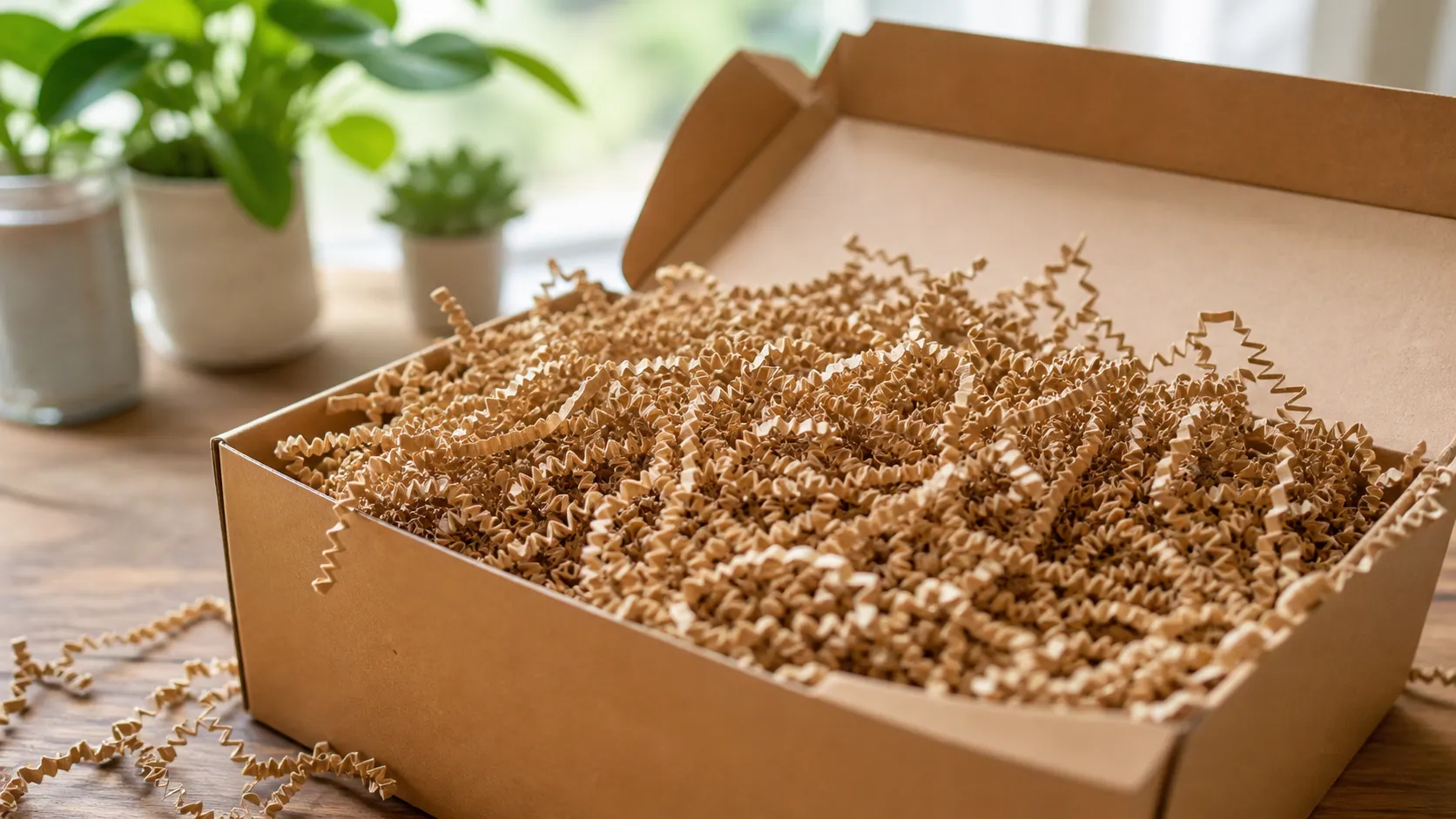
 If you're wondering whether shredded paper packaging trends in 2026 are really worth the switch, you're not alone.
E-commerce brands are under more pressure than ever to move away from plastic fillers, improve unboxing, and stay ahead of eco-friendly packaging expectations. And that's exactly why shredded paper fillers are gaining ground fast.
In this guide, you'll see why they're growing, where they fit best, and what makes them such a smart option for sustainable e-commerce packaging in 2026.
2026 Packaging Shift
I see the shift clearly: plastic fillers are losing ground because brands and buyers want packaging that is easier to recycle, less wasteful, and more aligned with today's sustainability expectations. As new packaging rules, EPR pressure, and single-use plastic limits reshape e-commerce, curbside recyclable packaging is becoming the safer long-term choice.
Why Plastic Is Falling Behind
-
- Plastic void fill is harder to defend when customers expect lower-waste, plastic-free cushioning material options.
- Landfill concerns and "packaging shame" are pushing brands to replace bubble wrap, loose fill, and foam-based protection.
- Buyers now notice whether a box is built with mono-material packaging solutions or mixed materials that are harder to recover.
Why Paper Wins
-
- Shredded paper filler and other eco-friendly void fill options fit the demand for sustainable e-commerce packaging.
- Paper-based packaging supports a cleaner unboxing experience while helping brands reduce visible waste.
- For many retailers, FSC-certified kraft paper, raffia paper filler, and paper void fill send a stronger brand message than plastic alternatives.
What Brands Are Doing
-
- Switching to curbside recyclable packaging to match buyer expectations.
- Replacing plastic waste with shock-absorbing paper void fill for a more responsible look and feel.
- Choosing paper packaging that supports compliance goals, cost control, and a better D2C unboxing experience.
Bottom Line
Plastic fillers are not disappearing overnight, but the market is moving fast toward paper. For brands that want to stay relevant, reduce landfill concerns, and support EPR compliance, paper packaging is no longer a niche option - it is becoming the standard.
Shredded Paper Filler Trends
Eco-Friendly Void Fill
I see more e-commerce brands moving to shredded paper filler because they want a plastic-free cushioning material that feels cleaner, looks better, and fits sustainable e-commerce packaging goals. For everyday shipping, I often use brown shredded paper filler when the pack needs a natural look and dependable paper void fill.
Premium Unboxing
Crinkle cut paper filler works well when the box needs a fuller, more premium feel. It helps turn simple packaging into a better D2C unboxing experience without adding a lot of complexity.
Better Fit by Use Case
-
- Straight-cut paper is a practical choice when I want a neater pack and simple handling.
- Raffia paper filler fits well when the brand wants a lightweight, clean presentation.
- Color-matched paper fillers support branding and help eco-luxury packaging feel more intentional.
Brand Impact
When the filler matches the product and the box, the whole package looks sharper. That is why I treat shredded paper packaging as both protection and presentation, not just empty space inside the carton.

Protection and Performance
When I use shredded paper filler as a shock-absorbing paper void fill, the first job is simple: keep the product from moving. That tight fit helps soften impact, reduce scuffing, and lower the risk of breakage in transit.
Why It Protects Better
-
- Shock absorption: Paper strands compress around the item and cushion sudden bumps.
- Less movement: A packed box holds fragile goods more firmly than loose void fill.
- Less surface damage: Reduced rubbing means fewer scratches and scuffs on finished products.
- Better transit control: Stronger packing stability helps protect items during shipping and handling.
Best Use Cases
| Product Type | Why Paper Filler Works |
|---|---|
| Glassware | Helps absorb shock and keep items separated |
| Cosmetics | Protects packaging surfaces and improves presentation |
| Electronics | Reduces shifting inside the carton |
| Gift boxes | Adds a cleaner look with better unboxing impact |
For fragile shipments, I prefer high-density paper void fill because it supports the product without adding plastic waste. In our customer results, switching to paper-based packaging has helped reduce shipping damage by more than 40% while improving the overall packing experience.
Where It Works Best
-
- Glassware and ceramics that need stable support
- Cosmetics and premium kits where appearance matters
- Electronics that need movement control in the box
- Gift boxes that need both protection and a cleaner finish
If the goal is sustainable e-commerce packaging with real protection, I treat shredded paper filler as a practical paper cushioning solution that balances safety, presentation, and efficiency.
Food-Grade and Safe Packaging
When I pack confectionery, gourmet gifts, or other sensitive items, I focus on one thing first: safety. A food-safe paper filler helps protect the product without adding plastic, odor, or messy residue. For brands that care about presentation and compliance, that matters.
| What I Look For | Why It Matters |
|---|---|
| Greaseproof paper packaging | Helps reduce oil transfer and keeps boxes cleaner |
| Non-toxic materials | Supports safer use around food and gift items |
| Dust-free paper filler | Improves product appearance and handling |
| Certified paper packaging materials | Gives buyers more confidence in sourcing |
For health-focused brands, I keep the sourcing simple: use food-grade packaging paper with the right certifications, then match it to the job. For direct food contact, I prefer solutions that are clearly positioned for food use, such as food wrapping paper vs standard wrapping paper. When the packaging needs an extra protective layer, I also look at food packaging applications of wrapping paper to fit the right paper into the mix.
In my view, the best setup is simple:
-
- Shredded paper filler for cushioning and clean presentation
- Greaseproof paper for oily or delicate food items
- Food-grade wrapping paper for outer wrapping and box lining
- Certified materials when the buyer needs stronger compliance support
That is the practical way I handle sustainable e-commerce packaging for confectionery, gourmet boxes, and other food-adjacent products without overcomplicating the process.
Shredded Paper vs Plastic Void Fill
I hear the same pain point from buyers all the time: they want better protection without creating more waste. That is where shredded paper filler has a clear edge over plastic void fill.
Paper-based void fill is easier to position in a mono-material packaging strategy, which makes end-of-life sorting simpler and supports Extended Producer Responsibility (EPR) compliance goals. Plastic fillers can be harder to manage after use, and they often add more landfill risk when recycling is not straightforward.
Disposal Differences
| Fill Material | End-of-Life | Packaging Fit | Operational Note |
|---|---|---|---|
| Shredded paper filler | Often easier to recycle through curbside streams, depending on local rules | Good for paper-forward packaging systems | Cleaner brand image and simpler disposal |
| Air pillows | Plastic waste stream | Light, but still plastic-based | Good for bulk void fill, not ideal for mono-material goals |
| Packing peanuts | Disposal varies by material | Can be messy to handle | More cleanup and spill risk |
| Bubble wrap | Plastic waste stream | Useful for cushioning, but not paper-based | Adds mixed-material packaging complexity |
Why Paper Wins
-
- Curbside recyclable packaging is easier for customers to understand and dispose of.
- Paper void fill supports a cleaner sustainability story than plastic waste.
- Mono-material packaging solutions can make compliance planning simpler.
- If I need to check supplier quality, I look at packaging paper testing standards early, because compliance matters as much as performance.
Operations Matter Too
Shredded paper filler also helps on the packing floor:
-
- It stores neatly and fits into existing fulfillment workflows.
- It reduces the need for separate plastic handling.
- It can support faster packing when teams want one simple material stream.
- It keeps the unboxing experience more premium and less waste-heavy.
For brands focused on sustainable e-commerce packaging, the move from plastic fillers to shredded paper packaging is not just a green choice. It is a practical one.
Packaging Cost and ROI
I do not look at shredded paper filler as a line-item cost alone. I look at the full cost of ownership across packing time, shipping damage, replacements, and customer returns. That is where eco-friendly void fill often proves its value.
Cost That Actually Matters
| Cost factor | What changes with paper void fill |
|---|---|
| Material spend | The filler itself may not be the lowest-cost option on day one |
| Transit damage | Better shock-absorbing paper void fill can cut breakage and scuffing |
| Replacements | Fewer damaged orders mean fewer reships and refunds |
| Labor time | Faster packing with a simple paper cushioning setup |
| Fulfillment flow | Less rework helps the line stay steady |
ROI Drivers
-
- Lower transit damage can offset the material cost fast, especially for fragile items and gift boxes.
- In customer cases, switching from plastic packaging to paper-based solutions has reduced overall packaging costs by up to 15%.
- Better protection can also bring a more stable packaging cost reduction strategy, since fewer claims and replacements protect margin.
- A clean mono-material packaging solution can make sorting and disposal simpler for buyers, which supports long-term sustainable e-commerce packaging goals.
Faster Fulfillment
I also care about speed at the pack station. When the team uses the right paper void fill, they spend less time fixing damaged packs and less time redoing orders. That means:
-
- quicker packing
- fewer replacement shipments
- better fulfillment efficiency
- tighter margin control
If I am matching material choice to budget, I start with the paper structure and performance basics in this guide to what materials are used in packaging paper.
Supplier Selection Criteria
When I source shredded paper filler or other paper void fill, I start with compliance, then production fit, then logistics. That is the fastest way to avoid risk in sustainable e-commerce packaging.
Check the certifications
For me, the baseline is simple: the supplier should be able to prove quality and compliance.
-
- FSC matters when I want paper from responsible sourcing.
- SGS gives extra confidence on product verification.
- FDA, QS, and ISO22000 matter when food-safe packaging or dust-sensitive use cases are part of the order.
- ISO9001 signals a more controlled quality system.
If a supplier cannot show clear documentation, I move on.
Match the packaging use case
Not every paper filler works the same way. I check whether the supplier can support the exact job I need:
-
- Shredded paper filler for protective void fill and presentation
- Raffia paper filler for decorative, premium packing
- Paper cushioning for fragile items
- Food-grade packaging paper for confectionery or gourmet boxes
- Greaseproof paper packaging when cleanliness and oil resistance matter
The goal is to match the material to the product, not force one filler into every order.
Confirm OEM/ODM support
For brand-led sellers, OEM/ODM custom paper packaging is a must. I look for a factory that can handle:
-
- Custom formats and pack styles
- Color matching for branded unboxing
- Bulk order planning
- Consistent repeat production
That matters when I need sustainable e-commerce packaging that still feels on-brand.
Review bulk logistics
Procurement does not stop at the sample. I also check:
-
- Cut size consistency
- Color consistency across batches
- Packaging size and storage footprint
- Order quantity flexibility
- Export and delivery support for global shipments
A strong supplier makes bulk handling easier, not harder.
Quick buying checklist
| What I check | Why it matters |
|---|---|
| Certifications | Supports compliance and buyer trust |
| Custom options | Helps brand fit and volume planning |
| Sample availability | Confirms quality before scale-up |
| Factory-direct supply | Improves control and sourcing efficiency |
| Support response | Reduces delays during repeat orders |
Why I trust a factory partner
A supplier with 16+ years of experience, direct factory supply, and support like free samples, 1-on-1 consulting, and 24/7 after-sales service is easier to work with at scale. For paper void fill, that combination lowers sourcing risk and helps keep the packing line moving.
Factory-Direct Partner
When I buy eco-friendly e-commerce packaging, I look for one thing first: a supplier that can keep quality, compliance, and lead times steady. That is where a factory-direct partner makes a real difference.
Why experience matters
Dongguan Xianghe Paper Co., Ltd. has been manufacturing packaging paper since 2008, so the process is mature and practical. For me, that lowers sourcing risk because I am not guessing about production control, order handling, or after-sales support.
-
- 16+ years of manufacturing experience
- Exports to 30+ countries
- Long-term work with 200+ international clients
- Certifications that support procurement checks: FSC, SGS, FDA, QS, ISO9001, and ISO22000
Product lines that fit e-commerce
For paper void fill and sustainable e-commerce packaging, I focus on products that are simple, protective, and easy to scale.
-
- Shredded paper filler and raffia paper filler for void fill
- Paper cushion pads for shock-absorbing protection
- Wrapping paper for presentation and gift-style packing
- Kraft paper rolls, glassine envelopes, and paper bags for broader packaging workflows
- Eco-friendly honeycomb lining for paper-based protection with a cleaner unboxing feel
Support that helps procurement teams
I also value the service side. Free samples, OEM/ODM custom paper packaging, 1-on-1 consulting, real-time order tracking, and 24/7 after-sales support make it easier to move from trial to bulk purchasing without slowing the team down.
In my view, that is what a reliable packaging partner should deliver: certified materials, flexible custom work, and factory-direct supply that supports long-term growth.
FAQs
| Question | My answer |
|---|---|
| Is shredded paper filler better than bubble wrap for e-commerce shipments? | For most sustainable e-commerce packaging, I prefer shredded paper filler because it gives plastic-free cushioning, a cleaner unboxing feel, and a better fit for eco-friendly void fill goals. Bubble wrap still has a use case, but paper is the stronger match when recyclability matters. |
| Is shredded paper packaging curbside recyclable? | In many paper recycling streams, yes, but local rules always decide the final answer. I use recycled shredded paper for packaging when buyers want a paper-based filler that supports recyclable packaging plans. |
| What certifications should a paper filler supplier have? | I look for FSC, SGS, FDA, QS, ISO9001, and ISO22000, depending on the product and market. These certifications help buyers check quality, safety, and compliance. |
| Can shredded paper be customized for branding and color matching? | Yes. I use paper filler as part of the brand look when the unboxing experience matters. For a cleaner premium style, white shredded paper filler works well, while other shades can support a stronger branded feel. |
| Which products need food-grade or greaseproof paper filler? | I use food-grade packaging paper for confectionery, gourmet boxes, and other products that need cleaner handling. For food-related applications, FDA, QS, and ISO22000 support is especially important. |
| How do I choose the right paper void fill for fragile items? | I match the paper cushioning to the product weight, box size, and transit risk. For glassware, cosmetics, electronics, and gift boxes, I choose a shock-absorbing paper void fill that limits movement, protects surfaces, and keeps the pack neat. |
Quick Fit Guide
| Product type | Best paper filler choice |
|---|---|
| Glassware | High-cushion paper void fill |
| Cosmetics | Clean, branded shredded paper filler |
| Electronics | Tight-fill paper cushioning |
| Gift boxes | Decorative crinkle cut or color-matched paper filler |
| Food-related packs | Food-grade, greaseproof paper packaging |
I keep it simple: if the goal is lower plastic use, better presentation, and dependable protection, paper filler is the safer long-term choice for modern e-commerce packaging.